



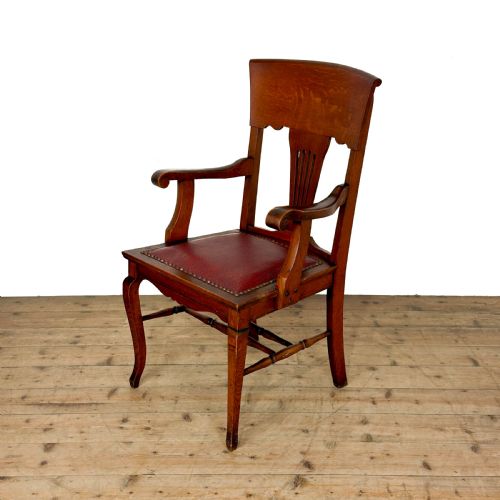

Traditional Leather Carvers
Traditional leather carvers bring enduring substance to a room, offering the sturdy comfort of period seating built for long dining and study.
Traditional Leather Carvers
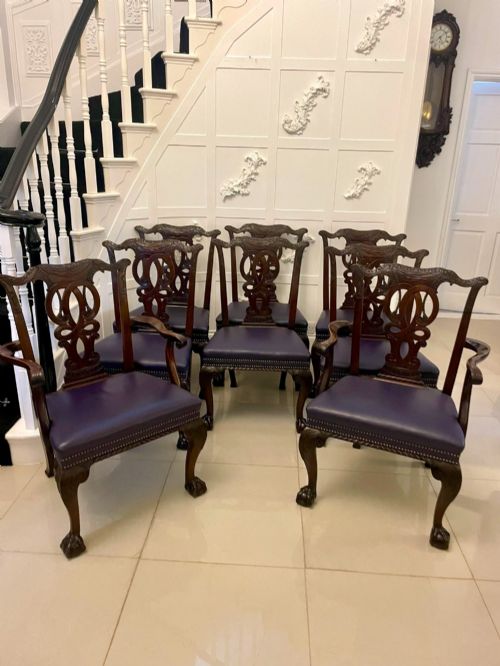
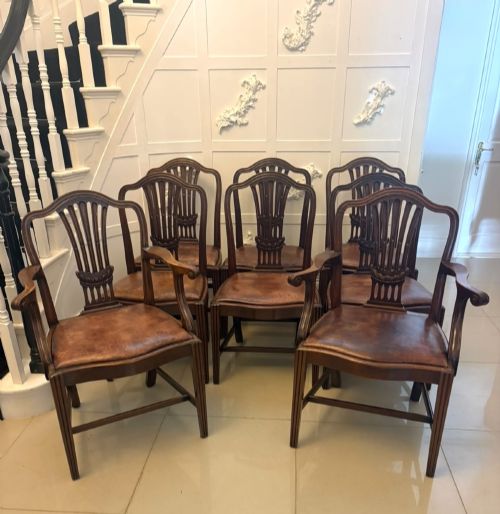
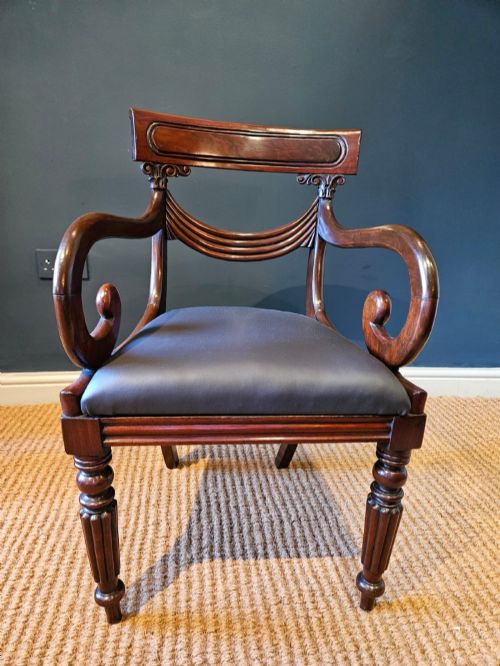
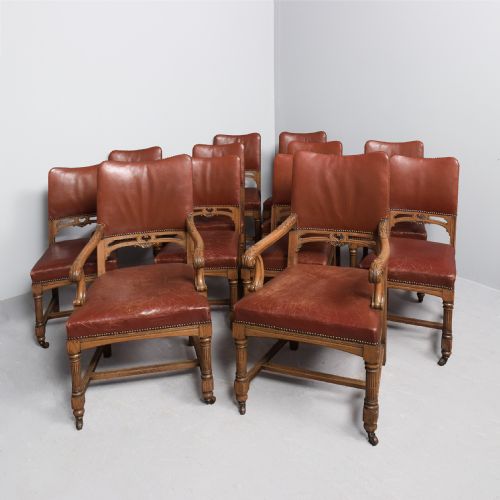
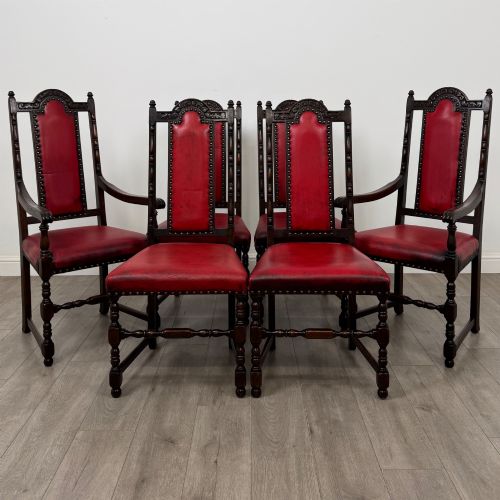
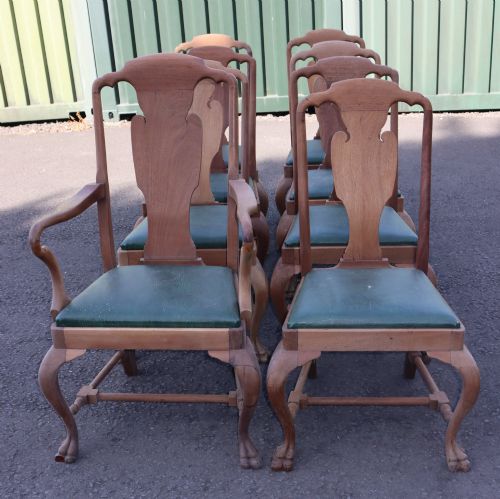
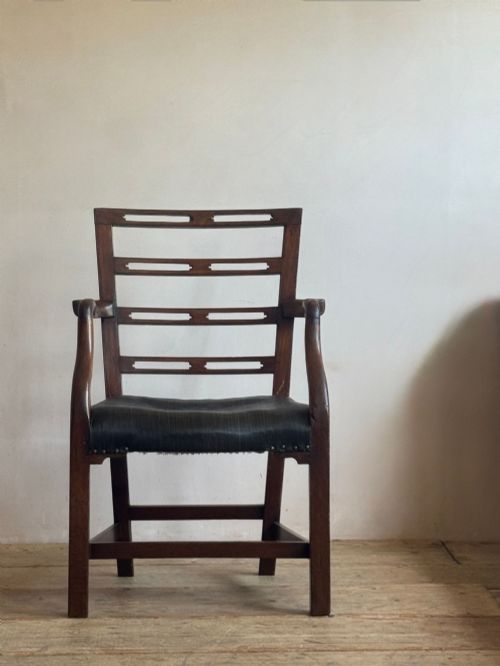
Traditional leather carvers encompass robust seating designed primarily for dining rooms and studies, typically appearing as single chairs alongside matching elbow chairs. These pieces emerge from periods spanning the Georgian, Regency, and Victorian eras through to the Edwardian years and the early decades of the twentieth century.
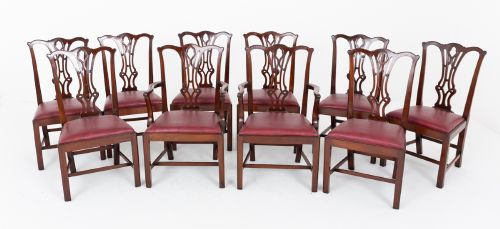
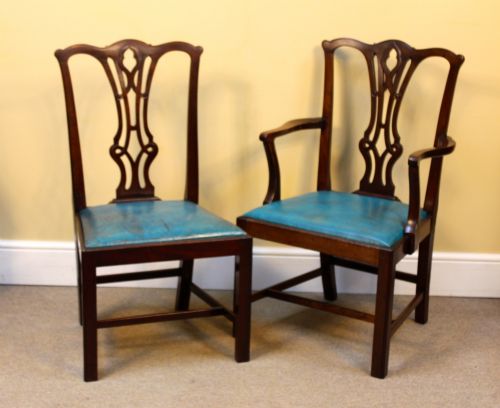
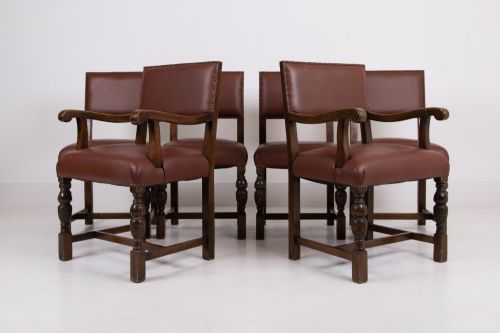
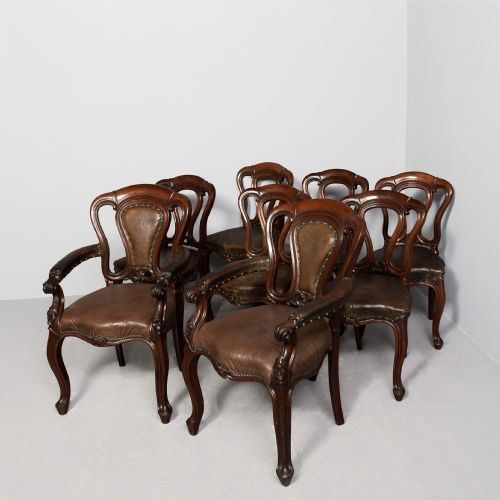
The form is defined by supportive armrests and a substantial frame, often categorized in listings as carver chairs, dining armchairs, elbow chairs, or desk chairs. Buyers frequently encounter sets configured for dining tables, combining a majority of side chairs with one or two principal carvers.
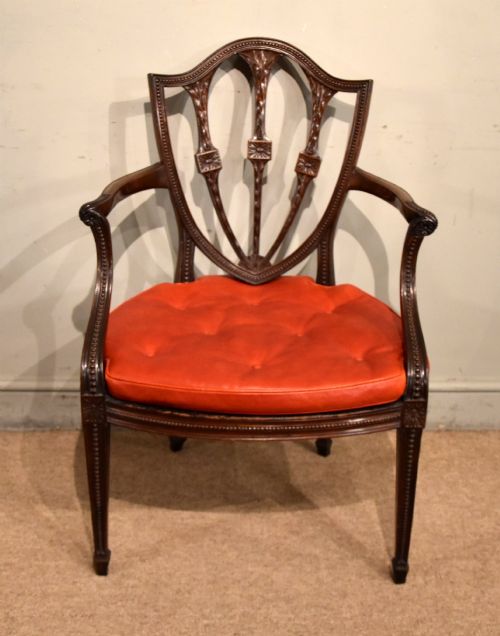
Stylistic influences heavily lean towards revival aesthetics, notably Chippendale, Hepplewhite, and Jacobean tastes, alongside distinct Georgian and Regency designs. The presence of leather upholstery unites these varied stylistic revivals under a single functional category.
Materials and construction
Makers relied predominantly on dense hardwoods for the structural frames, with mahogany appearing alongside oak and walnut. Brass elements, such as decorative studs, frequently secure the leather upholstery to the wooden seat bases.
The woodwork often exhibits detailed carving along the splats, arms, and legs, reflecting prevailing period tastes from the eighteenth century onwards. Upholstery techniques incorporate durable leathers, occasionally hand-dyed, fixed securely to support daily use.
Traditional Leather Carvers Retail Price Guide 2026
Typical asking prices for traditional leather carvers among the pieces listed under this phrase on Sellingantiques today, from the lower quarter to the upper quarter. They describe what is for sale here now, not the wider market.
Primary timbers recorded in the evidence are mahogany, oak, and walnut, frequently paired with brass studwork.
Judging quality and execution
The distinction between standard examples and superior pieces rests upon the crispness of the woodwork carving and the selection of timber. Heavier grain matching in the mahogany, oak, or walnut indicates a more considered initial commission.
Proportion and structural integrity dictate the standing of a carver chair, with finely balanced arm scrolls and well-fitted joints marking superior cabinet work. The grade of leather and the neatness of the studding further separate basic utility seating from finer parlor and dining examples.
The Traditional Leather Carvers Glossary
- Carver chair
- An armchair designed specifically for use at the head of a dining table or as a desk seat. These pieces feature integrated armrests to support the sitter.
- Shield back
- A chair back design shaped in the outline of a heraldic shield, popularised by Hepplewhite in the eighteenth century and revisited in later periods.
- Barback
- A horizontal crossbar design incorporated into the upper section of a chair back, frequently seen in nineteenth-century seating.
- Elbow chair
- A traditional term for an armchair with low supports, commonly referenced in relation to dining and drawing-room suites.
- Chippendale style
- A decorative manner originating in the eighteenth century featuring intricate fretwork, carved splats, and cabriole or straight legs.
- Ladder-back
- A chair back constructed with multiple horizontal wooden slats rising between the upright stiles.
Traditional Leather Carvers: Frequently Asked Questions
What is a carver chair?
A carver chair is an armchair traditionally placed at either end of a dining table, featuring supportive armrests that distinguish it from standard side chairs. These seats offer additional comfort during extended meals.
In historical dining sets, these armchairs were reserved for the head of the household or principal guests. Today, they function equally well as standalone desk chairs or occasional seating.
How do I date these chairs?
Dating relies on identifying the underlying style, such as Georgian proportions or Edwardian revival details, combined with the visible characteristics of the timber and upholstery. Cabinet-making techniques shifted noticeably between the eighteenth and twentieth centuries.
Examining the underside and joint construction provides further clues to the age of the piece. Revival pieces often emulate earlier centuries while retaining the machining methods of their actual period of manufacture.
Are leather seats original?
Leather upholstery on older chairs is frequently replaced over time due to natural wear and ageing. Many pieces retain period-appropriate leathers or later replacements finished with traditional studding.
Evaluating the leather involves looking at the patina and how the material is secured to the frame. Hand-dyed replacements are common in Edwardian and later interpretations.
How should I care for the leather?
Leather upholstery benefits from regular dusting and occasional conditioning to maintain suppleness and prevent the material from drying out. Avoiding direct sunlight helps preserve the colour and finish.
Wooden frames require standard polishing suited to mahogany, oak, or walnut. Keeping the environment stable protects both the hide and the structural joints.