
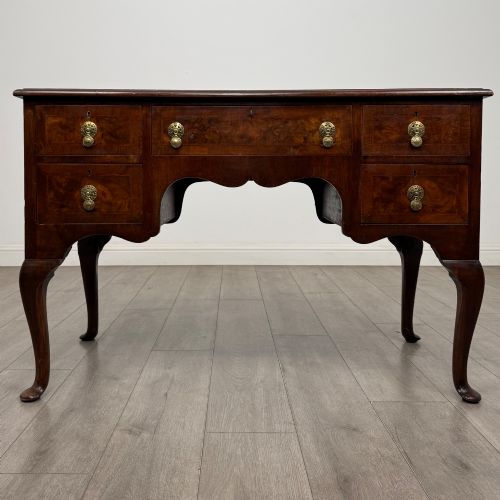
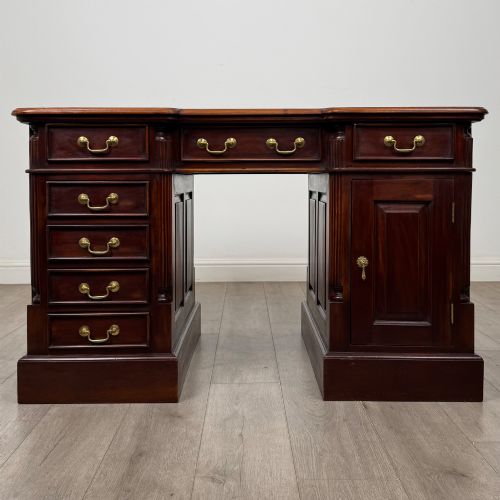


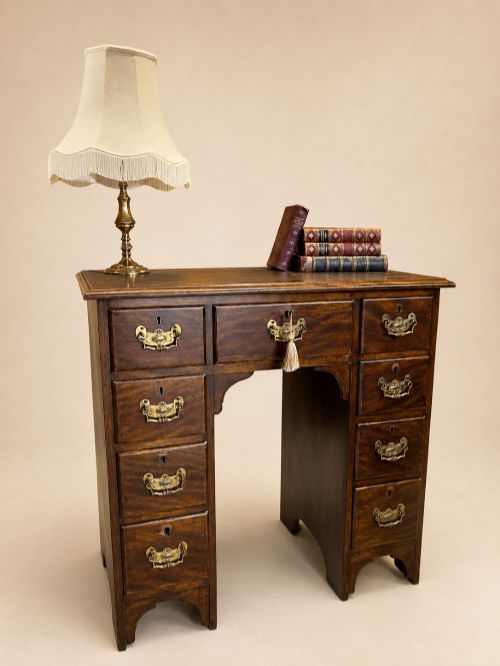
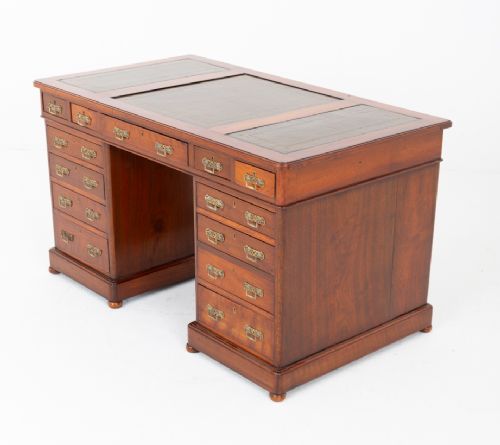
Traditional Kneehole Table
A traditional kneehole table delivers classical proportions and deep drawers for a study or library.
Traditional Kneehole Table
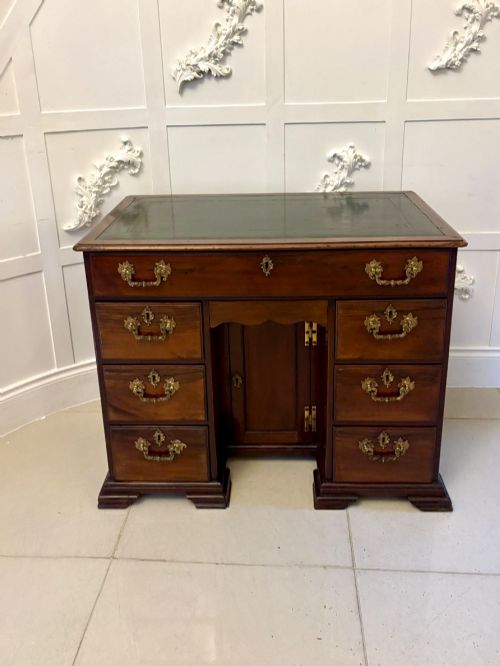
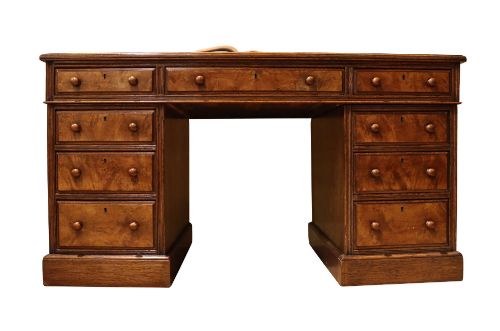
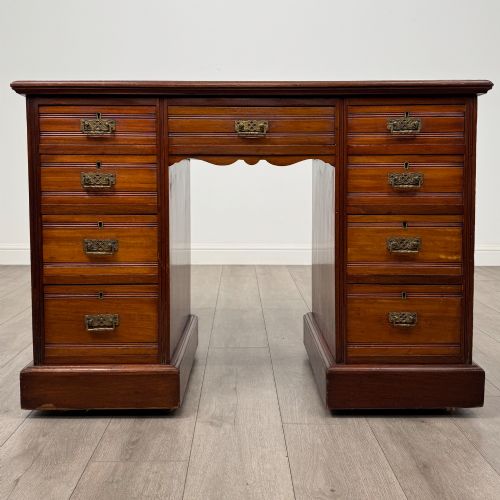
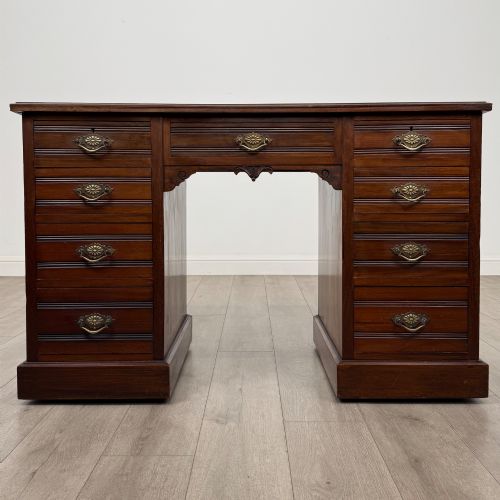
When you search for a traditional kneehole table, you encounter substantial pedestals flanking a central recess designed for a chair. These pieces function primarily as writing desks or pedestals, offering ample surface space and multiple small drawers.
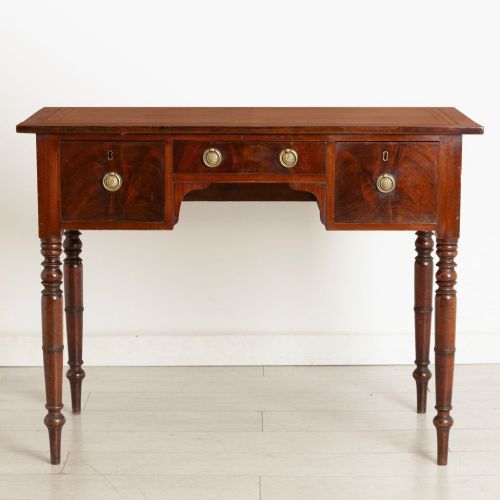
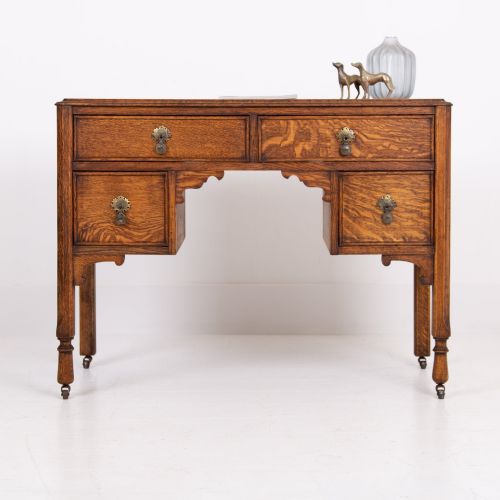
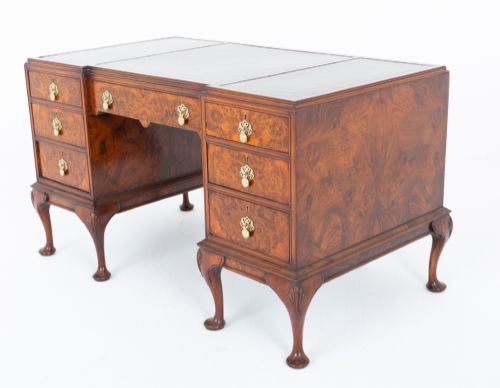
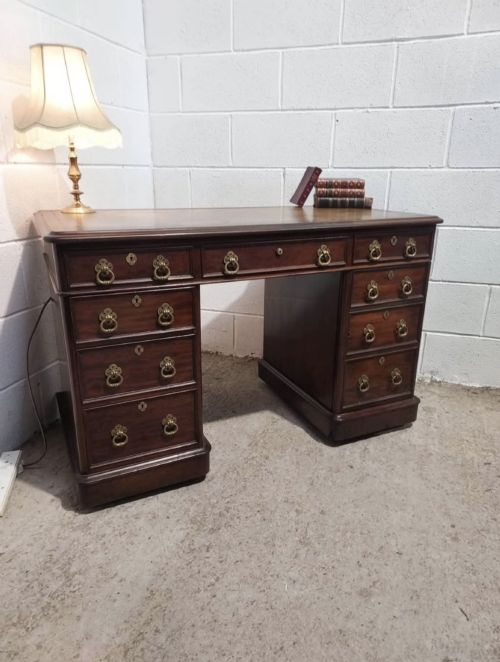
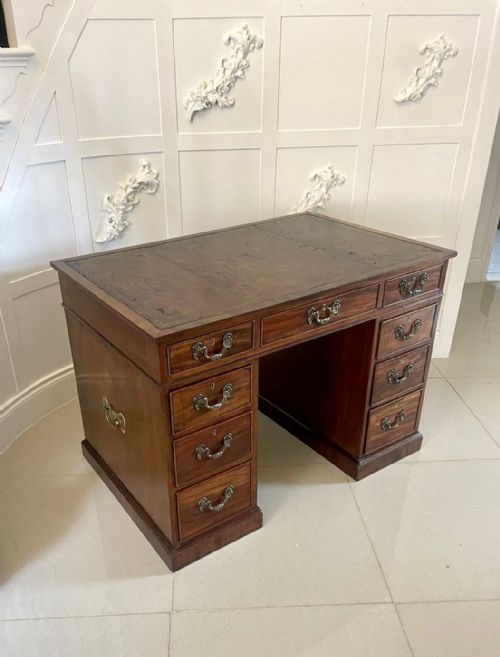
The versions you meet most frequently on this page date from the Victorian and Edwardian eras, constructed in mahogany, burr walnut or oak. Formats range from compact writing desks to large nine-drawer pedestal models.
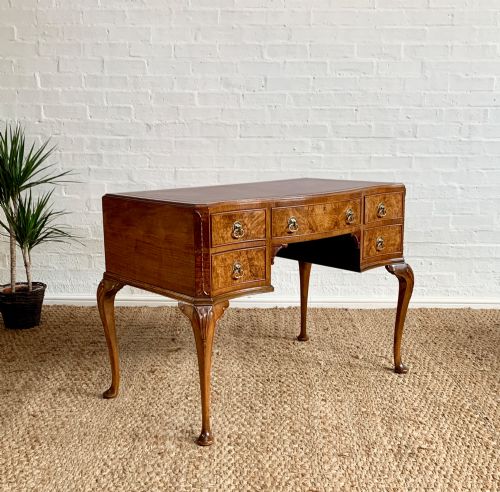
Cabinet makers also produced revival iterations during the later periods, drawing on Georgian and Queen Anne styles with characteristic bracket feet or shaped aprons.
Materials and construction methods
Workshops utilised dense timbers such as mahogany and oak for the primary carcase and structural framing, ensuring durability across decades of daily use. Cabinet makers applied highly figured burr walnut veneers to drawer fronts and top surfaces to create striking grain patterns.
Craftsman fitted brass hardware, including drop handles and escutcheons, alongside inset tooled leather writing surfaces. Joinery relied on traditional dovetail techniques for drawer construction and sturdy mortise and tenon joints for the pedestals.
Current listings feature traditional kneehole tables spanning the Victorian, Edwardian and Georgian periods, constructed predominantly in mahogany, walnut and oak.
Judging quality in kneehole tables
Superior examples distinguish themselves through the choice of timber and the precision of the veneer matching across the drawer banks. Finer pieces retain original brass handles and properly fitted leather inserts rather than later replacements.
The depth of the drawer linings, clean dovetailing and smooth operation of the timber runners separate workshop output from mass production. Proportions remain balanced, with careful attention paid to the finishing of the kneehole recess and rear panels for freestanding placement.
Trollope and Sons·Wylie and Lochhead Glasgow
The Traditional Kneehole Table Glossary
- Kneehole
- A recessed space beneath the centre of a desk or table designed to accommodate the user's legs. This architectural feature allows for banks of drawers on either side while maintaining a comfortable seating position.
- Pedestal desk
- A heavy writing table comprising two separate drawer pedestals supporting a wide top. The user sits in the central gap between the two wooden stacks.
- Burr walnut
- A highly prized timber taken from the gnarled growth of a walnut tree. Cabinet makers slice this wood into thin veneers to display intricate, swirling grain patterns.
- Dovetail
- A traditional interlocking joint used to secure drawer corners. Fine-pitched pins and tails indicate skilled hand woodworking.
- Escutcheon
- A protective metal plate surrounding a keyhole. These fittings prevent the surrounding wood from splitting when keys are inserted.
Traditional Kneehole Table: Frequently Asked Questions
How do I style a kneehole desk?
Place the table against a wall or float it in the centre of a room if the back is finished with matching timber veneers. Pair the desk with a traditional upholstered chair that fits comfortably within the central recess.
Keep surface accessories minimal to showcase the grain of the wood and the leather writing insert. A small banker lamp and a blotter complete the traditional setup.
Can I use a kneehole table as a dressing table?
Many period examples function well as dressing tables, particularly smaller proportions from the Victorian and Edwardian eras. The central kneehole provides leg room while seated for grooming.
Simply place a tabletop mirror on the leather or wood surface to complete the bedroom arrangement.
How do I care for the leather top?
Clean the tooled leather surface gently with a soft, dry cloth to remove dust. Avoid using harsh chemical cleaners or excess water, which can damage the gold tooling and dry out the hide.
Treat the leather occasionally with a specialised conditioning balm recommended for antique furnishings to keep the material supple.