





Small Pedestal Desk
A small pedestal desk provides a compact workspace anchored by sets of drawers, combining traditional cabinetry with practical room proportions.
Small Pedestal Desk
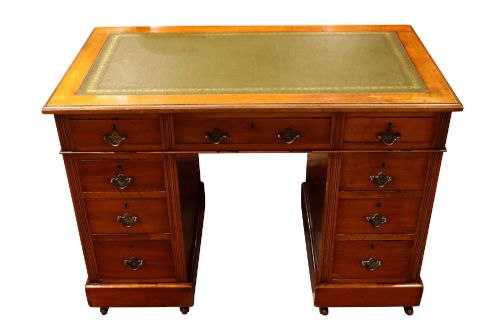
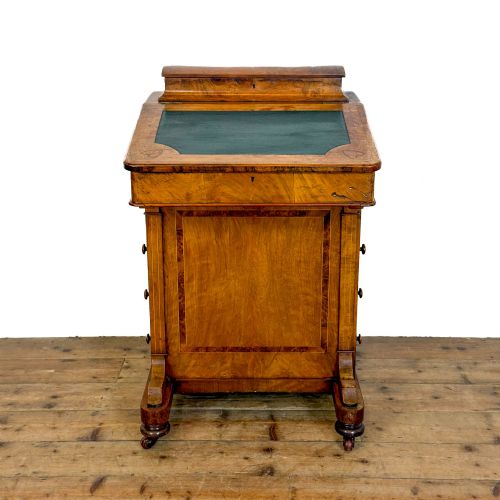
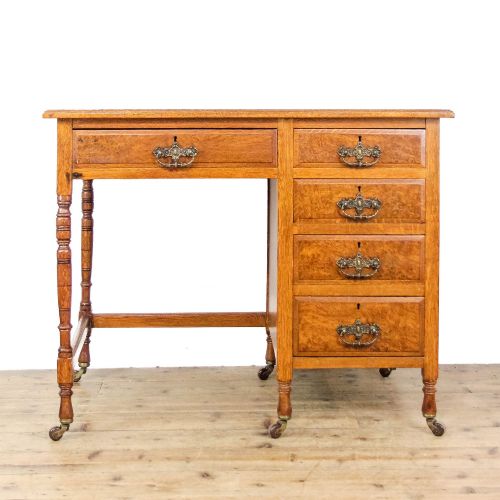
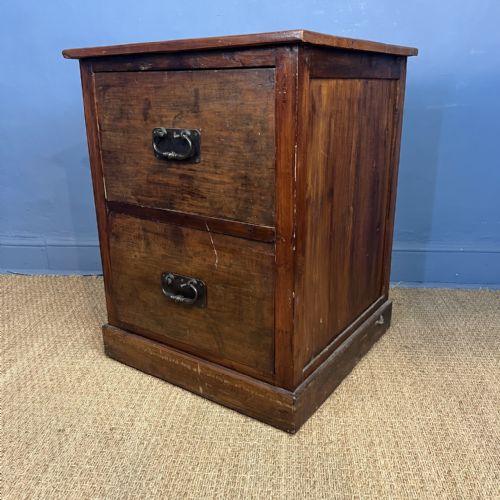
A small pedestal desk consists of a central writing surface supported by two stacks of drawers or a single pedestal configuration. When searching this phrase, a buyer meets compact writing furniture designed for domestic studies and smaller private offices rather than vast partner desks.
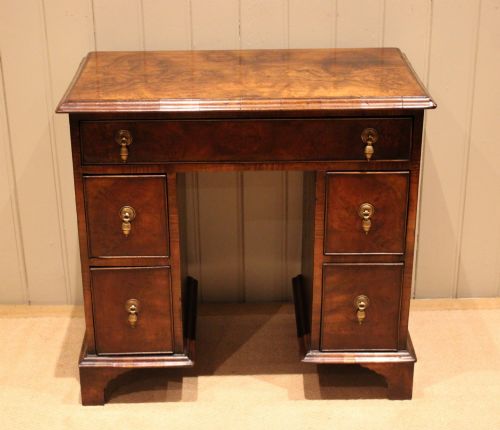
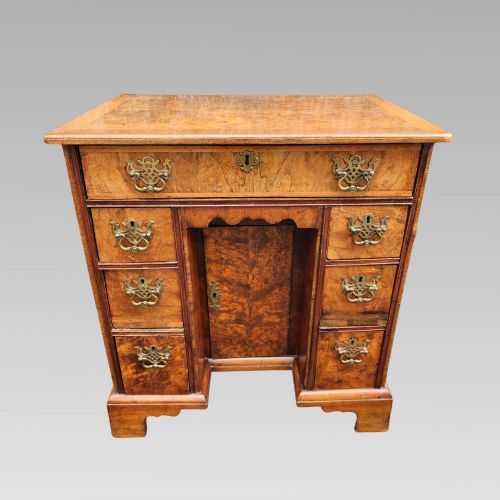
The material palette spans mahogany, oak, walnut, and rosewood across Georgian, Victorian, and Edwardian periods. Many examples utilise fine veneers such as burr walnut or flame mahogany to add visual depth to the writing surface and drawer fronts.
How they were made
Cabinet makers built these desks using solid timbers like mahogany and oak for structural frames, overlaid with figured veneers including burr walnut and rosewood. Drawer linings typically employed secondary woods like pine or oak, joined with hand-cut dovetails.
Writing surfaces were frequently inset with tooled leather or skivers bordered in gilt tooling. Brass hardware, from drop handles to escutcheons, completed the construction alongside occasional specialised mechanisms such as Wellington locking bars.
Some nineteenth-century writing desks include concealed compartments behind dummy drawer fronts to hide private correspondence.
What varies in quality
The calibre of a small pedestal desk rests on the selection of timber figures and the precision of the cabinet work. Finely matched veneer grains across multiple drawers indicate superior selection by the maker.
Secondary detailing, such as the thickness of the solid mahogany framing, the execution of hand-cut dovetailing, and the preservation of original brass fittings and leather inserts, distinguishes exceptional workshop output from standard production.
Maples and Co.·Hobbs and Co London·Gillows of Lancaster
The Small Pedestal Desk Glossary
- Pedestal desk
- A writing desk featuring a central top supported by two distinct columns or pedestals containing drawers. These units usually separate into multiple sections for easier transport.
- Skiver
- A piece of split sheepskin or leather attached to the top of a desk as a writing surface. It is frequently decorated with gold tooling around the perimeter.
- Kneehole desk
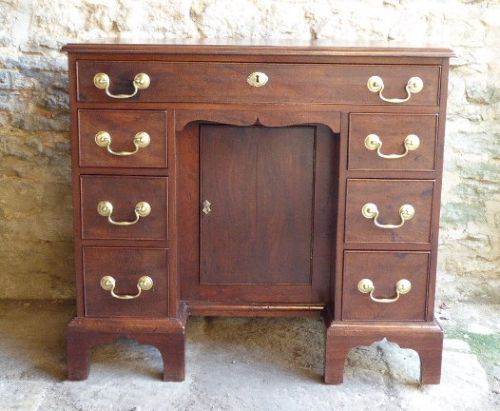
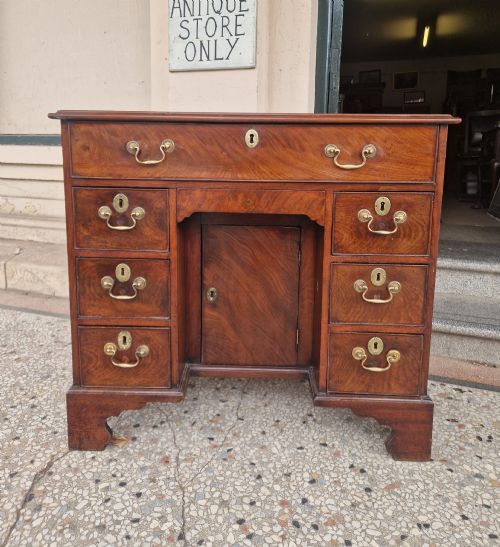
- A compact desk featuring a recessed central space for the user's knees, flanked by narrow banks of drawers. Eighteenth-century versions often conceal a small cupboard behind the kneehole.
- Crossbanding
- A decorative border technique where thin strips of veneer are laid running perpendicular to the surrounding grain. This method frames drawer fronts and table tops with contrasting timber grain.
Small Pedestal Desk: Frequently Asked Questions
How do I spot a Georgian desk?
Georgian desks usually feature solid mahogany construction with hand-cut dovetailing in the drawer boxes. They often present simpler, cleaner lines without heavy Victorian ornamentation.
Look for traditional brass drop handles and bracket feet that ground the piece firmly without heavy plinths.
Were these desks used in offices?
Many examples served in private studies, libraries, and shipboard cabins rather than large commercial offices. Their compact proportions made them ideal for domestic writing and correspondence.
Their sturdy construction ensured they withstood daily administrative tasks in nineteenth-century households.
How should I care for the leather top?
Protect the leather skiver from direct sunlight to prevent drying and cracking over time. Gentle cleaning with appropriate leather balms preserves the suppleness of the hide.
Avoid placing damp items directly onto the leather surface to protect the underlying timber and paper bindings.