





Fitted Leather Writing Desk
A fitted leather writing desk offers practical elegance, combining timber construction with dedicated storage and writing surfaces for daily correspondence.
Fitted Leather Writing Desk
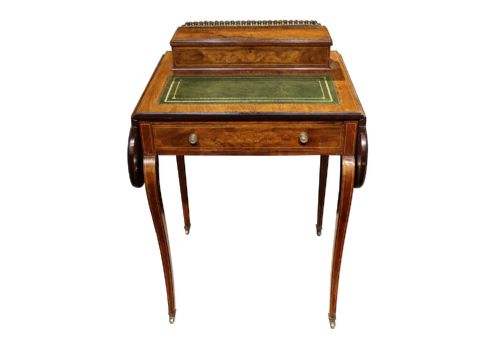
A fitted leather writing desk encompasses a variety of forms designed for correspondence and storage, ranging from compact writing boxes to substantial pedestal desks and bureau cabinets. Buyers searching for a fitted leather writing desk will encounter pieces spanning the Georgian, Regency, Victorian, and Edwardian eras.
Origins stretch across the nineteenth and early twentieth centuries, alongside earlier Georgian influences seen in later reproductions and styles such as Chippendale. Each form reflects the specific writing habits and interior requirements of its respective period.
Materials and Construction
Makers utilised dense hardwoods like mahogany, walnut, and rosewood for the primary carcases, often embellished with inlay, brass hardware, or satinwood details. Structural integrity relied on traditional joinery methods suited to heavy daily use.
Writing surfaces were typically inset with leather, providing a smooth, durable plane for pens and ink. Secondary timbers such as oak appeared in drawer linings and internal divisions.
Brass mounts, campaign bindings, and specialised locking mechanisms reinforced corners and secured confidential documents. These elements combined structural robustness with refined exterior finishes.
Several pieces include hidden compartments designed for secret letters.
Gradation in Craftsmanship
Quality in a fitted leather writing desk rests upon the selection of timber veneers, the precision of internal joinery, and the integrity of the fitted compartments. Superior examples display carefully matched grain patterns and harmonious proportions across large surfaces.
The complexity and execution of the internal stationery fittings dictate much of the distinction between standard and high-grade pieces. Master workshops employed finer secondary woods and more intricate secret compartments or brass locking systems.
Originality of components, from the leather writing surface to the drawer pulls and escutcheons, separates authentic period survivals from heavily restored or assembled items.
Holland & Sons·Gillows·Maples of London and Paris·Marsh & Tatham
The Fitted Leather Writing Desk Glossary
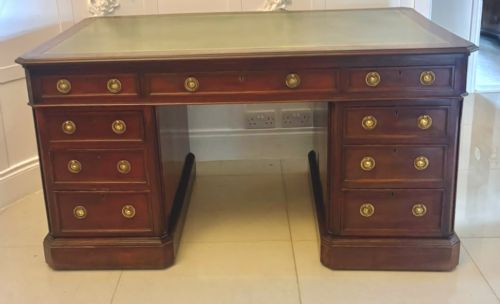
- Pedestal desk
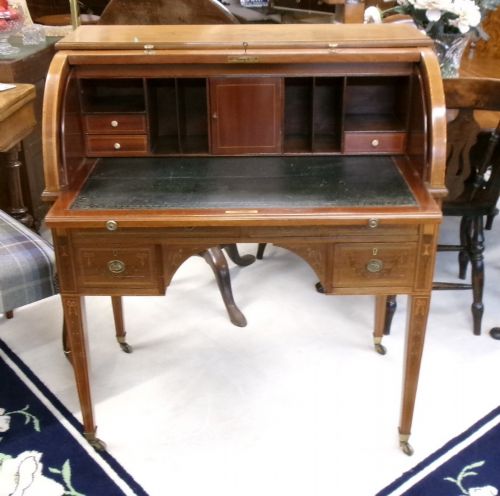
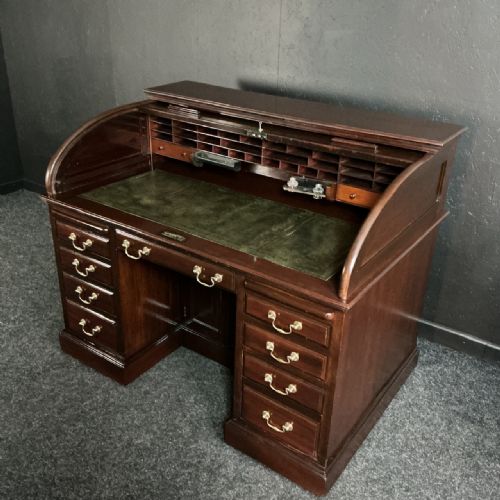
- A freestanding desk comprising two supporting pedestals of drawers joined by a top section with a central drawer. This form provides substantial storage capacity while allowing kneehole space in the centre.
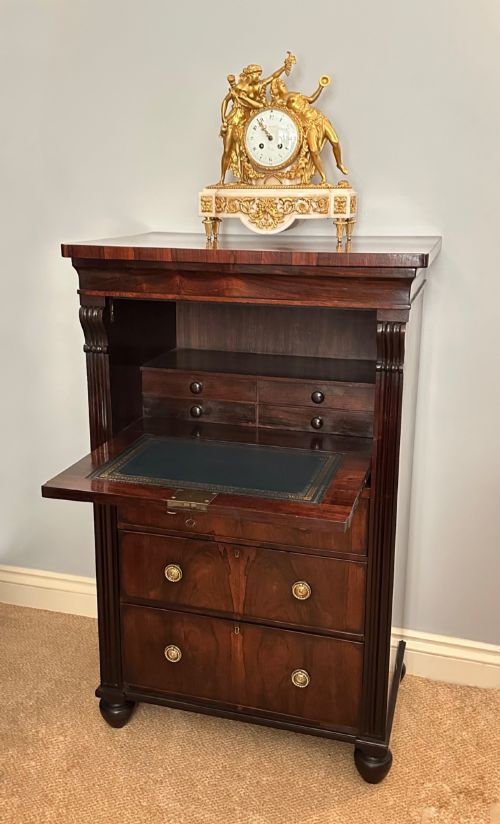
- Bureau
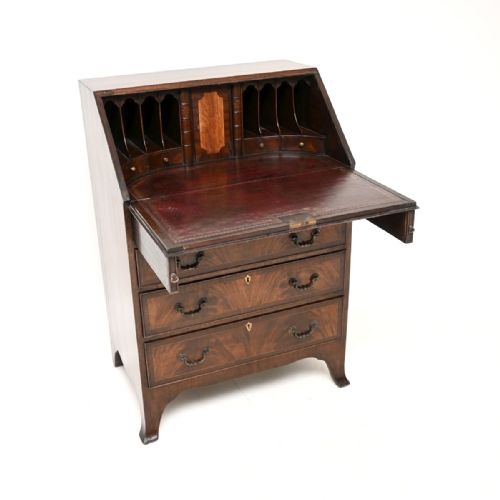
- A desk featuring a sloping fall-front that opens to reveal a fitted interior of small drawers and pigeonholes. When closed, it conceals writing materials and unfinished correspondence.
- Writing slope
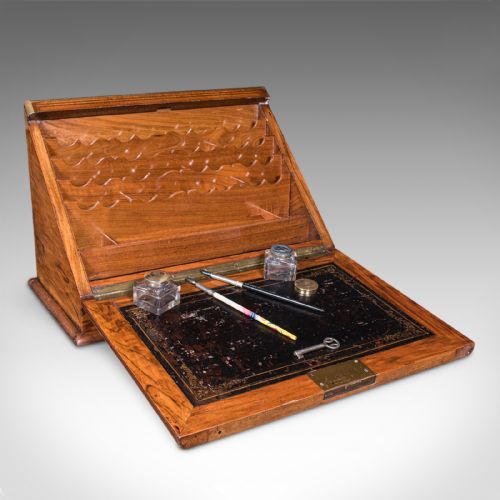
- A portable box with a hinged lid that folds down to form an angled writing surface. It typically houses compartments for inkwells, pens, and paper.
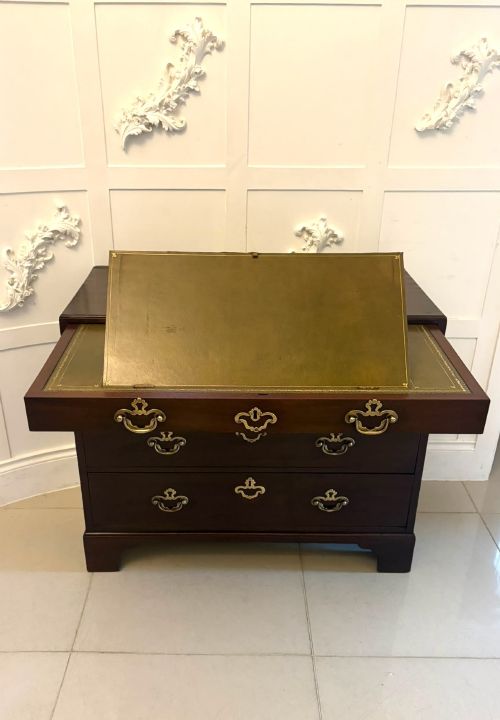
- Secretaire
- A piece of furniture containing a pull-out drawer or drop-front panel designed specifically for writing. This versatile mechanism disguises a desk within a chest of drawers or bookcase.
- Inlay
- A decorative technique where contrasting woods, brass, or ivory are fitted into depressions carved into the primary timber surface. This creates flat, ornamental patterns across the exterior.
Fitted Leather Writing Desk: Frequently Asked Questions
What is a fitted leather writing desk?
A fitted leather writing desk is a piece of antique furniture designed for correspondence, featuring an integrated leather writing surface and internal compartments for stationery and documents.
These desks range from compact portable boxes to large pedestal tables and bureau cabinets produced during the Georgian, Victorian, and Edwardian periods.
How do I care for the leather surface?
Maintaining the leather top involves keeping it clean from dust and applying appropriate conservation leather balms to prevent drying and cracking over time.
Avoid using harsh chemical cleaners or excessive moisture, which can damage both the leather and the surrounding timber frame.
How do I distinguish Victorian from Edwardian desks?
Victorian desks generally feature heavier proportions, darker mahogany or walnut timbers, and robust brass hardware suited to formal nineteenth-century interiors. Edwardian pieces often display lighter satinwood inlays, more delicate frames, and influences from earlier stylistic revivals.
Examining the secondary woods inside the drawers and the style of the brass locks helps confirm the manufacturing era.
Were these desks used for travel?
Certain forms, such as campaign desks and writing boxes, were specifically constructed for travel and military use with brass bindings and collapsible components. Pedestal desks and large bureau cabinets remained stationary furniture intended for permanent placement in libraries or studies.