



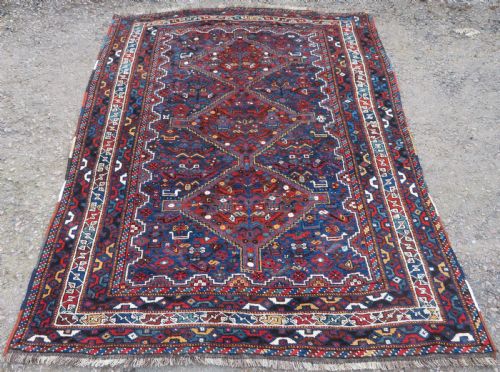


Traditional Khamseh Rug
Traditional khamseh rugs are South Persian tribal floor coverings woven with rich motifs and natural materials.
Traditional Khamseh Rug
A traditional khamseh rug originates from the tribal confederacies of South-West Persia, produced by confederated groups such as the Baharlu, Arab-Jabbareh, and Basseri tribes. These pieces reflect the nomadic and village heritage of the region, carrying distinct stylistic links to neighbouring tribal groups like the Qashqai and Luri.
The format typically ranges from smaller area rugs to larger main carpets and bag faces. These textile items span various production dates from the late nineteenth century into the early twentieth century, capturing a period of distinct regional weaving traditions.
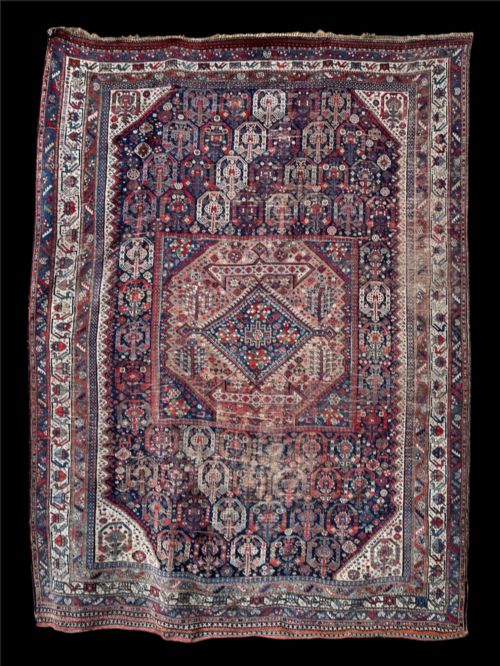
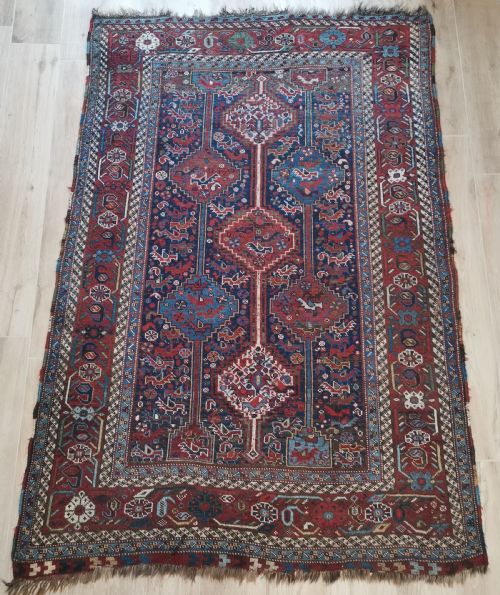
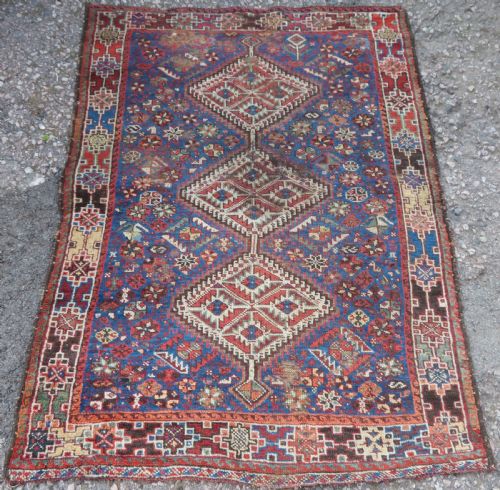
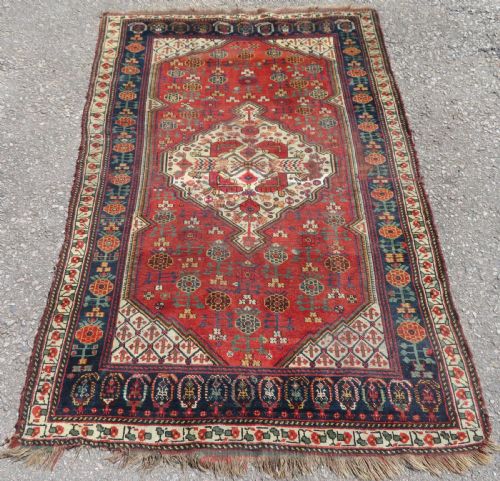
Buyers encountering this selection will frequently find formats featuring tribal motifs including peacocks, animal figures, and the characteristic morghi or chicken designs. Such patterns define the visual identity associated with the search phrase.
What varies in quality
The fineness of the knotting and the density of the wool foundation separate standard utility pieces from finer tribal works. Superior execution ensures greater structural integrity and longevity.
Clarity and complexity of the design motifs influence the standing of an individual carpet. Well-defined tribal symbols and balanced composition demonstrate higher standards of weaving skill.
Listings span production dates from 1870 through the 1920s, featuring wool, cotton, and natural dyes.
The Traditional Khamseh Rug Glossary
- Khamseh Confederacy
- A coalition of five distinct tribes in South-West Persia whose weavers produced distinctive tribal rugs. This confederation included groups such as the Basseri and Baharlu.
- Morghi
- A traditional tribal motif depicting small birds, frequently referred to by collectors as chicken designs. These stylised figures appear regularly across South Persian carpets.
- Bag Face
- The front panel of a utilitarian nomadic storage bag converted into a small rug format. These pieces display concentrated tribal patterns.
- Kelleh
- A long, narrow format of Persian carpet traditionally suited for specific room proportions. This rectangular shape allows for extended repeating medallion or field designs.
- Natural Dyes
- Plant and mineral based colourants utilised before the introduction of synthetic alternatives. These substances produce the characteristic mellow tones visible in antique textiles.
Traditional Khamseh Rug: Frequently Asked Questions
What is a traditional khamseh rug?
A traditional khamseh rug is a hand-woven textile created by the nomadic and confederated tribes of South-West Persia. These pieces incorporate distinctive geometric patterns and animal motifs.
They serve as historical examples of tribal craftsmanship from the nineteenth and early twentieth centuries, prized for their regional character.
How do I identify a tribal design?
Tribal designs are characterised by repeating geometric patterns, stylised animal figures, and regional motifs such as chickens or peacocks. These elements reflect the cultural heritage of the weavers.
Unlike urban workshop carpets, tribal pieces display spontaneous layout variations and local dye palettes specific to the producing tribe.
Where were these rugs made?
These rugs were made in the Fars Province of South-West Persia by nomadic and village weavers belonging to the Khamseh confederacy. Specific sub-tribes included the Arab-Jabbareh, Basseri, and Baharlu.
The environment and local resources of this region directly influenced the materials and dyestuffs utilised in each carpet.
How do I care for an antique rug?
An antique rug requires gentle maintenance, including regular vacuuming without a beater bar and professional cleaning when necessary. Avoiding direct sunlight helps preserve the natural dyes.
Placing a suitable underlay beneath the carpet prevents excessive friction and movement on hard flooring surfaces.