
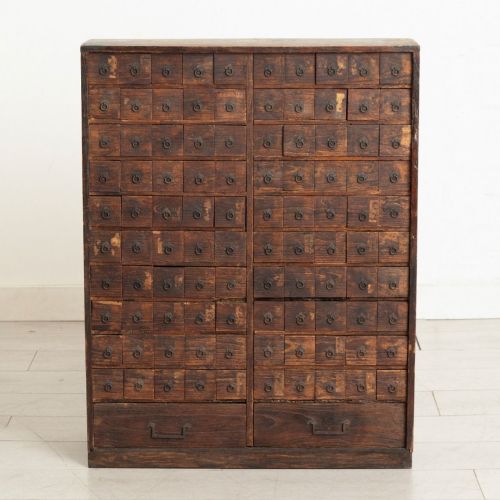


Traditional Japanese Cabinet
A traditional japanese cabinet brings architectural timberwork and meticulous joinery into a modern room, offering clever storage with historic character.

Traditional Japanese Cabinet
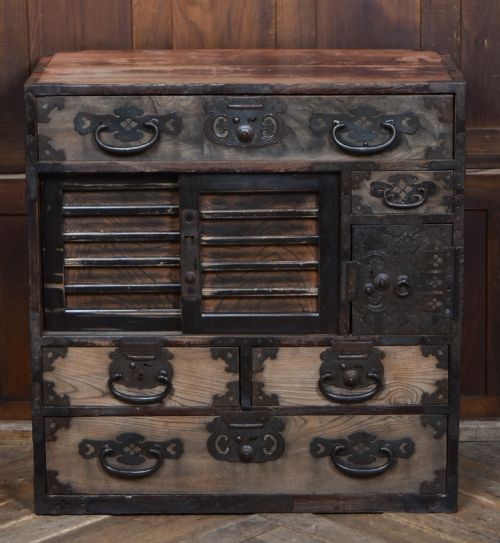
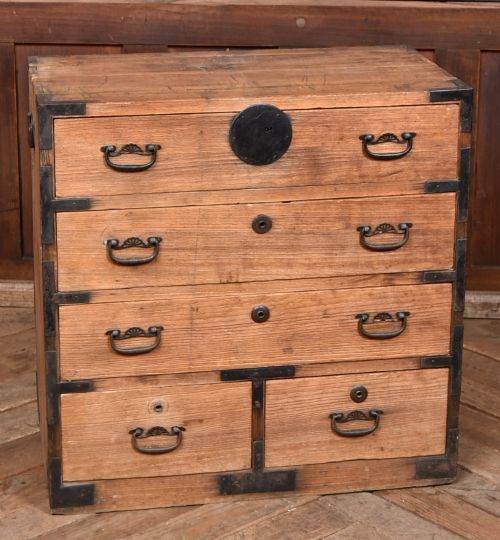
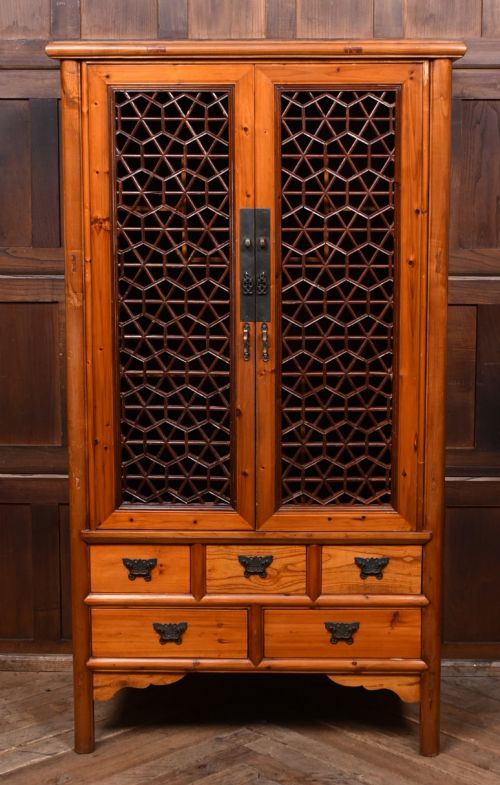
A traditional japanese cabinet encompasses robust tansu chests, kitchen cupboards, apothecary banks of drawers, and stepped storage units originating from the nineteenth and early twentieth centuries. These pieces reflect the functional domestic and commercial storage needs of their period, spanning the Meiji and Taisho eras.
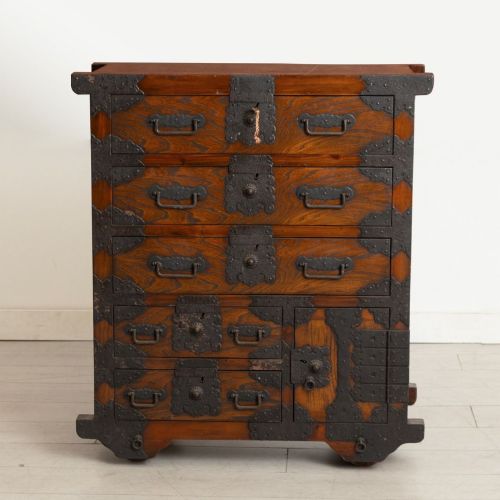
Materials range from cedar and keyaki to zelkova wood, sometimes finished with red lacquer or complemented by iron hardware. The construction prioritises practical organisation through varied drawer arrangements and enclosed compartments.
Materials and construction
These items rely on native timbers such as cedar, elm, kiri, and zelkova wood, selected for their grain and durability. Joinery techniques connect these wooden elements without relying on modern fasteners, allowing the timber to adjust to seasonal humidity.
Iron fittings, hinges, and lock plates reinforce the structural corners and drawer fronts of tansu chests and storage cabinets. Surfaces receive finishes including red lacquer or natural wood treatments that highlight the character of the grain.
Listings feature nineteenth and early twentieth century Japanese items, predominantly tansu chests, storage cabinets, and imari porcelain plates.
Craftsmanship and hardware
Superior examples display crisp joinery where timber panels fit precisely without distortion, while lesser pieces show gaps or excessive shrinkage over time. The structural integrity of the internal framing and the stability of the drawers dictate the grade of a tansu or cabinet.
The complexity and preservation of iron hardware, including hand-forged corner brackets and lock plates, separate standard utility items from finer workshop output. Original surface treatments, such as intact red lacquer or well-maintained wood patination, elevate the standing of a piece.
The Traditional Japanese Cabinet Glossary
- Tansu
- A traditional mobile chest or cabinet used for storage in Japanese domestic interiors. These pieces typically feature multiple drawers and iron mountings.
- Zelkova
- A hardwood native to Japan, prized for its dense grain and strength in cabinetmaking. It is often utilised for the front panels of high-grade chests.
- Imari
- A style of Japanese porcelain featuring blue, iron red, gold, and green pigments. These decorative plates and chargers frequently appear alongside historic furniture.
- Meiji
- A historical period spanning from 1868 to 1912, characterised by opening trade and refined craftsmanship. Many surviving wooden cabinets and decorative plates originate from these decades.
- Keyaki
- The Japanese term for zelkova timber, commonly cited in descriptions of merchant chests and storage cabinets. Artisans select this wood for its durability and prominent grain pattern.
Traditional Japanese Cabinet: Frequently Asked Questions
How do I care for antique wood?
Maintain stable indoor humidity levels and keep wooden cabinets away from direct heat sources to prevent the timber from splitting. Dust regularly with a dry cloth and avoid harsh chemical polishes.
Allow the natural patination of the cedar or zelkova wood to develop without heavy wax applications.
What is a mizuya?
A mizuya is a traditional Japanese kitchen tansu utilised for storing utensils, dried goods, and culinary equipment. These storage cabinets feature a combination of sliding doors and multiple drawers.
They reflect the domestic organisation of nineteenth-century households and showcase practical compartmentalisation.
How do I date these pieces?
Dating relies on construction methods, timber choice, and stylistic markers associated with the Meiji and Taisho periods. Nineteenth-century examples often display hand-forged iron hardware and native softwoods or hardwoods.
Makers incorporated specific regional joinery traditions that evolved across the decades.