
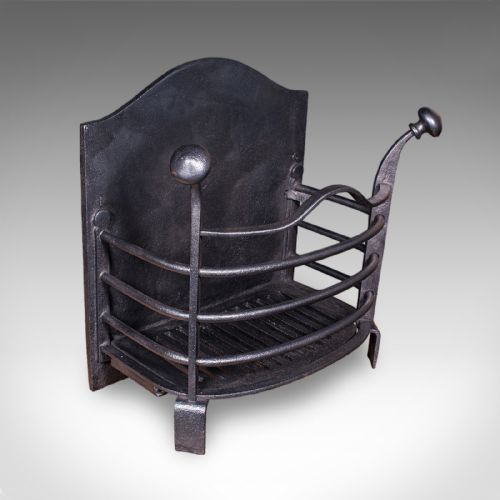
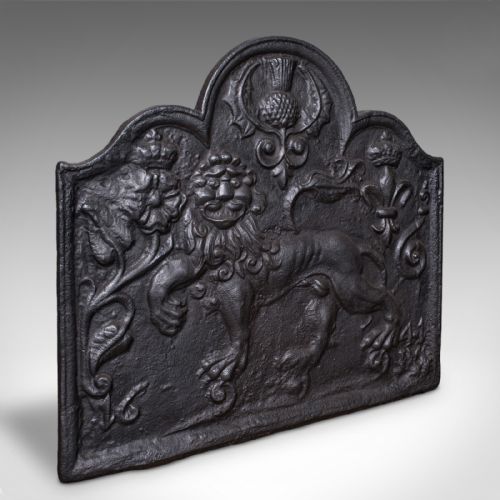
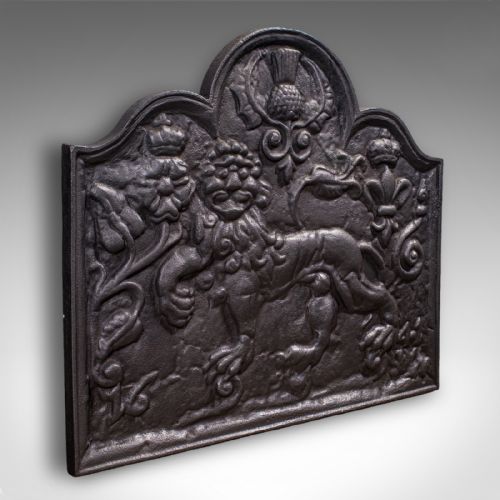


Traditional Iron Fireback
These traditional iron fireback pieces protect the hearth wall while throwing heat forward into the room.
Traditional Iron Fireback
A traditional iron fireback stands at the rear of an open hearth to absorb heat and radiate it back into the living space. When you search for this phrase, you will find items spanning the 17th century through the Victorian era up to 1900.
The selections on this page include plain relief panels alongside pieces paired with grates, fenders, and andirons. Victorian interpretations frequently draw upon Carolean, Tudor, and Neoclassical revival styles.
Forms range from compact plates to heavy architectural items designed for large hearths. English examples dominate the selection, often functioning as fireplace reflectors.
Materials and construction methods
Foundries produced these objects primarily in cast iron, utilising moulds to impress decorative motifs directly into the molten metal. Some heavier assemblies incorporate wrought iron elements and brass components.
Relief casting allowed makers to impart distinct pictorial details, such as the Tree of Life pattern or heraldic emblems, into the face of the plate.
Current listings feature items spanning the 17th century through the Victorian period, constructed in cast iron, wrought iron, and brass.
Evaluating the standard of execution
Thickness and weight distinguish standard utilitarian plates from substantial decorative castings. Heavier metal absorbs thermal stress better and retains heat longer.
The crispness of the moulded relief work dictates visual refinement. Finer examples display sharp borders and clear pictorial depth rather than softened outlines.
The Traditional Iron Fireback Glossary
- Fireback
- A heavy metal plate placed against the back wall of a fireplace. It protects the masonry from excessive heat.
- Andirons
- Horizontal metal bars supported by vertical legs, placed in a hearth to hold burning logs. They often accompany firebacks in larger fireplace assemblies.
- Register grate
- A metal fireplace frame incorporating a movable flap or valve to regulate the draught. These units combine the fireback and grate into a single apparatus.
- Fire basket
- An open container made of iron bars designed to hold fuel within the hearth. Some configurations integrate a fixed back plate directly into the basket frame.
Traditional Iron Fireback: Frequently Asked Questions
What is a traditional iron fireback used for?
A traditional iron fireback serves to shield the brickwork at the back of an open hearth from the direct impact of flames. It also absorbs thermal energy during a fire and radiates that warmth out into the room long after the embers die down.
Many period examples also function as decorative focal points within the fireplace. Their relief designs catch the flickering light of the hearth.
How do I know the period of a fireback?
Dating relies heavily on stylistic clues, such as revival motifs or heraldic details that point to Victorian, Georgian, or earlier 17th-century aesthetics. Documentation or foundry marks, where present, help confirm the era of manufacture.
Construction methods also provide context, as older pieces often display heavier casting techniques and distinct surface textures from sand moulds.
Can I install a fireback in a modern fireplace?
Most firebacks sit upright against the rear brick or refractory panels of an open hearth, secured simply by their own substantial weight. You should measure the back of your fireplace opening carefully to ensure the plate fits without obstructing the flue or grate.
Heavier examples may require adequate hearth depth and stable placement alongside andirons or fire baskets.
Do firebacks require special maintenance?
Routine care involves brushing away ash and soot after use to prevent moisture retention against the metal. A light application of grate polish or oil helps protect the iron surface from rust during warmer months when the fireplace sits unused.
Avoid using harsh chemical cleaners that can strip the dark patina accumulated from years of wood smoke.