


Hearth Reflector
These hearth reflector pieces project warmth into the room while protecting the masonry behind the flame.
Hearth Reflector
A hearth reflector serves to bounce heat away from the chimney back and out into the living space. Most examples found here date from the Victorian period, alongside earlier Georgian and Regency pieces.
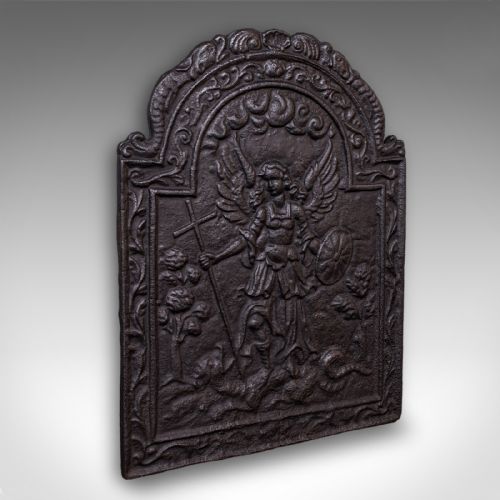
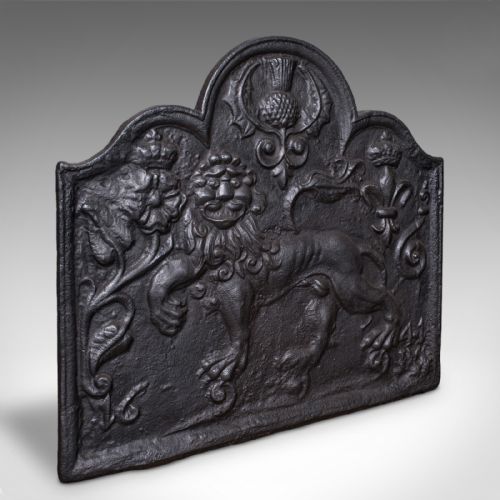
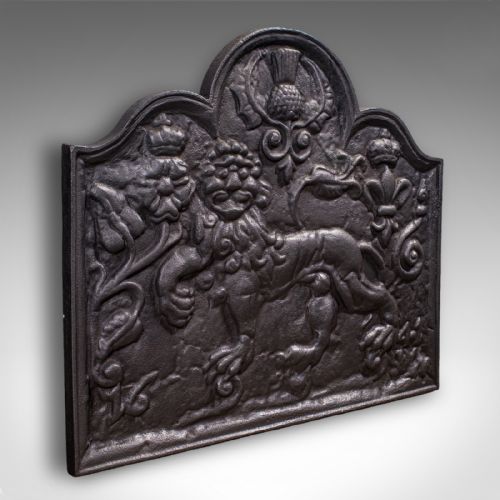
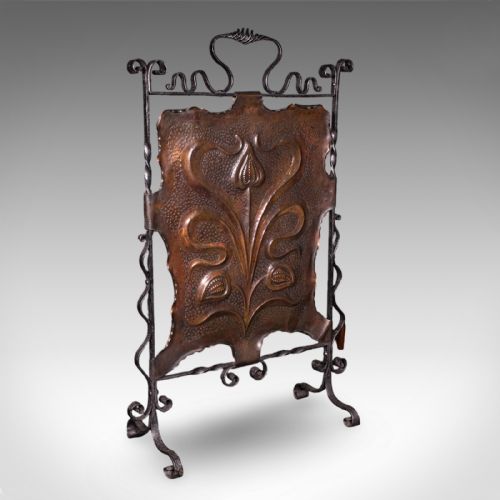
The inventory covers several distinct forms, including heavy cast iron fire backs, copper fire screens, and pole screens with embroidered panels or glass. These items originate predominantly from English workshops, with occasional French examples.
Makers utilised various decorative vocabularies, ranging from Neoclassical Revival and Carolean Revival to Art Nouveau and Gothic styles. Buyers select these items to anchor a period fireplace installation.
Materials and Construction
Cast iron forms the foundation of the heavy fire backs, often cast in relief with motifs such as the Tree of Life. Iron plates withstand intense hearth temperatures while absorbing and radiating thermal energy.
Copper and wrought iron appear in screen formats, sometimes paired with textiles, silk, or giltwood frames. Pole screens incorporate adjustable glass or fabric panels to block heat directly from the user's face.
Foundries and metalworkers employed sand casting for the iron plates, achieving crisp relief details. Joinery on the pole screens and frames relies on traditional cabinet-making techniques suited to domestic interiors.
Public houses once utilised heavy iron plates to keep patrons warm while enduring drafty taproom hearths.
Assessing Quality and Character
Quality reveals itself in the crispness of the cast relief work and the thickness of the metal plates. Finer iron backs display deep, well-defined moulding without distortion from repeated thermal expansion.
In screen formats, the integrity of the frame and the quality of the materials dictate the standard. Giltwood, carved wood, and hand-embroidered panels denote elevated domestic commissions compared to utilitarian items.
Weight and metal density distinguish substantial installations from lighter alternatives. Age and authenticity of surface patination further separate standard examples from superior survivals.
The Hearth Reflector Glossary
- Fire back
- A heavy metal plate placed at the back of an open hearth to protect the wall and reflect heat. These often feature heraldic or botanical relief designs.
- Pole screen
- A standing fireside screen with an adjustable panel mounted on a vertical pole. They allowed occupants to shield their faces from radiant fireplace heat.
- Giltwood
- Wood that has been treated with a thin layer of gold leaf. This finish appears on finer Regency and Victorian frames.
- Relief
- Sculptural projection from a flat background surface. Cast iron fire backs utilise this technique to display pictorial scenes and motifs.
- Carolean Revival
- A Victorian design style inspired by the late seventeenth-century restoration era. It incorporates rich carving and ornate symmetry.
Hearth Reflector: Frequently Asked Questions
How do I install a hearth reflector?
Heavy iron fire backs simply stand upright against the rear masonry of an open fireplace, often supported by small feet or leaning at a safe angle.
Lighter screen reflectors stand freely on the hearth floor or beside the opening, requiring no permanent masonry fixing.
Can I use these with a modern fire?
Cast iron fire backs function safely behind modern gas fires or traditional wood-burning hearths, provided dimensions match the firebox.
Fragile screen formats containing silk or glass should remain positioned further back to avoid excessive heat damage.
What is the difference between iron and copper reflectors?
Iron fire backs sit directly inside the fireplace recess to absorb and radiate heat from the flames while protecting the brickwork.
Copper and textile screens stand outside the fireplace opening to shield occupants from direct radiant heat.
How do I date a cast iron fire back?
Stylistic clues such as Gothic revival motifs, Art Nouveau curves, or Neoclassical symmetry point toward Victorian manufacturing dates.
Heavier, simpler plates often correspond to Georgian or public house utility designs from around eighteen hundred.