


Vintage Cast Iron Fireback
These heavy vintage cast iron fireback pieces protect masonry and radiate hearth warmth, built to anchor a room.
Vintage Cast Iron Fireback
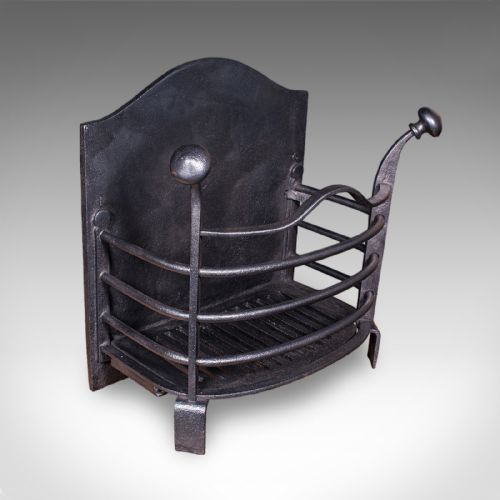
A vintage cast iron fireback sits against the rear wall of a hearth to absorb and reflect heat while protecting the brickwork. Buyers examining this page will find heavy iron panels originating mainly from the Victorian and Georgian periods, alongside pieces styled after the seventeenth century.
Forms vary from simple rectangular plates to arched tops and integrated sets featuring grates and fenders. English and French examples dominate, often functioning simultaneously as decorative fireplace reflectors behind burning logs.
How they were made
These items rely entirely upon cast iron, poured into sand or open moulds to achieve thick, durable plates capable of withstanding intense hearth temperatures. The resulting metal supports detailed surface ornamentation without losing structural integrity under heat.
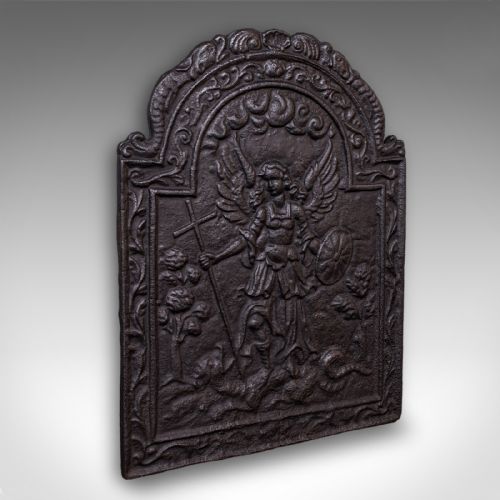
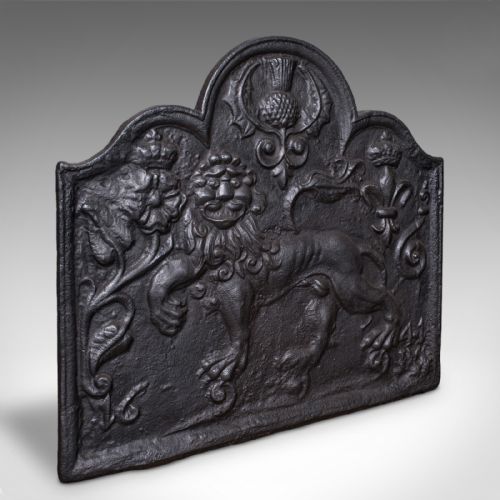
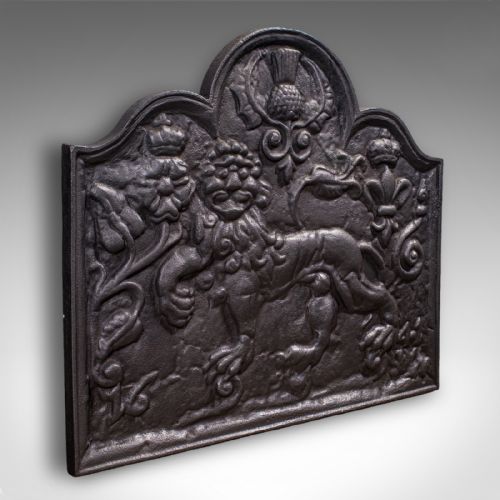
Moulds captured intricate relief designs ranging from heraldic motifs to neoclassical revival patterns and tree of life imagery. Artisans worked the molten metal to produce solid, heavy panels designed for long service inside active chimneys.
Some heavy iron plates double as silent witnesses to centuries of hearthside gossip.
What varies in quality
Quality rests in the crispness of the cast relief work and the thickness of the iron plate. Finer pieces display sharply defined figures, such as armour and eagles or heraldic emblems, whereas simpler utility plates remain plain.
The weight and solidity of the casting dictate durability, with heavier examples offering superior heat retention and structural substance. Complete sets incorporating matching grates and fenders represent a more substantial hearth arrangement.
The Vintage Cast Iron Fireback Glossary
- Fireback
- A heavy metal plate placed at the back of an open fireplace. It protects the masonry wall and reflects warmth forward into the room.
- Fireplace reflector
- An alternative descriptor for a fireback, highlighting its primary functional role in throwing heat back from the hearth. These plates redirect radiant energy that would otherwise be absorbed by brickwork.
- Neoclassical revival
- A stylistic influence seen in nineteenth-century decorative arts, drawing upon classical Greek and Roman motifs. Pieces in this style utilise symmetrical urns, swags, and formal geometric framing.
- French baroque
- A decorative style characterised by exuberant ornamentation, dramatic curves, and grand theatrical themes. In hearth ironwork, this translates to elaborate armorial bearings and martial imagery.
- Relief
- A sculptural technique where figures and patterns project from a flat background. Cast iron firebacks utilise high and low relief to create depth within the mould.
Vintage Cast Iron Fireback: Frequently Asked Questions
What is a fireback used for?
A fireback protects the rear brick or stone wall of an open hearth from direct heat damage. It also absorbs thermal energy during a fire and radiates that warmth back into the room long after the flames die down.
Beyond practical heat management, these heavy iron panels serve as a decorative focal point within the fireplace. They transform a dark recess into a detailed display of period metalwork.
How do I install a fireback?
Most firebacks simply stand upright against the back wall of the fireplace hearth, often tilted slightly backward for stability. Their substantial weight usually keeps them securely in place behind the burning logs.
For pieces sold alongside grates and fenders, position the main plate behind the grate before laying any fuel. Ensure the hearth floor is level and capable of supporting heavy cast iron.
How do I tell Victorian firebacks apart from Georgian ones?
Georgian firebacks typically date around the turn of the nineteenth century and often feature simpler, heavier utilitarian casting. Their surfaces lean toward straightforward decorative panels rather than revivalist pastiche.
Victorian examples frequently display specific stylistic revivals, including Gothic elements, neoclassical motifs, and tree of life patterns. Manufacturers during this later era produced diverse relief designs ranging from English church refectory styles to French armorial themes.