



Traditional Highland Landscape Painting
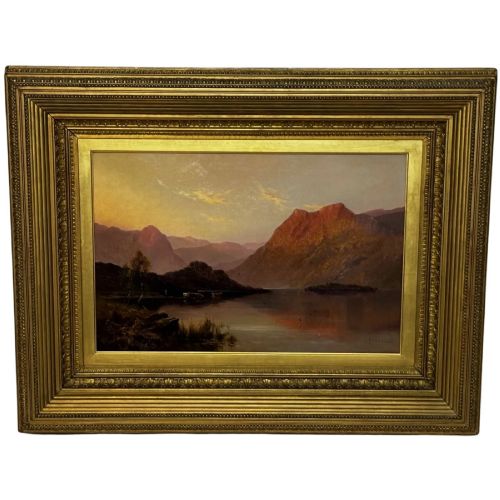
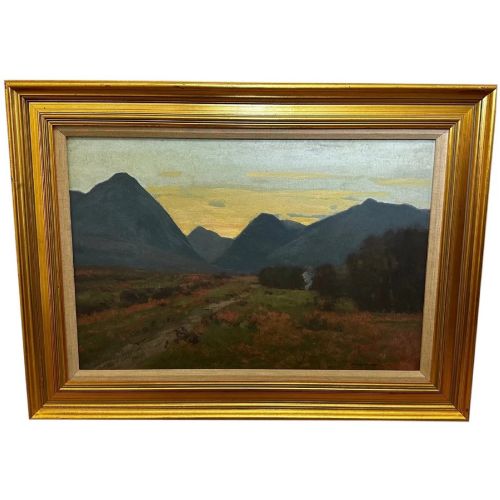
A traditional highland landscape painting captures remote mountain terrain and misty lochs, bringing nineteenth-century Scottish atmosphere straight to the wall.
Traditional Highland Landscape Painting
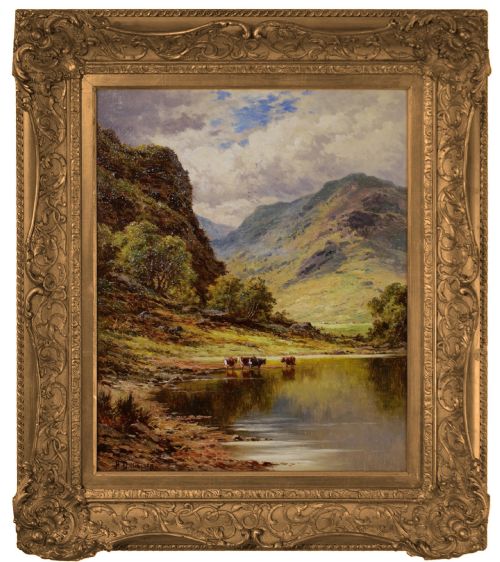
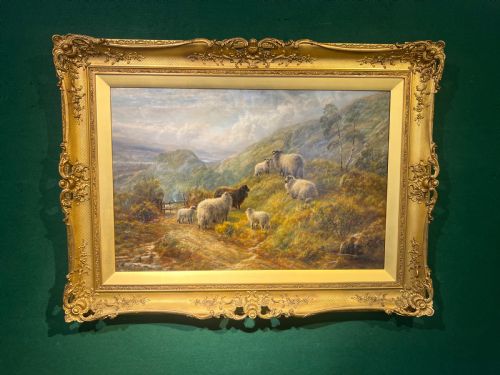
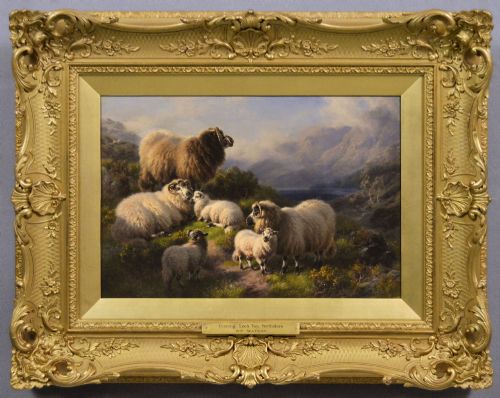
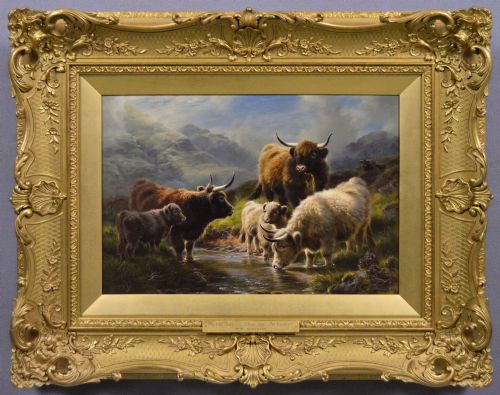
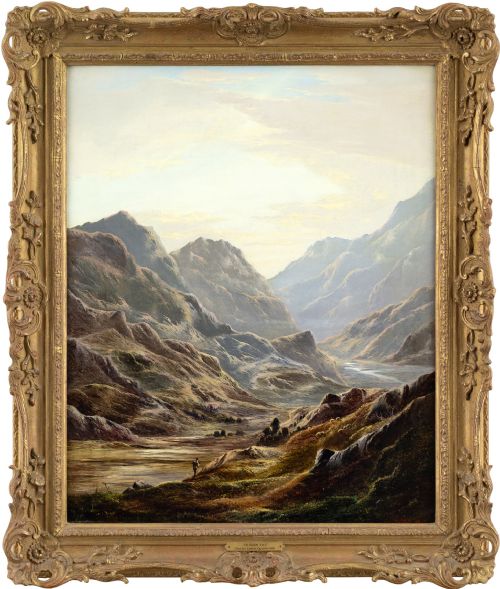
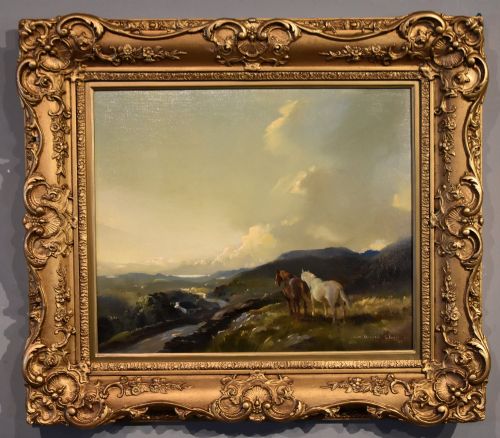
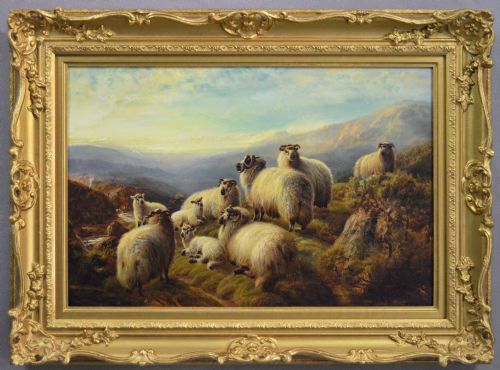
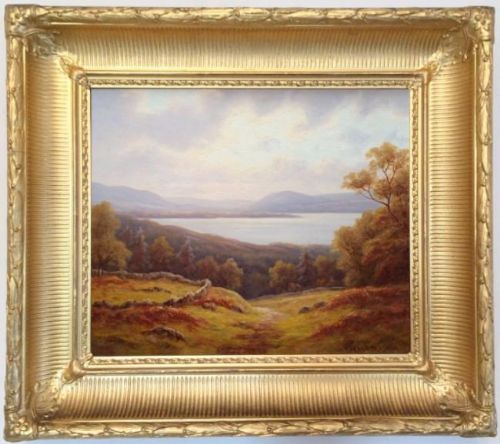
Traditional highland landscape painting centres on the rugged scenery of Scotland, depicting mist-shrouded peaks, serene lochs, and distant glens. Buyers seeking these works encounter framed oil paintings that frequently feature native livestock such as Highland cattle and sheep grazing in remote valleys.
The pieces on this page span the Victorian era into the early twentieth century, reflecting a sustained artistic fascination with dramatic northern topography. Common formats range from intimate wood panels to large canvases, often preserved in original giltwood frames.
Materials and technique
Artists built these compositions primarily using oil paint applied to canvas or wood panels, sometimes employing gouache on paper for works on a smaller scale. Painters layered pigments to capture atmospheric effects like passing showers, morning mist, and evening sunlight over water.
The finished artworks were typically housed in heavy giltwood or gesso frames adorned with ornate moulding. These frames were integral to the presentation, designed to catch candlelight and complement the rich tones of the oil palette.
Frames range from simple wood surrounds to ornate giltwood and gesso constructions dating from the nineteenth and early twentieth centuries.
What separates works within the range
Quality rests upon the artist's ability to render light and atmosphere convincingly, turning a standard topographical record into a compelling visual experience. Superior examples demonstrate confident brushwork that defines the texture of heather, rock, and animal fleece without excessive stiffness.
The integration of livestock or human figures also influences the standing of a piece, as well-drawn cattle or sheep add scale and life to the vast mountain backdrop. Preservation of the original canvas and the survival of the period gilt frame contribute substantially to the integrity of the object.
William Beattie-Brown·Tom Campbell·Alfred Fontville de Breanski·George Houston·Henry H. Parker·Robert Watson·William Watson Jnr·Charles Leslie·Vernon DeBeauvoir Ward·Alexander Wellwood Rattray·Everett Watson Mellor·Archibald Kay·Henry Robinson Hall·William Henry Mander·Henry Hillier Parker·Charles Grant Murray·James Bell Anderson·Sidney Yates Johnson·John Charles Tunnard·Charles Jones·Nasmyth·George Turner·John W Morris·Alfred de Breanski Snr·AJ Thornton
The Traditional Highland Landscape Painting Glossary
- Giltwood
- Wood carved and coated with a thin layer of gold leaf or metallic gilt. It forms the traditional bright border surrounding nineteenth-century canvas paintings.
- Canvas
- A heavy woven fabric stretched tightly across a wooden frame to serve as a support for oil paint. It provides the standard textured surface for Victorian fine art.
- Gesso
- A plaster-like mixture applied to wood frames to create a smooth surface for gilding and moulding. Intricate decorative corners on Victorian frames are typically built from this material.
- Scottish School
- A collective term for artists working in Scotland who shared regional subjects, tonal palettes, and realist or impressionist tendencies. These painters documented domestic topography during the nineteenth and early twentieth centuries.
Traditional Highland Landscape Painting: Frequently Asked Questions
What subjects appear in these paintings?
These works typically depict Scottish mountains, lochs, remote crofts, and misty glens. Herds of Highland cattle or sheep frequently inhabit the foreground near streams or loch shores.
Human figures occasionally appear as drovers or travellers navigating the rugged terrain. Sunset and passing rain showers are recurring atmospheric themes.
How do I date a landscape painting?
Dating relies on stylistic clues, framing techniques, and signatures recorded on the canvas or reverse. Victorian pieces often use heavy gesso frames and tight realist brushwork.
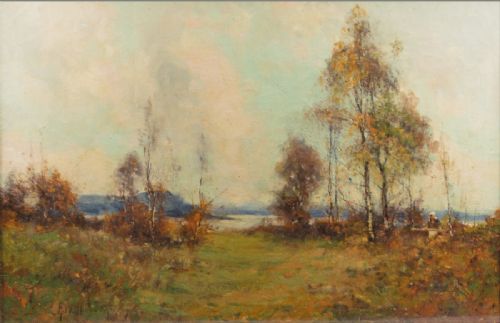
Later works from the early twentieth century may show looser application and brighter palettes associated with Scottish Impressionism. Inscribed stretcher bars and gallery labels also help establish a chronology.
Are these paintings usually signed?
Many examples carry the artist's signature or monogram, typically placed in one of the lower corners. Signatures are sometimes accompanied by dates or location inscriptions.
Unsigned works also appear frequently, often attributed to specific regional schools based on palette and subject matter. Attribution in these cases depends on stylistic comparisons with documented pieces.
How should I hang an oil painting?
Oil paintings on canvas require stable indoor environments away from direct sunlight and fluctuating heat sources. Heavy giltwood frames need secure wall fixings anchored directly into studs or masonry.
Maintaining moderate room humidity prevents canvas slackening and protects the gesso frame mouldings from cracking. Regular dusting with a soft, dry brush keeps the surface clear.