

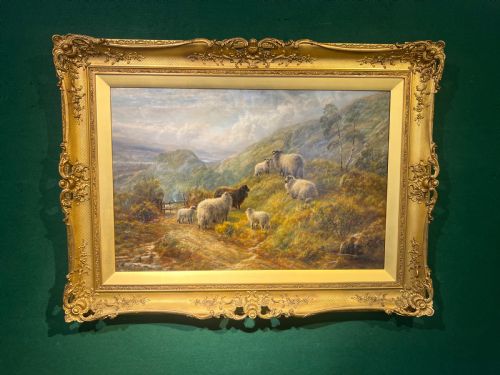
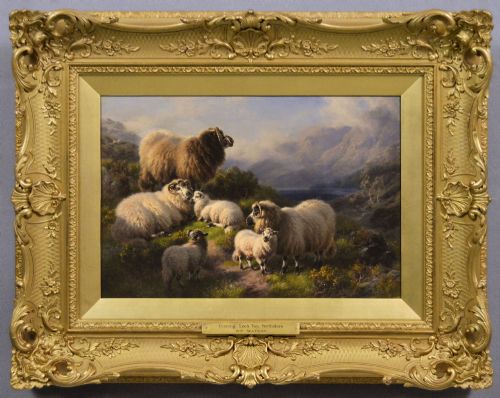
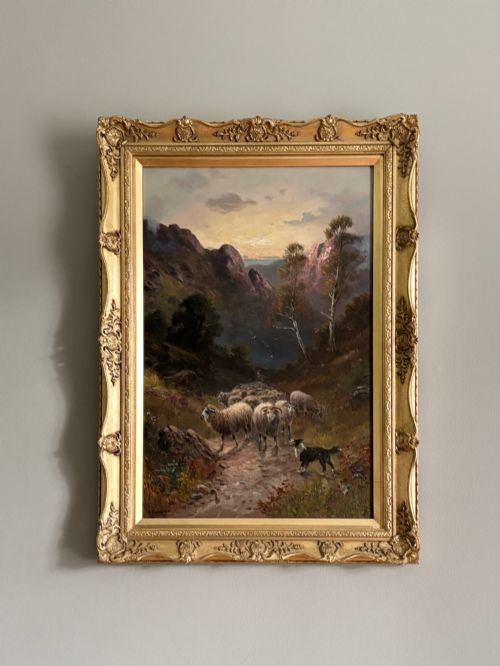
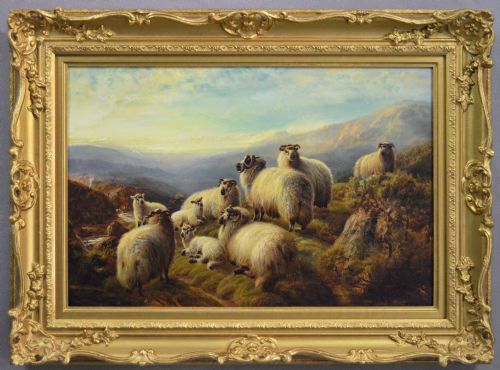


Sheep Landscape Artwork
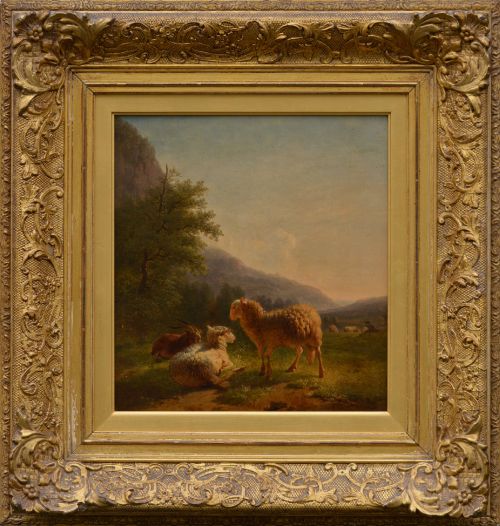
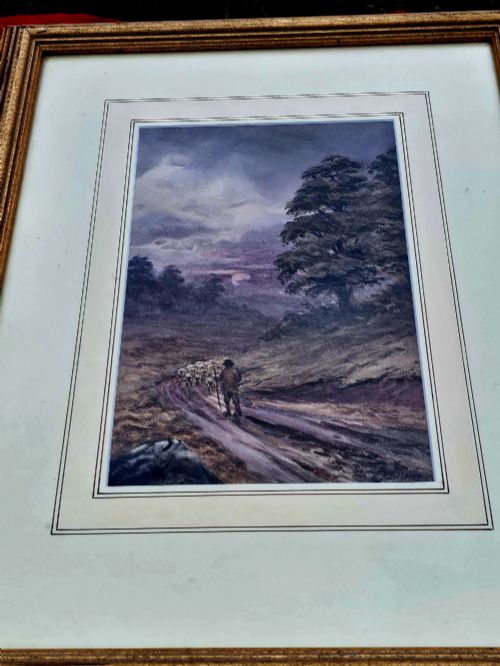
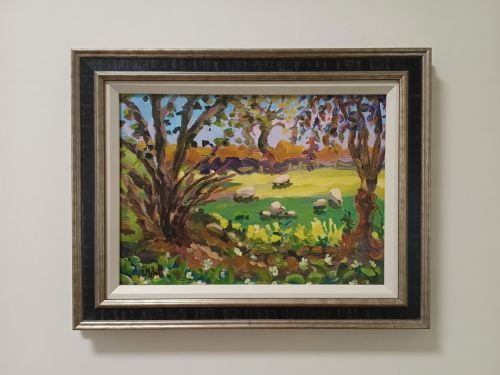
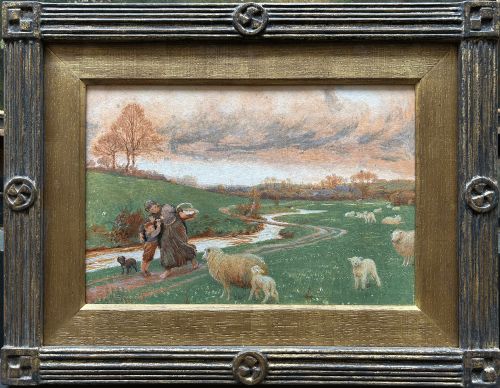
These sheep landscape artwork pieces bring nineteenth-century pastoral scenery into modern rooms through oil and watercolour.
Sheep Landscape Artwork
A sheep landscape artwork captures rural countryside scenes featuring flocks grazing on moors, hills, and riverbanks. The pieces span Victorian and Edwardian periods, stretching from the mid nineteenth century into the mid twentieth century.
Most examples appear as oil paintings on canvas or wood panel, alongside watercolours framed behind glass. Subjects range from Scottish highlands to Welsh valleys and English farmland.
Moorland paths, coastal pastures, and country lanes provide the setting for shepherds, drovers, and their animals. These works combine animal portraiture with naturalistic topography.
How they were made
Painters used oil on canvas, wood panels, and paper, applying pigment with traditional brushwork techniques. Watercolours were worked on paper, often finished with gum arabic to enrich the tones of sky and vegetation.
Surviving works retain their period framing, utilising moulded giltwood and gesso surrounds that match the nineteenth and early twentieth-century origins of the canvases.
Common materials include oil on canvas, wood panel, paper, and giltwood frames.
What varies in quality
The distinction lies in the handling of light and atmospheric perspective across the landscape. Superior works capture the wool texture and anatomical structure of the animals rather than rendering them as uniform white patches.
Compositional balance separates standard decorative pieces from accomplished works by named artists. Stronger paintings integrate the flock into the topography of the hills or valleys rather than placing them as isolated additions.
Eugène Verboeckhoven·Tom Campbell·William Watson Jnr·Cornelius Pearson·Henry Charles Fox·Thomas Sidney Cooper·Franz van Severdonck·Owen Bowen·Robert Watson
The Sheep Landscape Artwork Glossary
- Oil on canvas
- Pigment suspended in drying oil applied to a woven fabric stretched across a wooden frame. This method allowed artists to build rich surface textures and deep tonal ranges.
- Giltwood
- Timber carved and coated with gold leaf or a metallic finish. It forms the decorative border of period frames.
- Gesso
- A paint mixture consisting of a neutral binder mixed with chalk, gypsum, or pigment. It created a smooth base on wooden frame mouldings before gilding.
- Watercolour
- Pigments ground in a water-soluble binder applied to paper. Artists used washes to create luminous sky effects and subtle landscape distances.
Sheep Landscape Artwork: Frequently Asked Questions
What periods do these paintings come from?
The works originate primarily from the nineteenth and early twentieth centuries, spanning the Victorian and Edwardian eras. Later mid-century examples also appear within the selection.
Dates generally range from the eighteen-sixties through to the nineteen-twenties, reflecting changing pastoral art traditions.
Are these paintings executed in oil or watercolour?
The selection includes both oil paintings and watercolours on paper. Oils are typically executed on canvas or wooden panels.
Watercolours are generally mounted behind glass within period frames.
Where do the landscape settings usually originate?
Settings frequently feature Scottish highlands, Welsh valleys, and English countryside locations. Specific regional subjects include Loch Tay, Wharfedale, and various southern coastal lanes.
Artists often recorded named rural spots across Britain and continental Europe.
How should I care for a framed nineteenth-century painting?
Keep works away from direct sunlight and damp environments to protect both the canvas and the original giltwood frame. Maintain stable indoor temperatures to prevent wood panels or canvas from warping.
Dust watercolours behind glass very gently with a dry cloth without applying pressure.