




Traditional Heriz Area Carpet
A traditional heriz area carpet brings durable wool and geometric medallion designs woven in North-West Persia into a room.
Traditional Heriz Area Carpet
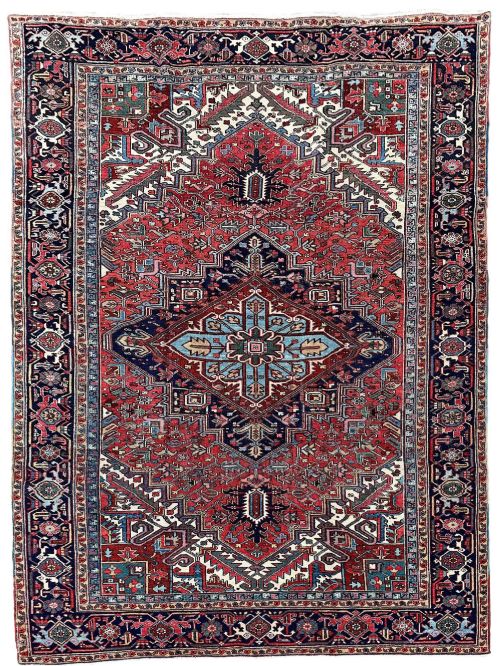
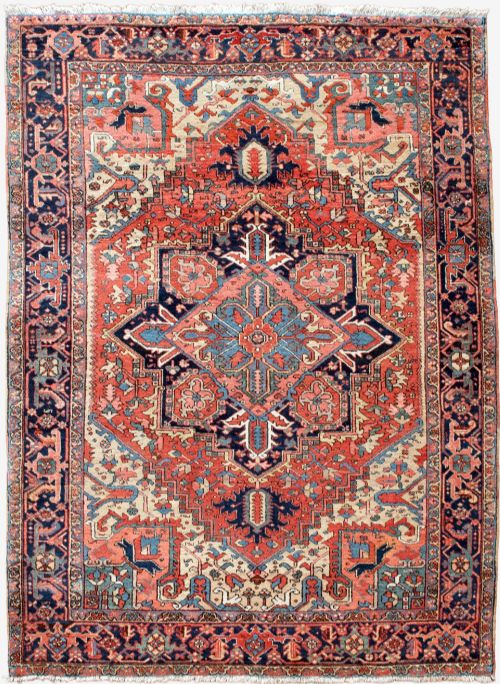
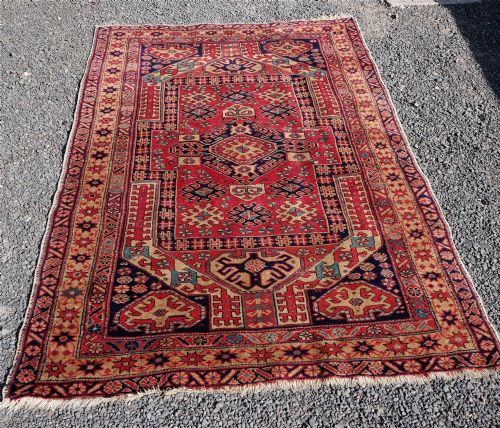
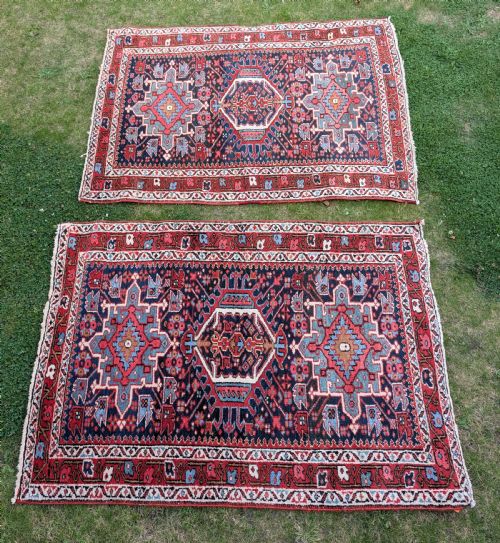
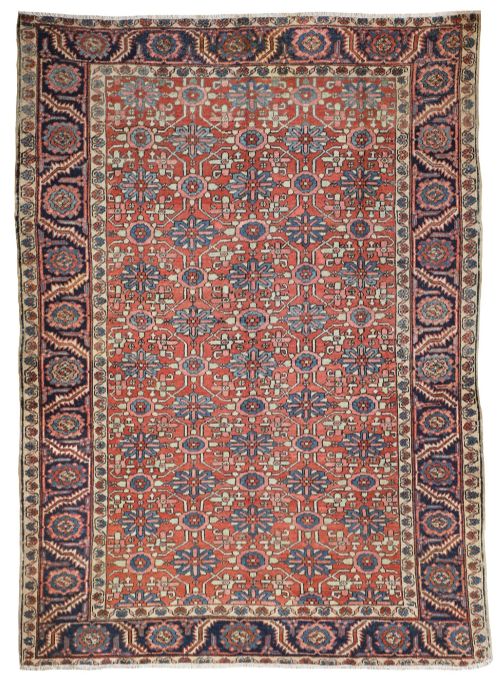
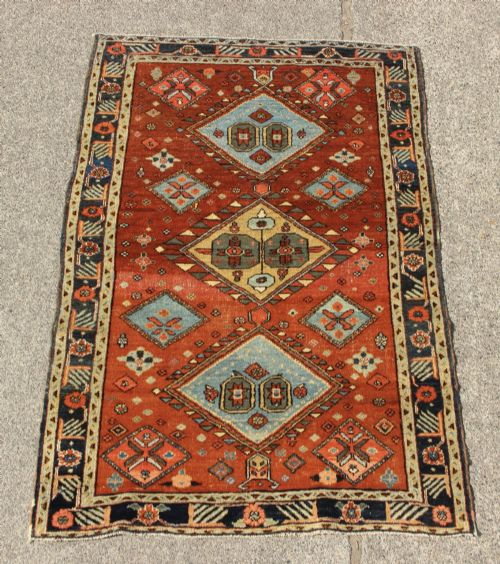
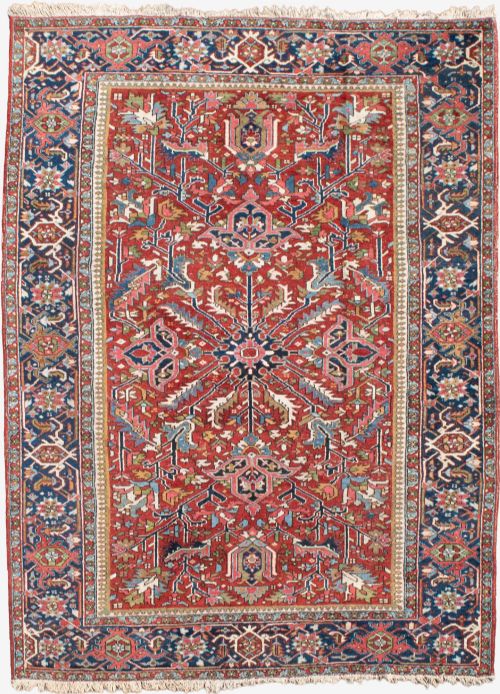
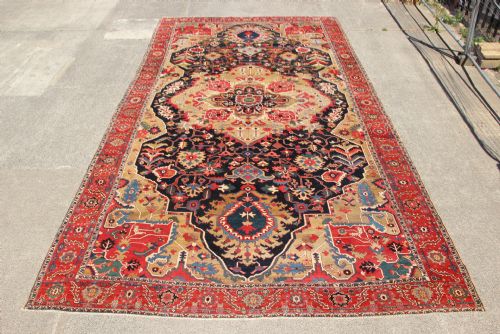
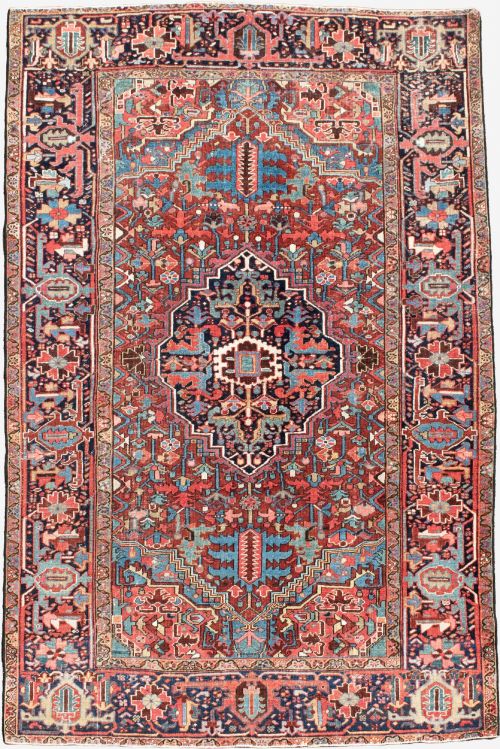
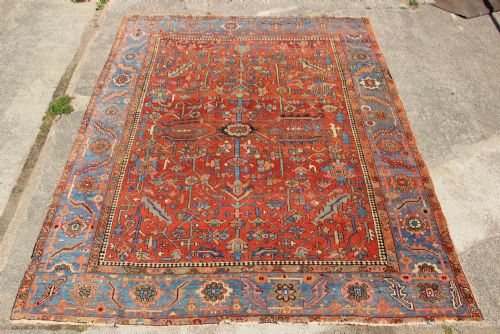
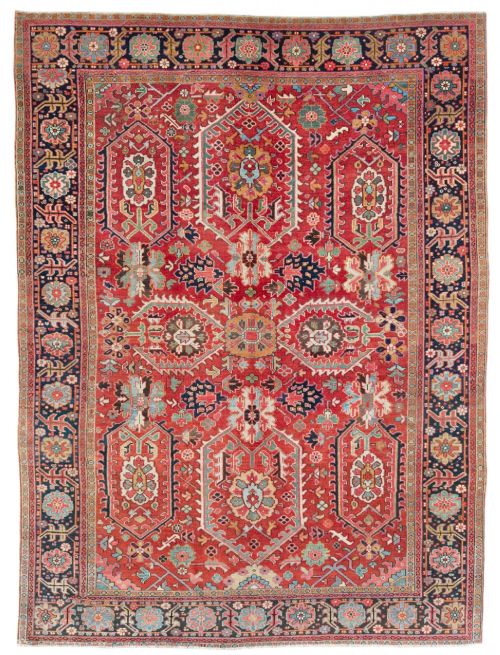
A traditional heriz area carpet is a woven floor covering originating from the Heriz region and wider North-West Persia. These pieces arrive in room-size formats, large carpets, and smaller rug dimensions suited to country houses and domestic interiors. The examples available span production dates from the mid-nineteenth century through to the early twentieth century, encompassing periods from eighteen-eighty to nineteen-thirty.
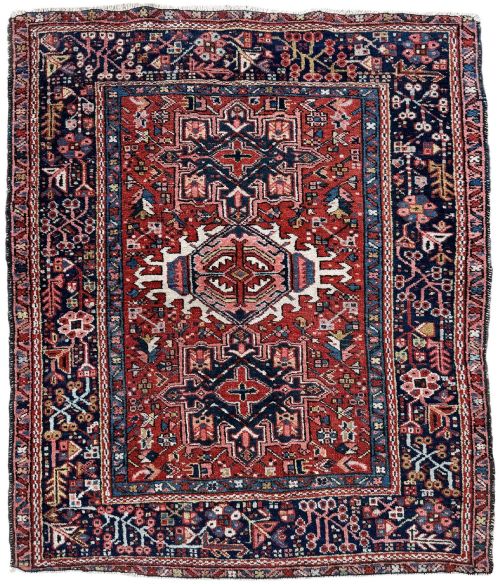
Buyers encounter regional variants alongside core Heriz styles, including Serapi, Bakshiash, Karaja, and Ahar rugs and carpets. Many pieces present distinct geometric centre medallions, ivory grounds, sky blue fields, or colourful all-over designs. The format ranges from compact runner-like dimensions to exceptionally large carpets exceeding six metres in length.
How They Were Made
These carpets are hand-woven utilising wool on cotton foundations, with several listings recording hand-spun wool and cotton warp threads. The traditional construction relies on dense knotting techniques tied onto sturdy warp and weft foundations to withstand heavy daily use. Weavers in North-West Persia employed natural dye sources to achieve the characteristic saturated colours seen across the region.
The materials combine resilient wool surface piles with stable cotton warps that help maintain the structural integrity of large format carpets over decades of wear. Hand-spinning practices create slight irregularities in the yarn texture, contributing to the tactile depth of the pile. This construction method accounts for the long survival rates of carpets produced across the nineteenth and early twentieth centuries.
One remarkably large carpet stretches over six metres in length, requiring a dedicated room just to stretch its geometric legs.
What Varies in Quality
Quality in these woven carpets depends on the fineness of the knot count and the precision executed in the geometric drawing. Finer examples, such as those designated as Serapi, often display more open fields and crisper medallion geometry executed with deliberate artistic control. The handling of secondary motifs and border proportions distinguishes standard regional production from exceptional works.
The vibrancy and retention of the original dye palette heavily influence the visual standing of each piece. Carpets retaining deep, saturated natural colours without excessive fading or harsh chemical washing hold a stronger presence in a room. Additionally, the integrity of the original wool pile across large surface areas separates well-preserved examples from heavily worn specimens.
The Traditional Heriz Area Carpet Glossary
- Heriz
- A region in North-West Persia known for producing durable carpets featuring bold geometric medallions and robust wool piles. These rugs were traditionally woven in village workshops and homes.
- Serapi
- A sub-style associated with older Heriz carpets, typically characterised by coarser knotting, bolder designs, and more open, spacious compositions. Collectors prize these for their early nineteenth-century aesthetic.
- Bakshiash
- A neighbouring North-West Persian weaving origin known for archaic geometric patterns and earthy colour palettes. Pieces from this tradition often pre-date standard Heriz production.
- Karaja
- A village in the Heriz district famous for producing smaller rugs and runners with distinct repeated medallion motifs. They share the sturdy wool construction typical of the wider region.
- Warp
- The vertical threads stretched across the loom that form the foundational skeleton of the carpet. In these pieces, cotton warp threads provide structural stability.
Traditional Heriz Area Carpet: Frequently Asked Questions
How do I style a heriz carpet?
A traditional heriz area carpet anchors a living room, dining space, or hallway by introducing strong geometric patterns and rich natural colours. Pair the carpet with wooden floors and neutral furnishings to let the medallion design stand out as the focal point of the interior.
Consider the scale of the room when selecting dimensions, ensuring enough floor space remains visible around the perimeter. Large room-size formats suit substantial seating arrangements, while smaller formats define compact zones within a larger area.
Are these carpets durable for daily use?
These hand-woven pieces utilise dense wool piles combined with cotton foundations designed to endure heavy foot traffic. The robust construction methods employed by weavers in North-West Persia ensure the textiles withstand decades of domestic life.
Routine care involving gentle vacuuming without rotary brushes helps maintain the wool pile over time. Placing a quality underlay beneath the carpet prevents slipping and reduces friction against hard flooring.
How do I date an antique heriz?
Dating relies on examining the structural materials, dye characteristics, and stylistic evolution visible across the weave. Pieces produced in the nineteenth century often display softer, naturally derived colour palettes and looser knot densities compared to later twentieth-century output.
Regional attributions also provide chronological clues, with certain sub-styles like Bakshaish and early Serapi typically associated with mid-to-late nineteenth-century production. Documentation and historical comparisons help narrow the manufacturing window.
What is the difference between serapi and heriz?
Serapi rugs represent an earlier, finer tradition within the broader Heriz production area, generally dating to the nineteenth century. They are distinguished by more relaxed, spacious geometric compositions and a particularly balanced distribution of colour.
Standard Heriz carpets tend to feature denser, more rigid medallion layouts and slightly heavier knotting. Both share the durable wool-on-cotton construction native to North-West Persia.