





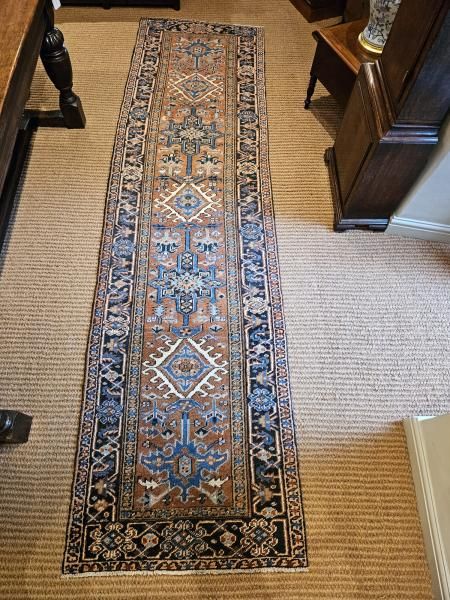
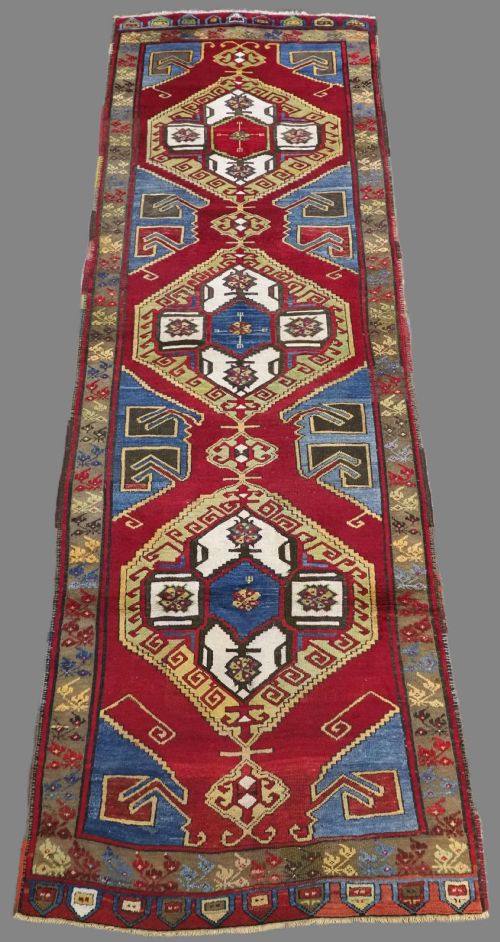

Traditional Hallway Carpet Runner
A traditional hallway carpet runner brings character and linear warmth to narrow spaces through enduring regional patterns.
Traditional Hallway Carpet Runner
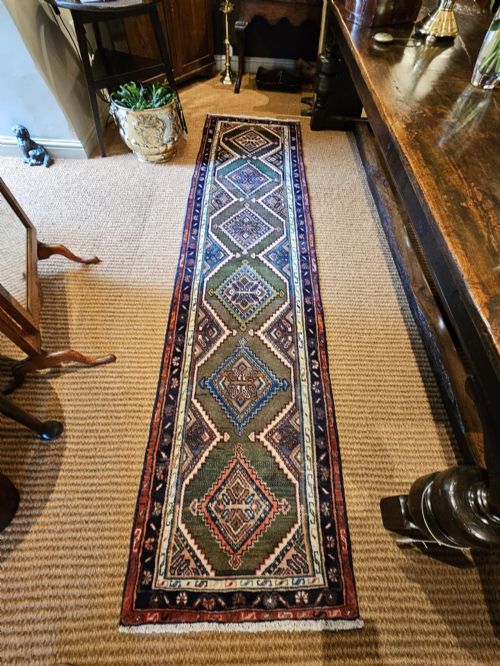
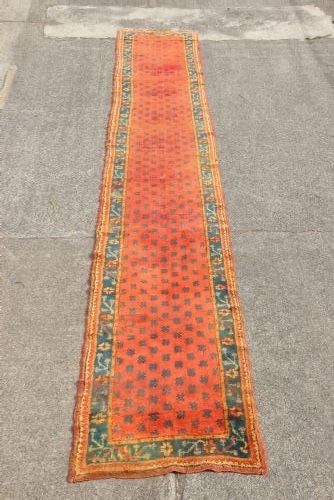
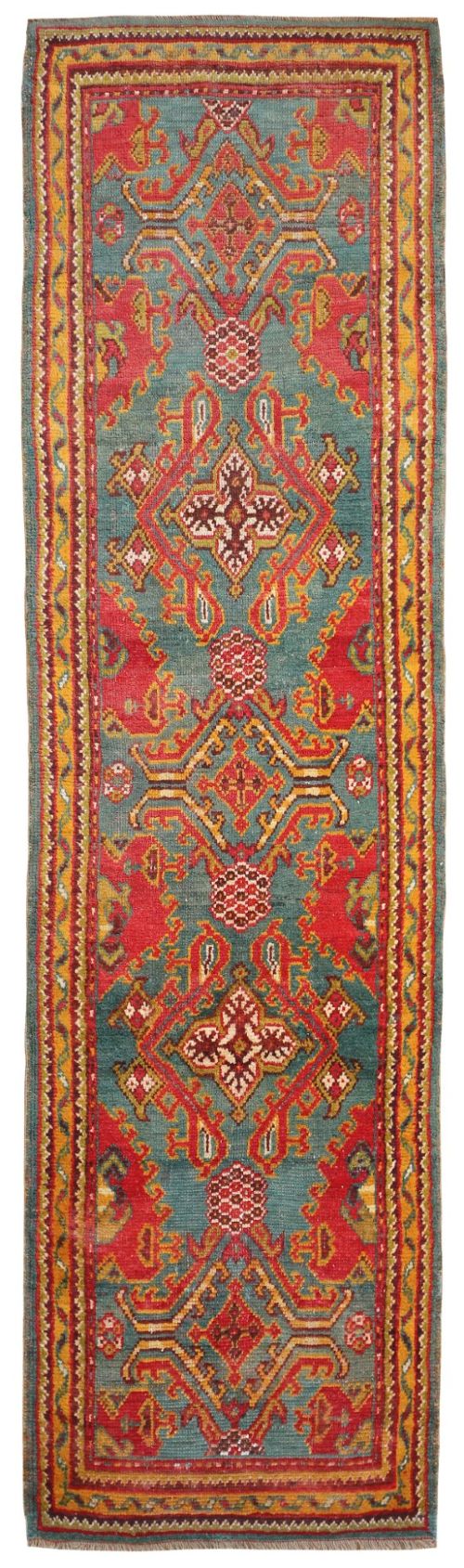
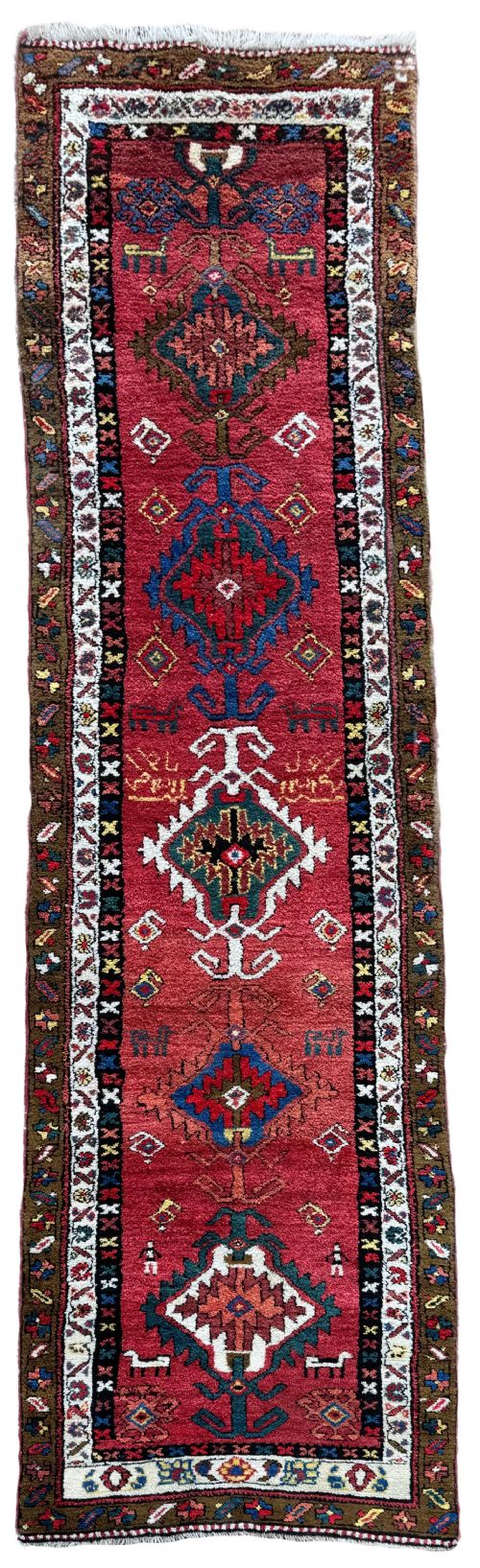
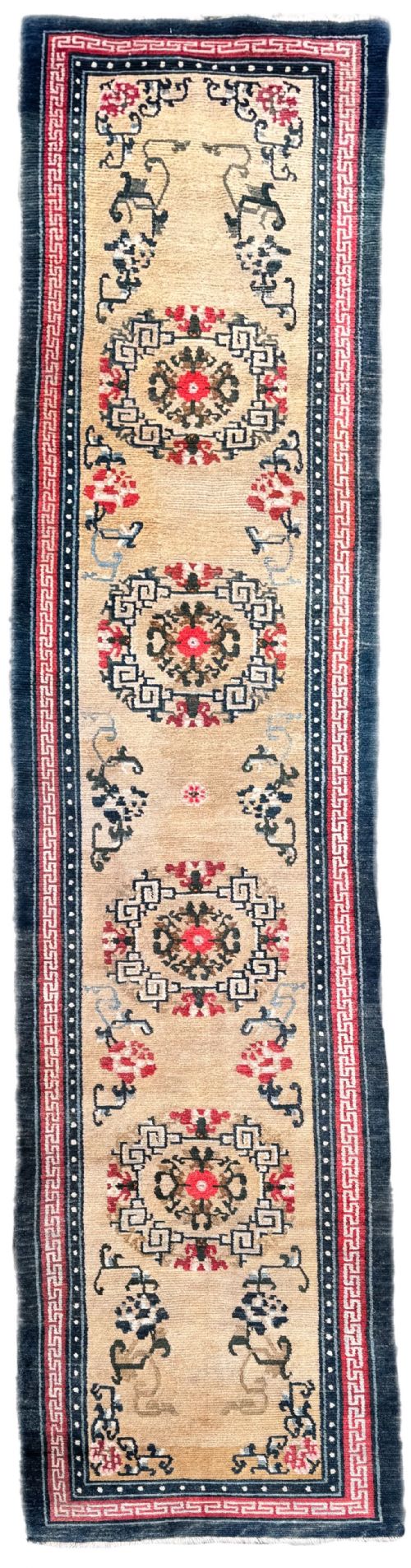
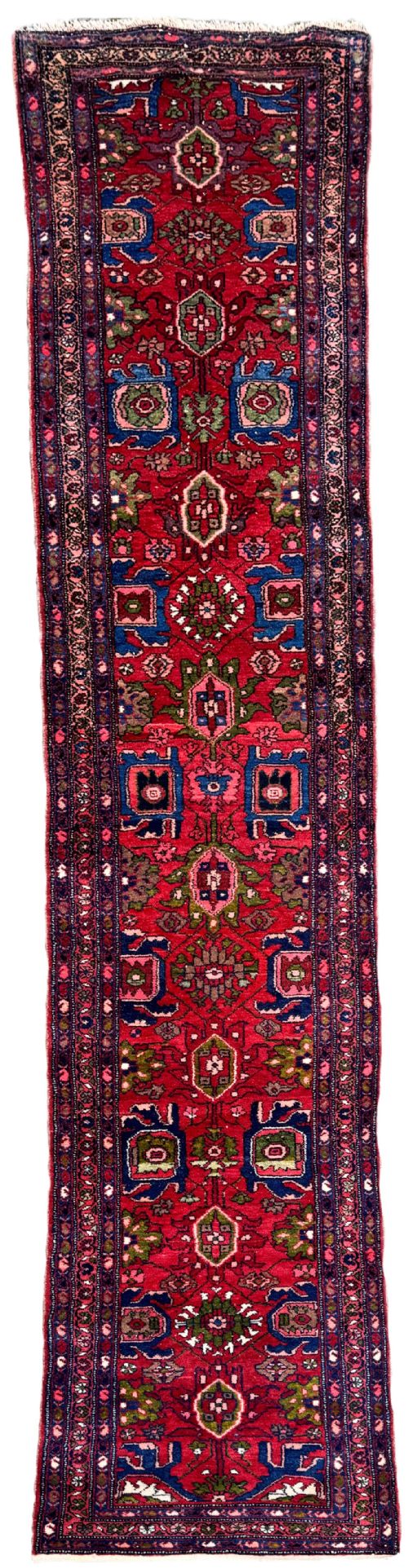
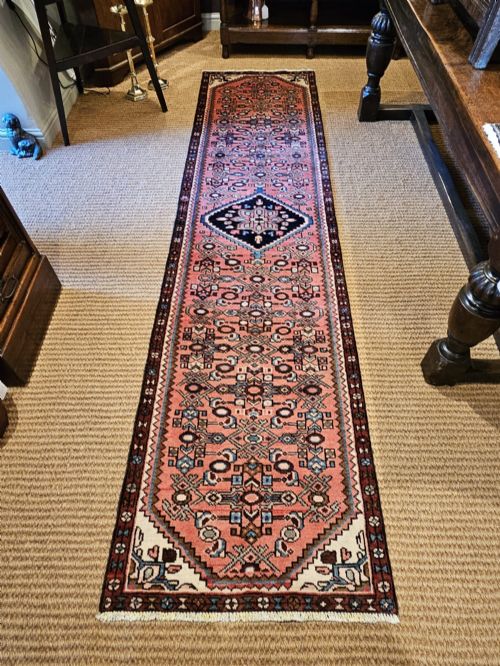
A traditional hallway carpet runner is a long, narrow floor covering designed specifically for corridors, landings, and entrance spaces. These pieces span from the late nineteenth century into the mid twentieth century, originating primarily from Persian, Caucasian, Turkish, and Anatolian weaving traditions.
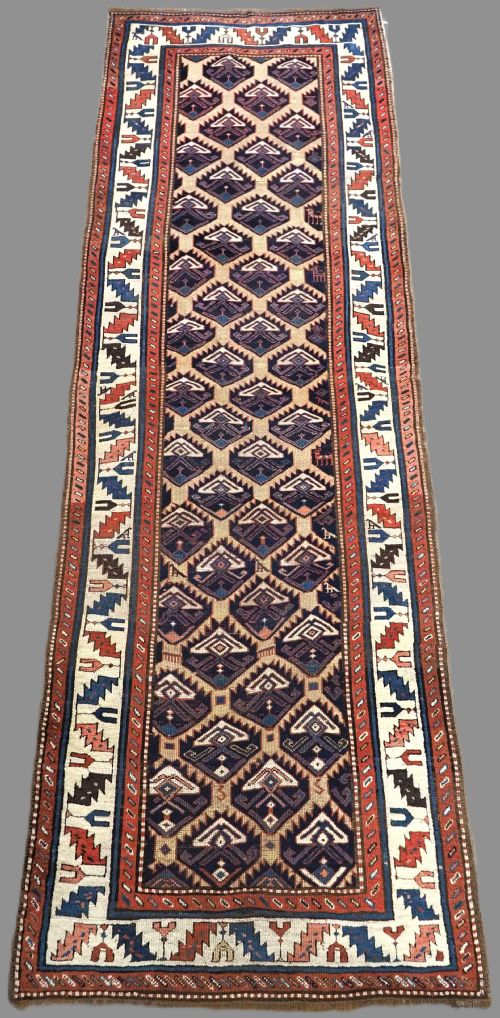
The selections available here emphasise tribal and regional village workshops rather than mass production. You will encounter long, narrow formats featuring geometric layouts, medallion repeats, and distinctive lattice designs suited to extended architectural layouts.
These floor coverings balance utility with distinct regional artistry. Their proportions match the specific spatial demands of corridors while displaying the traditional motifs handed down through generations of weavers.
What varies in quality
Quality rests upon the tightness of the weave and the precision of the knotting technique. Finer knot counts allow for sharper geometric detail and greater durability underfoot.
The depth and harmony of the natural dye palette also define the grade of a runner. Superior examples display rich saturation and subtle tonal shifts that enhance the complexity of the design.
Several examples proudly embrace the description crooked, reminding us that handwoven runners carry the charming imperfections of human hands.
The Traditional Hallway Carpet Runner Glossary
- Runner
- A long, narrow carpet format designed for hallways, corridors, and staircases. Their elongated proportions distinguish them from standard square or rectangular room rugs.
- Pile
- The upright yarn loops or cut ends that form the usable surface of a carpet. In these pieces, the pile is traditionally constructed from pure wool.
- Medallion
- A central ornamental motif placed in the field of a rug. These symmetrical designs anchor the visual composition of many traditional woven pieces.
- Warp
- The vertical threads stretched tightly on a loom before weaving begins. Cotton is commonly utilised for this foundational structure in traditional carpets.
- Weft
- The horizontal threads passed alternately over and under the warp threads to hold the knots in place. This structural element contributes to the rigidity and drape of the textile.
Traditional Hallway Carpet Runner: Frequently Asked Questions
How do I measure for a runner?
Measure the clear floor space of your hallway, leaving an equal margin of exposed wood or tile visible around the perimeter. Ensure doors can swing freely over the thickness of the wool pile.
Take measurements at multiple points along the corridor to account for any irregularities in older walls. A well-fitted runner leaves adequate breathing room at thresholds and architectural junctions.
Are these runners suitable for busy halls?
Traditional runners utilise dense wool piles designed to withstand regular foot traffic in domestic environments. The natural resilience of wool fibres helps them bounce back from daily pressure.
Pairing the runner with a quality underlay prevents shifting and provides additional cushioning against hard floors. This simple addition absorbs impact and extends the working life of the textile.
How do I identify different regional styles?
Regional styles reveal themselves through specific design vocabulary, such as the geometric layouts of Caucasian pieces or the bold medallion arrangements found in Persian Heriz work. Colour palettes also point toward particular origins, from deep navy blues to earthy olive tones.
Examining the structure, edge finishes, and knotting habits helps narrow down whether a piece originates from Anatolia, Persia, or the Caucasus. Each weaving group maintained distinct preferences for symmetry and motif repetition.
How should I clean my antique runner?
Gentle surface cleaning and regular light vacuuming without a beater bar keep dust from settling deep into the wool pile. Professional specialist cleaning is recommended for deep maintenance.
Avoid harsh chemical treatments or excessive water, which can damage natural dyes and weaken cotton foundations. Prompt attention to spills prevents staining while preserving the integrity of the wool.