



Navy Blue Persian Runner
A navy blue persian runner brings deep indigo tones and intricate tribal geometry to a hallway, offering centuries of hand-knotted heritage underfoot.
Navy Blue Persian Runner
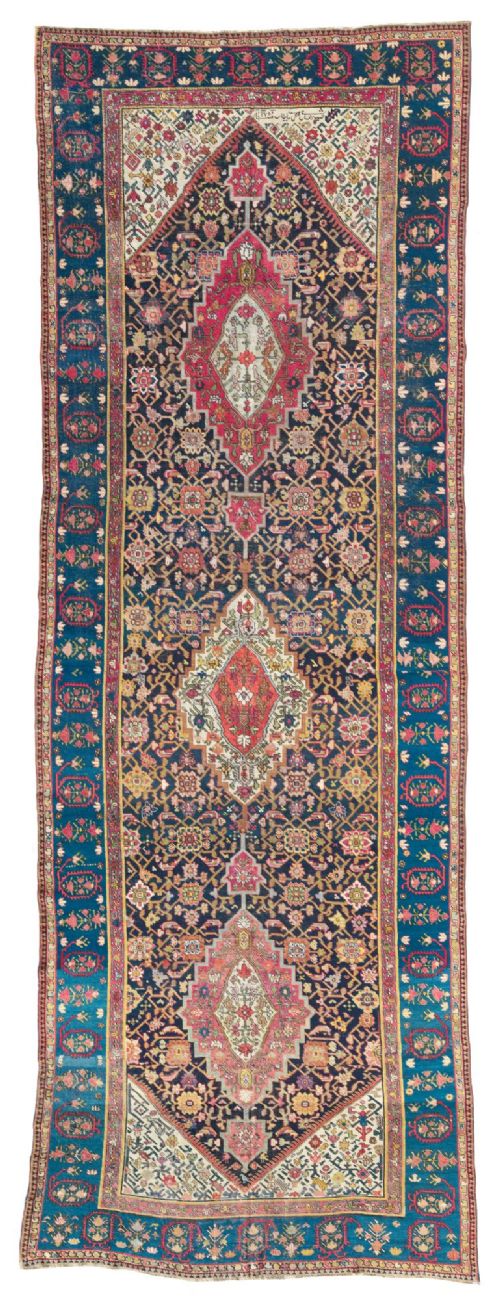
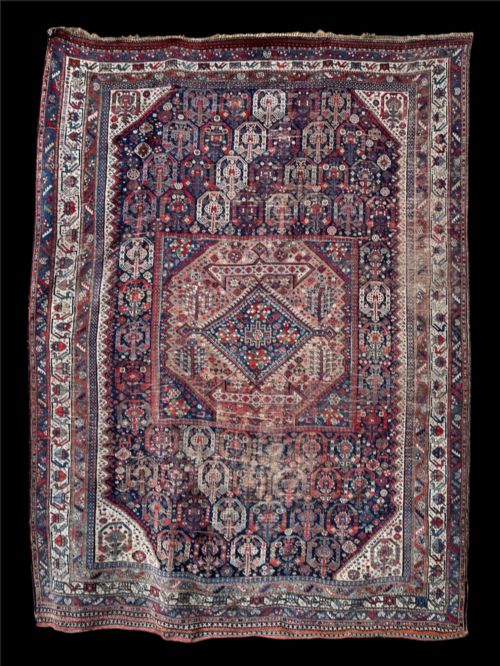
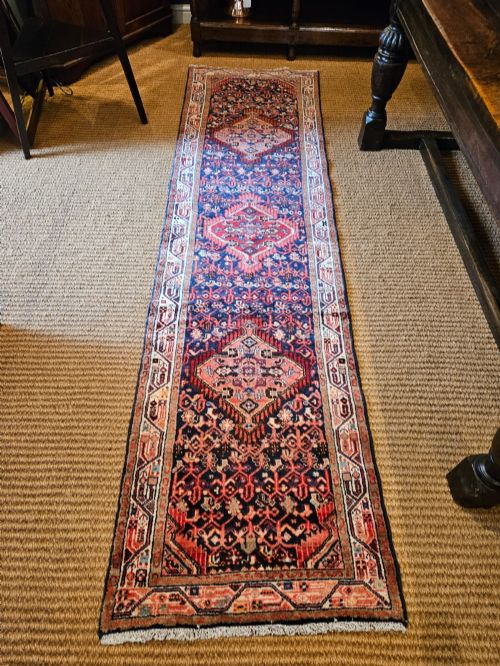
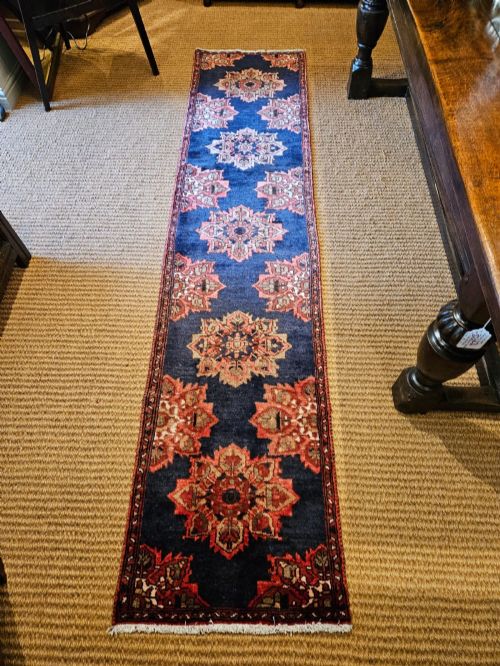
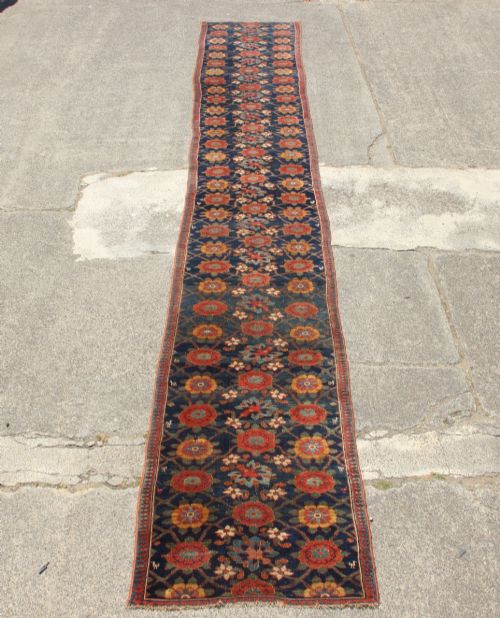
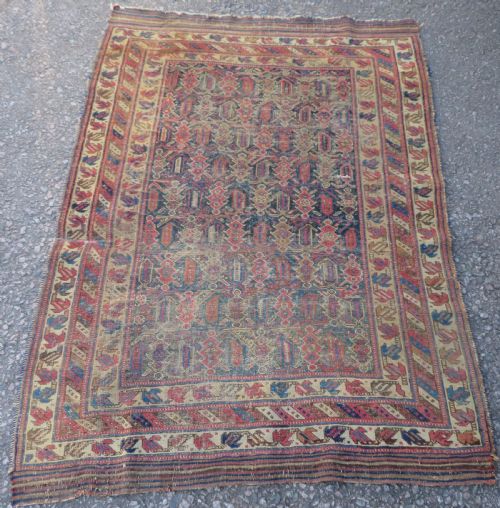
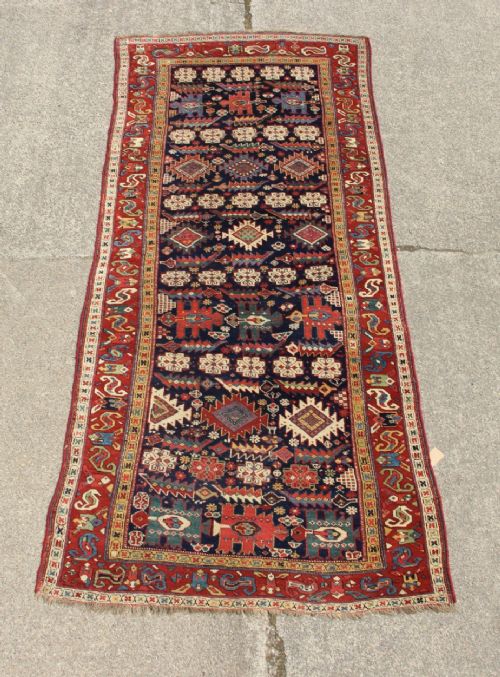
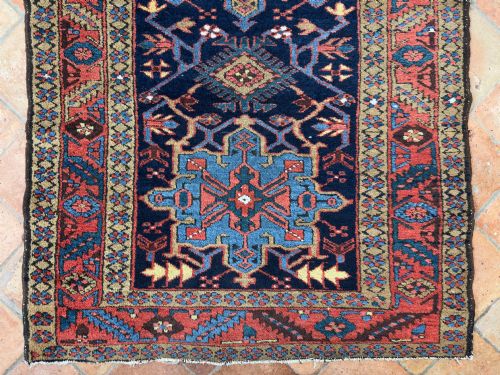
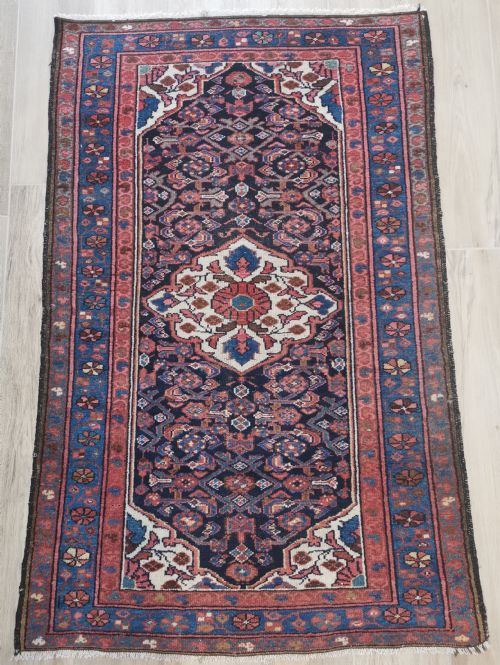
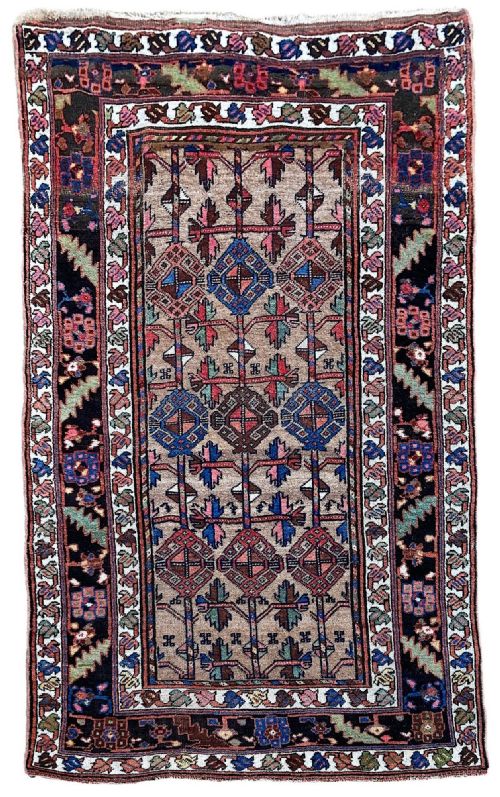
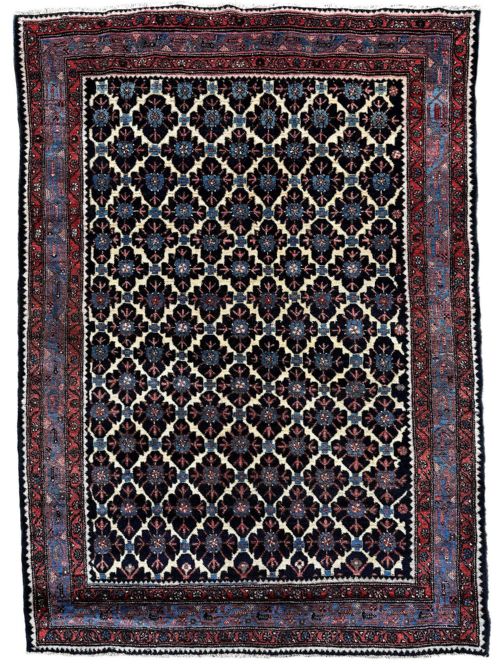
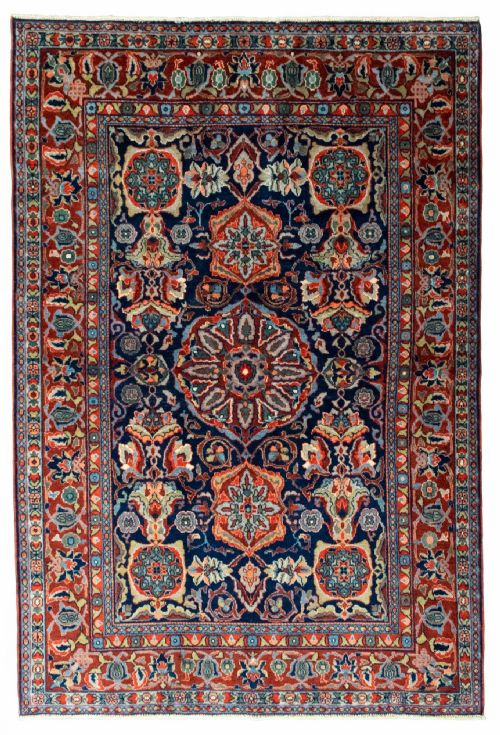
When you search for a navy blue persian runner, you encounter long, narrow formats designed for corridors and passages, originating from Persian, Kurdish, and tribal weaving traditions. These pieces span from the mid-nineteenth century through the early twentieth century, reflecting village and nomadic production rather than city workshop uniformity.
The selections on this page demonstrate the classic proportions of hallway runners and long carpets, utilising traditional formats like Heriz, Hamadan, and Kurdish structures. Most examples rely on saturated dark grounds offset by ivory, madder red, and soft blues in the geometric or floral motifs.
How they were made
Weavers constructed these long carpets using hand-spun wool knotted onto sturdy cotton or wool foundations, creating a dense, resilient pile designed for heavy use. Natural dyestuffs provided the characteristic deep indigo navy tones alongside earthy reds and yellows that soften gracefully over generations.
The hand-knotting technique allowed makers to execute complex repeating medallions, Mina Khani patterns, and tribal guls without printed charts, relying entirely on transmitted local knowledge and memory.
Listings feature nineteenth and early twentieth century wool carpets originating from Persian tribal and village workshops.
What varies in quality
The distinction between standard village production and finer examples rests in knot density, precision of line, and the depth of the wool pile. Higher quality pieces maintain crispness in intricate geometric borders and possess a supple handle due to superior wool preparation.
Visual harmony also dictates standing, where uneven dye batches or irregular wear across the field separate everyday utilitarian carpets from finer tribal pieces preserved with balanced proportions.
The Navy Blue Persian Runner Glossary
- Runner
- A long, narrow carpet format traditionally woven for hallways, stairs, and narrow passages. These pieces measure significantly longer than they are wide.
- Kelleh
- A large format rug, intermediate in proportion between a standard rug and a full carpet, often longer and narrower than a room-size piece.
- Gul
- A medallion or repeating octagonal motif frequently found in tribal and nomadic weaving traditions, symbolising clans or ancestral crests.
- Mina Khani
- A repeating floral pattern consisting of daisy-like blossoms linked by a lattice of curved stems across the field.
- Sofreh
- A flatwoven or piled spread used historically for dining, serving food, or processing flour within nomadic households.
Navy Blue Persian Runner: Frequently Asked Questions
Where should I place a runner?
These long formats suit narrow hallways, corridors, and bedside spaces where linear geometry anchors the room.
Their sturdy wool construction handles everyday foot traffic while adding warmth to transitional spaces.
How do I care for antique wool?
Vacuum gently without a rotating brush roll to protect the aged foundation threads and hand-spun pile.
Professional specialist cleaning preserves the natural lanolin and prevents dye bleed in saturated indigo grounds.
Are these pieces symmetrical?
Hand-knotted tribal carpets frequently display slight irregularities in width and motif alignment due to nomadic vertical looms.
These minor variations indicate genuine hand production rather than machine-made standardisation.
How do I identify village rugs?
Village and tribal pieces often feature spontaneous geometric layouts, abrash colour shifts, and local wool characteristics.
These traits distinguish them from formal city workshops that adhered to strict cartoon blueprints.