



Cream Wool Hallway Carpet
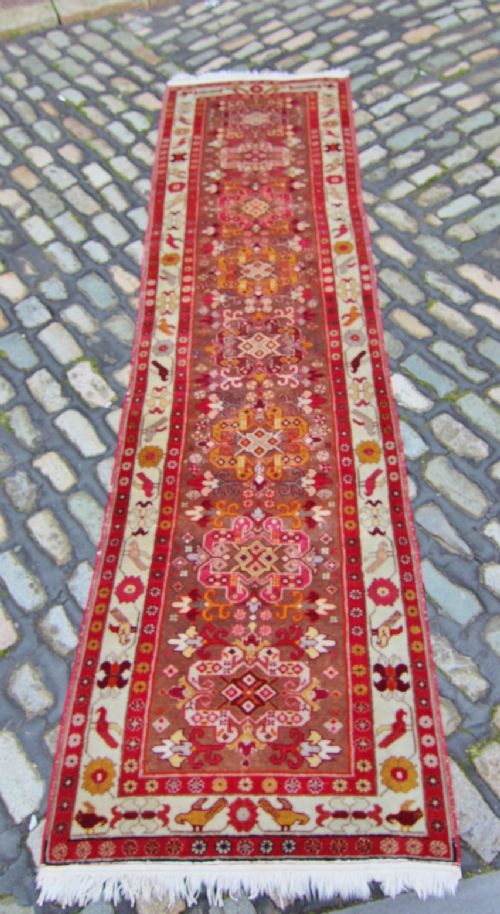
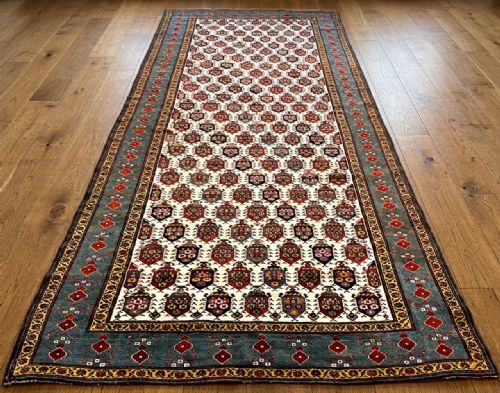
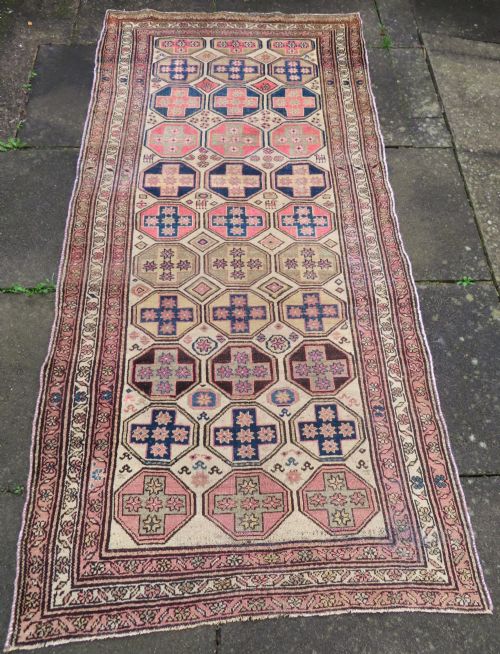
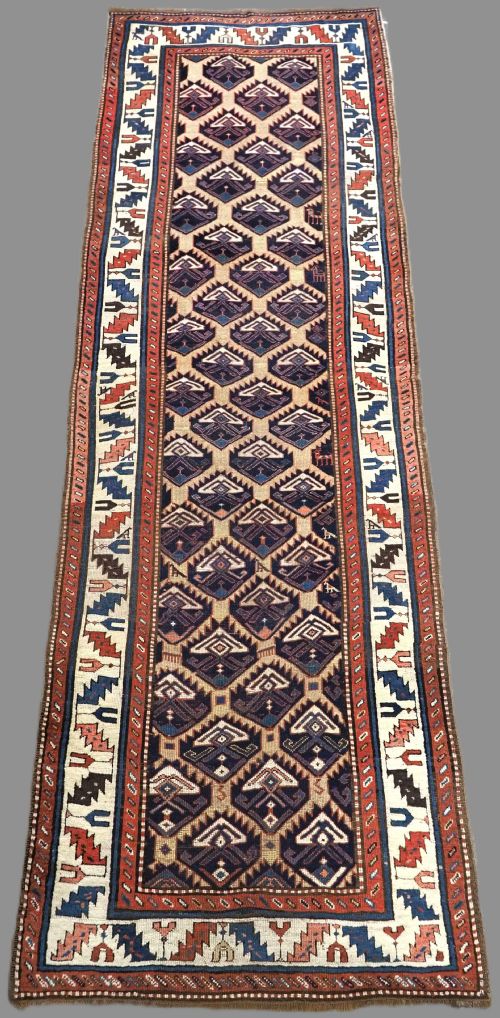
These cream wool hallway carpet selections are durable woven runners designed to anchor a passage with traditional tribal patterns.
Cream Wool Hallway Carpet
When you search for a cream wool hallway carpet, you encounter elongated runner rugs and corridor carpets originating from Persian tribal weaving traditions, Kurdistan, the Caucasus, and Central Asia. These pieces date across the nineteenth and early twentieth centuries, spanning periods from eighteen-fifty to nineteen-twenty.
The format typically presents as narrow, long proportions suited for corridors and passageways. Designs range from lattice motifs and boteh patterns to tribal compositions created by Kurdish, Afshar, Bakhtiari, Gendje, Shahsavan, Hamadan, Malayer, Sarab, Kirman, and Uzbek makers.
Most examples rely on a light or ivory ground colour to brighten narrow architectural spaces. They combine heavy wool construction with traditional village and tribal aesthetics.
How they were made
These textiles rely on wool for the pile and foundation, often supported by cotton structural elements. The materials are dyed using natural dyes that yield enduring tones across the ivory or cream grounds.
Weavers constructed these long runners on traditional upright or horizontal looms using hand-tied knots or flatweave techniques such as kilim construction. The resulting heavy fabric withstands heavy foot traffic in domestic corridors.
Cream Wool Hallway Carpet Retail Price Guide 2026
Typical asking prices for cream wool hallway carpet among the pieces listed under this phrase on Sellingantiques today, from the lower quarter to the upper quarter. They describe what is for sale here now, not the wider market.
Some runners are so exceptionally long and narrow they turn a mundane hallway into an accidental art gallery.
What varies in quality
Quality in these runners rests on the density of the weave and the crispness of the tribal design work. Finer knotting allows intricate motifs like lattice patterns and boteh designs to hold their geometric definition along narrow proportions.
The integrity of the natural dyes and the condition of the wool pile determine the longevity of the piece. Strong foundations and well-preserved ivory grounds distinguish superior examples from heavily worn specimens.
The Cream Wool Hallway Carpet Glossary
- Runner
- A long, narrow carpet format designed specifically for hallways, corridors, and stairs. These pieces measure significantly longer than they are wide.
- Boteh
- A traditional almond-shaped or paisley motif representing a floral or cypress sprout, frequently repeated across tribal fields.
- Kilim
- A flatwoven textile produced without a pile by tightly interweaving warp and weft threads together. These pieces offer a smooth surface texture.
- Kelleh
- A large, elongated carpet format shorter than a standard runner but narrower than a full room-size carpet, often originating from Northwest Persia.
- Natural dye
- Colouring matter derived from plants, insects, and minerals rather than synthetic chemical compounds. These dyes age with subtle variations in tone.
Cream Wool Hallway Carpet: Frequently Asked Questions
Where do these hallway carpets come from?
These runners originate from traditional weaving centres and tribal regions including Persia, the Caucasus, and Central Asia. Village workshops and nomadic groups produced them during the nineteenth and early twentieth centuries.
The geographical attribution often appears in the tribal designation, such as Kurdish, Afshar, Bakhtiari, or Gendje, reflecting distinct regional weaving techniques and design vocabularies.
How do I choose the right size runner?
Selecting a runner requires measuring the clear floor space of your hallway while leaving an equal margin of bare flooring exposed around the edges. Long narrow proportions work best in extended corridors.
Consider the length of the passage and ensure doorways can clear the thickness of the heavy wool pile and cotton foundations without obstruction.
Are these rugs suitable for heavy traffic?
These traditional runners utilise heavy wool construction designed to endure daily use in active domestic spaces like hallways and corridors. The dense natural fibres provide natural resilience.
Placing an appropriate underlay beneath the carpet helps absorb impact, prevents slipping, and extends the working life of the textile.
How do I care for a wool hallway carpet?
Regular gentle vacuuming without a rotating power brush removes surface dust and grit from the wool pile. Professional cleaning suited for antique textiles preserves the natural dyes and fibres.
Prompt attention to spills prevents staining, and rotating the runner periodically ensures even wear along high-traffic pathways.