




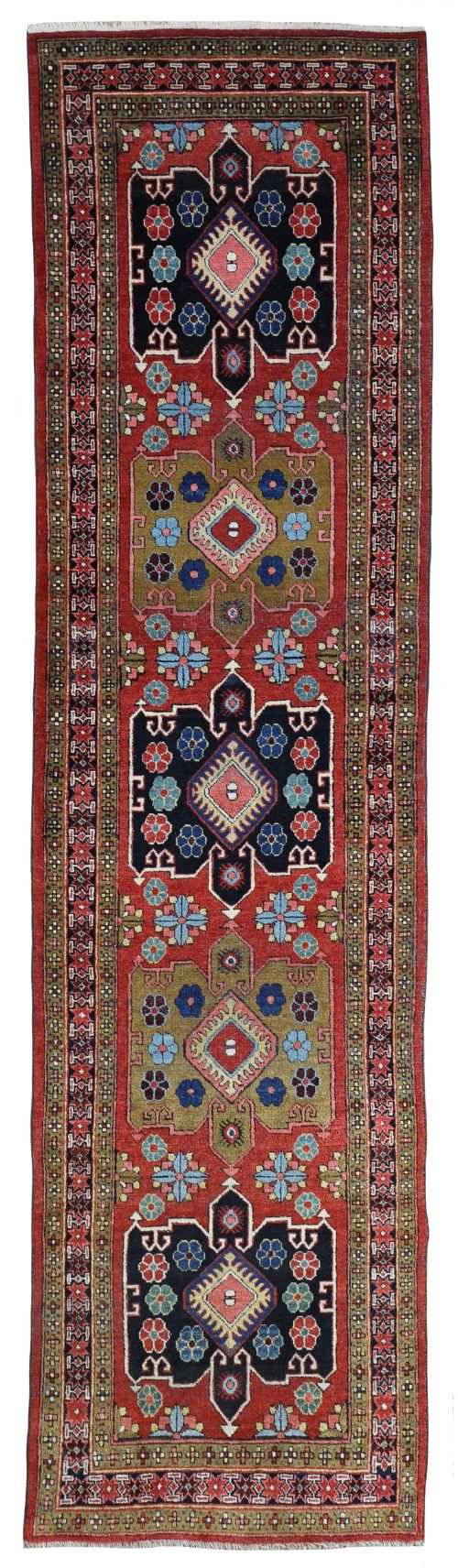


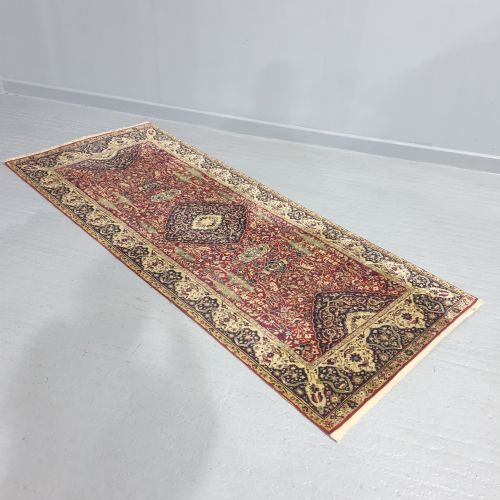


Vintage Floral Hallway Rug
A vintage floral hallway rug brings warmth and traditional pattern to a narrow space through enduring textile artistry.
Vintage Floral Hallway Rug
A vintage floral hallway rug takes the form of an elongated runner designed specifically to fit narrow corridors and walkways. These floor coverings bridge domestic spaces with decorative plant motifs and geometric botanical arrangements.
The selections available here span from the late nineteenth century into the early decades of the twentieth century, originating primarily from Persian weaving centres and Caucasian regions. Pieces range from modest dimensions to exceptionally long narrow proportions suited to grander halls.
Buyers encounter traditional village and workshop productions, including specific regional styles such as Sarouk, Heriz, Bakhtiari, Bidjar, Ushak, and Gendje Kazak. Each piece displays distinct floral lattice designs or stylised botanical patterns formed over a century ago.
How they were made
These textiles rely on wool and cotton construction, utilising natural animal and plant fibres spun by hand. Wool provides the resilient pile necessary for heavy foot traffic in corridors, while cotton typically forms the foundational warp and weft structure.
Weavers knotted the pile by hand onto sturdy foundations, creating dense surfaces designed to endure decades of domestic use. Natural dye traditions across Persian and Caucasian workshops produced the deep tones and botanical colourways visible in these runners.
Vintage Floral Hallway Rug Retail Price Guide 2026
Typical asking prices for vintage floral hallway rug among the pieces listed under this phrase on Sellingantiques today, from the lower quarter to the upper quarter. They describe what is for sale here now, not the wider market.
Some nineteenth-century runners stretch to exceptional lengths, designed to pacify the echoing footsteps of very long hallways indeed.
What varies in quality
Knot density and structural tightness dictate the crispness of the floral motifs and the longevity of the runner under foot. Finer village and workshop pieces maintain precise botanical outlines and robust foundations that resist distortion.
Proportion and scale separate standard formats from exceptionally long narrow runners designed for specific architectural spaces. The consistency of the wool pile and the depth of the dye saturation further define the character of each individual textile.
The Vintage Floral Hallway Rug Glossary
- Runner
- A long, narrow carpet format specifically proportioned for corridors, hallways, and stairs. These pieces measure significantly longer than they are wide.
- Pile
- The upright yarn loops or cut ends that form the usable surface of a rug. This layer absorbs foot traffic and displays the woven pattern.
- Warp
- The stationary vertical threads stretched onto a loom before weaving begins. The pile knots are tied around these foundational strands.
- Weft
- The horizontal threads passed alternately over and under the warp threads to secure the knots in place. This structure holds the woven textile together laterally.
- Lattice
- A decorative framework of crisscrossing lines forming a repeating grid across the field of the rug. Floral elements often populate the compartments of this geometric network.
Vintage Floral Hallway Rug: Frequently Asked Questions
How do I choose the right length?
Measure your hallway carefully, leaving a balanced margin of exposed flooring around the perimeter of the runner. Consider doors that need to clear the thickness of the wool pile when opened.
Keep in mind that exceptionally long narrow formats suit expansive corridors, while standard proportions fit typical domestic passageways without overwhelming the space.
Are these rugs suitable for heavy traffic?
Traditional village and workshop runners utilise robust wool construction designed to withstand regular foot traffic in busy hallways. The dense hand-knotted pile provides natural resilience against daily wear.
Pairing the textile with an appropriate underlay helps prevent slipping and cushions the foundation against hard flooring surfaces.
How do I care for a wool runner?
Regular gentle vacuuming without a rotating brush roll removes surface dust and grit from the wool pile. Address spills immediately by blotting rather than rubbing the fibres.
Professional cleaning tailored to antique textiles preserves the natural lanolin in the wool and maintains the integrity of the dyes.
How do I distinguish regional styles?
Regional styles reveal themselves through specific colour palettes, knotting densities, and botanical motifs. For instance, Kurdish and Hamadan village pieces often display stylised geometric floral patterns, while Sarouk runners showcase refined curvilinear floral arrangements.
Comparing the border designs and secondary motifs helps identify the distinct weaving traditions of Persian and Caucasian workshops.