
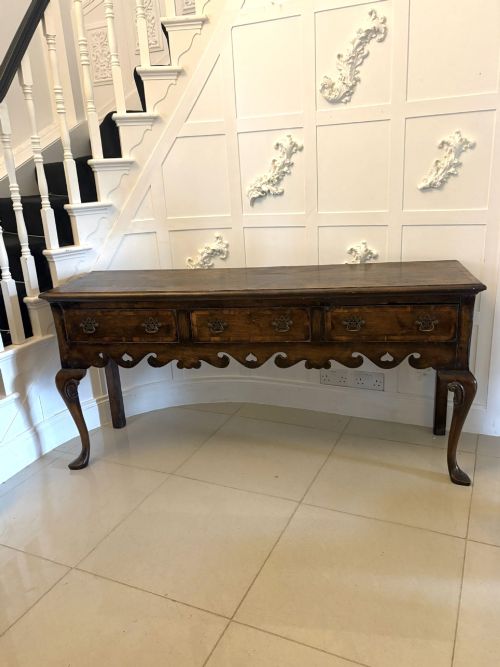
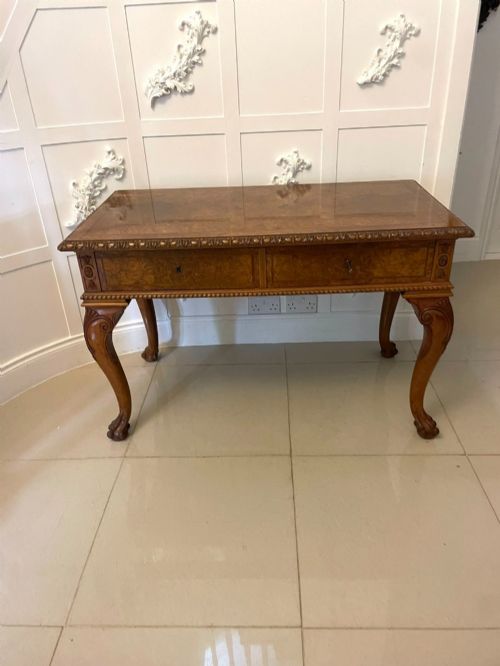
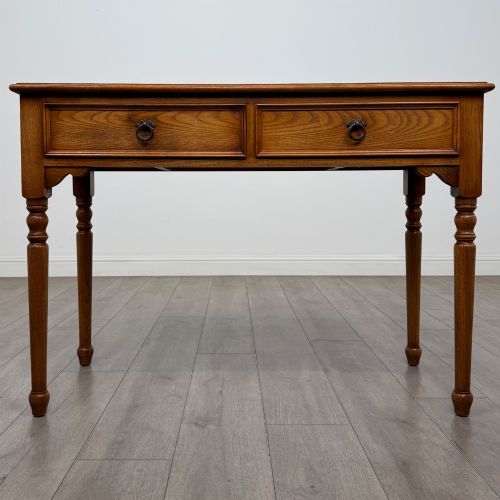
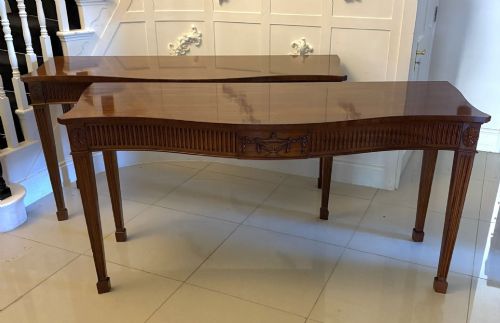
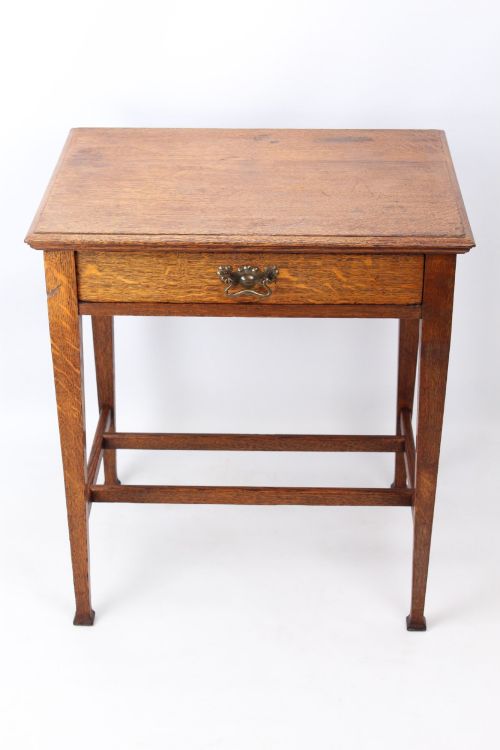
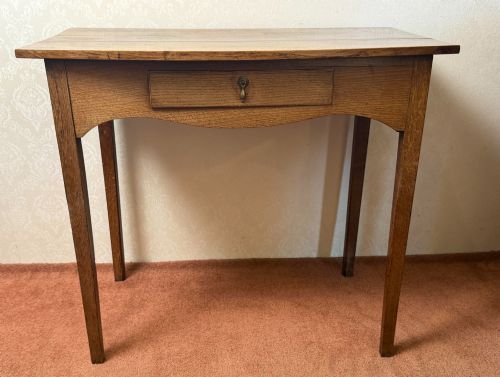
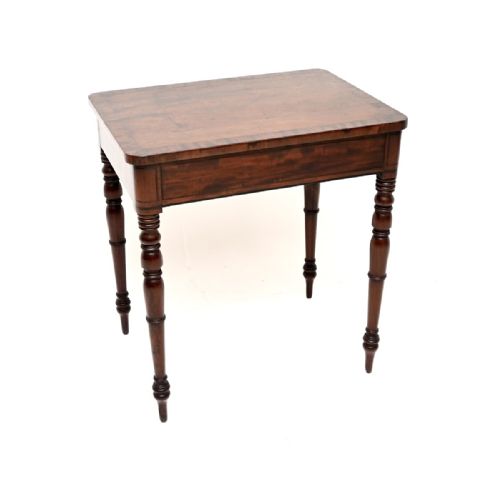
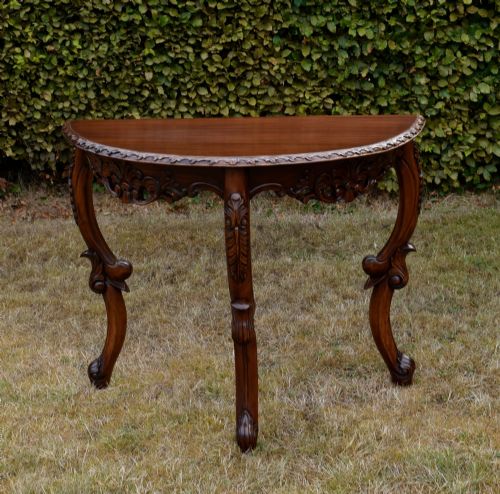
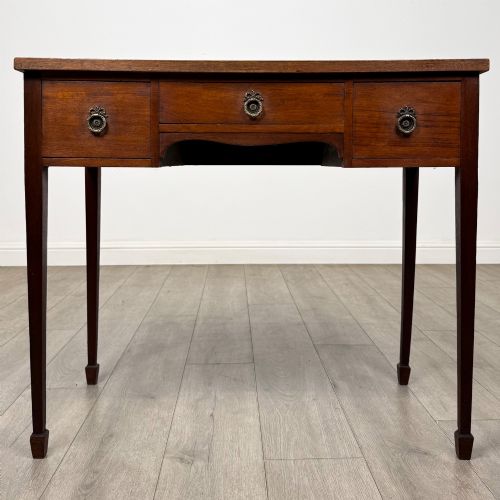
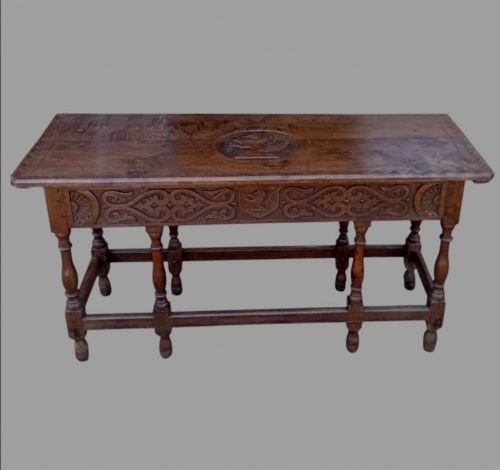
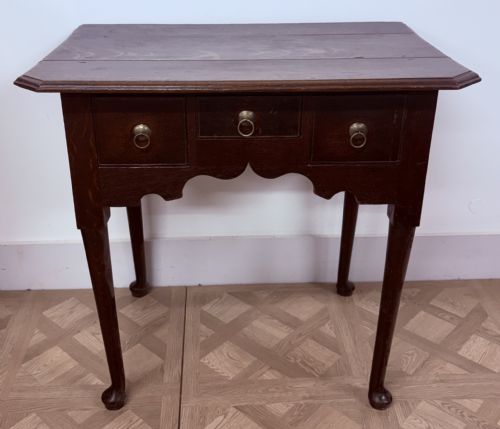
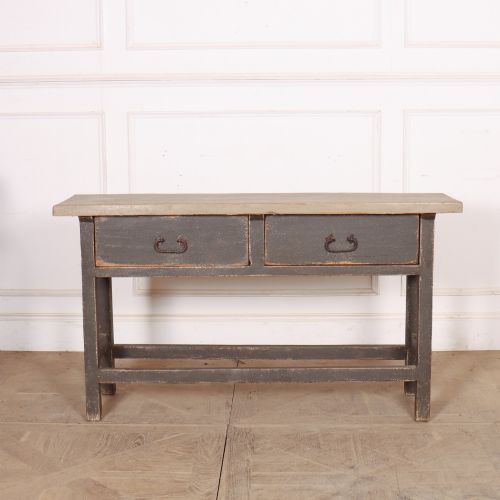
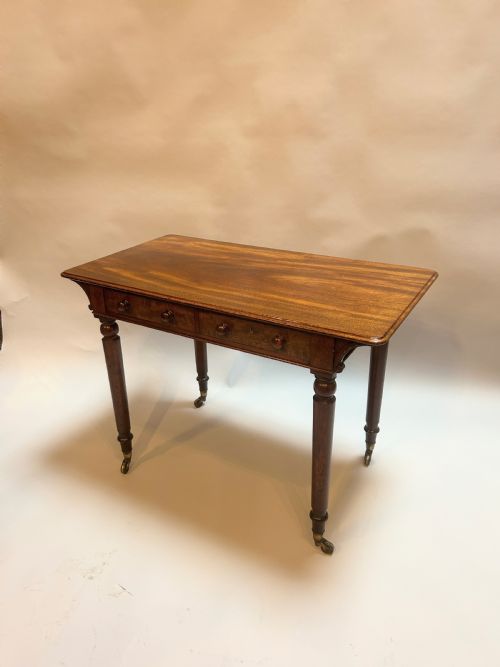
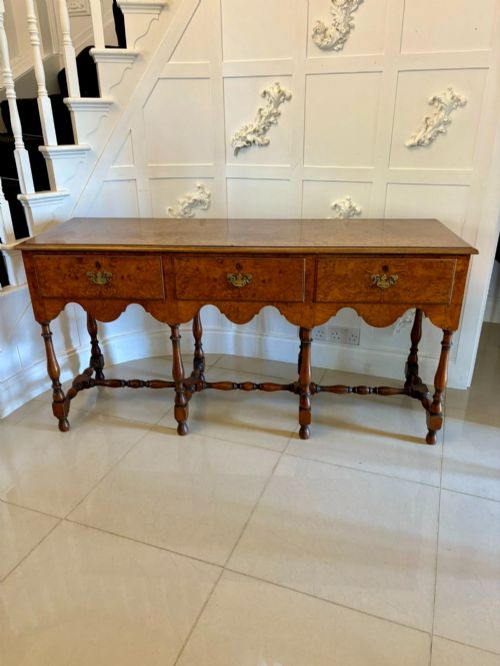
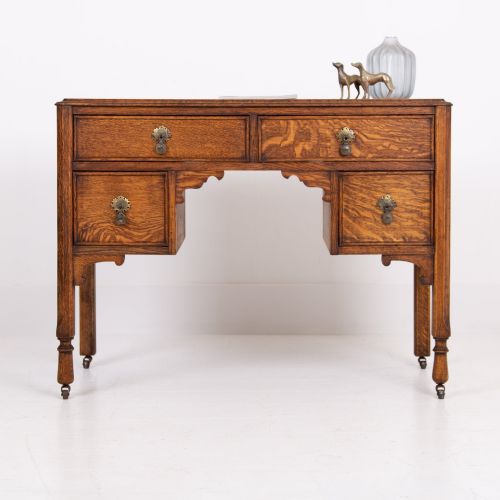
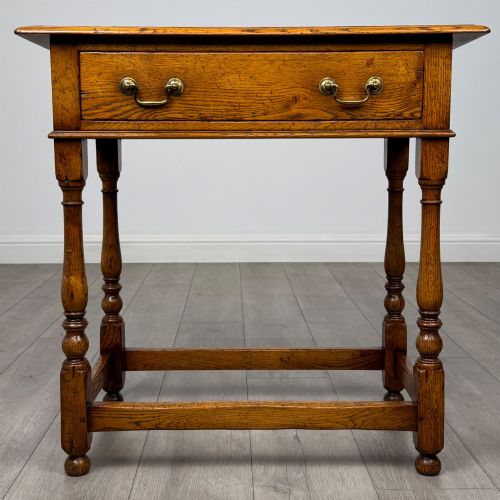
Traditional Hall Console
A traditional hall console anchors an entryway with practical surface space and solid historical character.
Traditional Hall Console
A traditional hall console serves as a narrow surface for an entrance or passage, often taking the form of a side table, lowboy, or dresser base. Buyers looking for a traditional hall console encounter pieces designed to fit tight spaces while providing a surface for daily objects.
The selections span centuries from the eighteenth century through the Edwardian era and the 1930s, reflecting varied domestic needs. Oak and mahogany dominate the offerings, appearing alongside walnut, pine, elm, and metal.
Forms range from simple side tables with fitted drawers to serpentine serving tables and carved oak dresser bases. English country styles sit alongside Georgian and Victorian interpretations, including revival pieces from the early twentieth century.
How they were made
Cabinet makers constructed traditional hall consoles primarily using solid timbers like oak, mahogany, and walnut, frequently selected for their durable grain and rich colour. Joinery relied on traditional methods such as mortise and tenon frames to ensure stability in narrow furniture.
Carving and turning shaped the structural elements, featuring details like cabriole legs, barley twist supports, and neoclassical motifs. Secondary elements incorporated brass handles on fitted drawers and occasional painted finishes on server pieces.
Some tables hide tiny secret drawers originally intended for pocket watches and stray farthings.
What varies in quality
Quality in these tables depends upon the selection of timber and the precision of the cabinet work, particularly in drawer construction and leg turning. Finer examples display carefully matched wood veneers, such as burr walnut, and crisp, hand-carved ornamentation rather than cast decoration.
Proportion and structural integrity separate standard utility pieces from exceptional commissions, with superior items maintaining balanced dimensions and original hardware. The integration of period specific details, such as barley twist legs or serpentine fronts, influences the overall character of the piece.
Gillows·J A Mein Edinburgh Cabinet Maker
The Traditional Hall Console Glossary
- Lowboy
- A small table with drawers, typically standing on four legs, originating in the late seventeenth century and often used as a side table or dressing table.
- Dresser base
- A lower sideboard unit featuring cupboards or drawers, frequently constructed from solid oak in English country traditions.
- Serpentine
- A curved furniture front characterised by a convex centre flanked by concave ends, common in finer mahogany console designs.
- Potboard
- An open lower shelf built into a dresser base or table, originally designed to hold pots and domestic utensils.
- Demi lune
- A half moon shape utilised for console tables designed to sit flat against a wall in restricted spaces.
Traditional Hall Console: Frequently Asked Questions
What is a traditional hall console used for?
These tables provide a convenient surface in narrow entryways and hallways for placing keys, post, and decorative items. Fitted drawers also offer concealed storage for small household essentials.
Their shallow depth ensures they do not obstruct movement in corridors while still anchoring the hallway interior.
How do I identify an eighteenth century piece?
Eighteenth century examples often show distinct timber patination, hand cut dovetails in the drawers, and simpler structural pegged joinery. Oak lowboys and Georgian mahogany side tables from this period reflect proportions designed for domestic utility.
Examining the underside and drawer linings reveals tool marks and construction methods consistent with period handcraft.
Where should I place a console table?
They fit naturally against hallway walls, entry passages, or behind living room seating where depth is restricted. Freestanding variants can also stand in dining spaces as serving surfaces.
Matching the wood tone to existing furniture helps integrate the piece into the room scheme.
What is the difference between a side table and a console?
Side tables typically feature four independent legs and are finished on all sides, whereas some traditional console variants rely partially on wall stability or specific placement.
In modern usage, the terms often overlap for narrow rectangular tables used in hallways and living areas.