
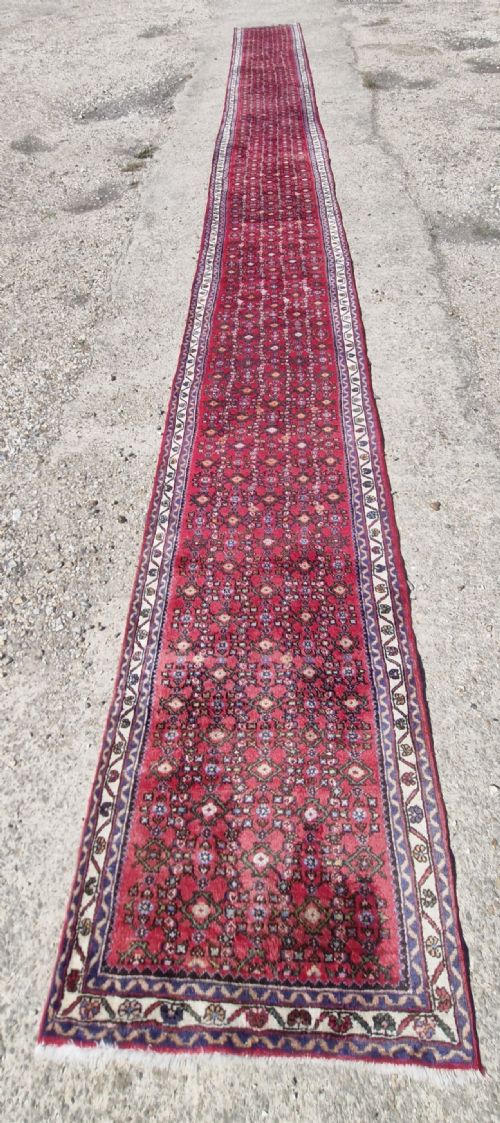
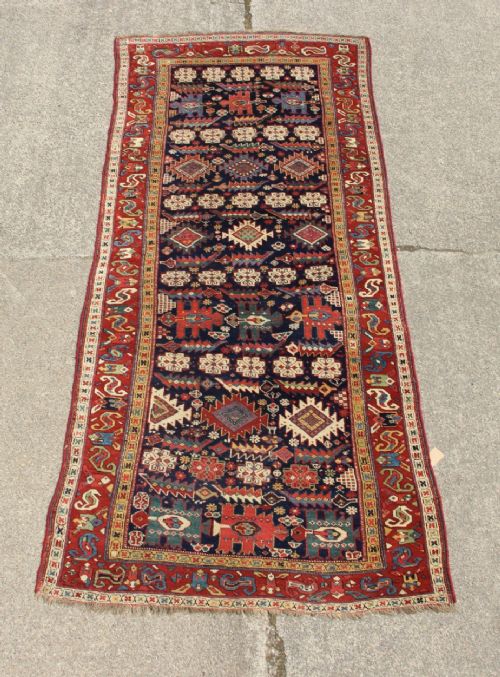


Traditional Gallery Rug
A traditional gallery rug brings centuries of Persian weaving tradition into long halls and expansive rooms through enduring wool and cotton construction.
How they were made
These floor coverings utilise foundation structures of durable cotton warp and weft threads, providing stability for the dense pile. Artisans knotted natural wool tightly onto this foundation to create resilient surfaces capable of withstanding heavy daily transit.
Weavers employed traditional hand-knotting techniques characteristic of Persian and Kurdish village workshops. Natural dye methods produced deep, enduring colour palettes that mellow gracefully over decades of use.
What varies in quality
Quality in these textiles depends upon the precision of the knotting density and the integrity of the wool foundation. Finer knot counts allow for sharper delineation of geometric motifs, medallion layouts and intricate border systems.
Proportion and scale dictate the visual success of a long format runner. The best examples maintain structural straightness and balanced design rhythms across exceptionally narrow or extended dimensions without distortion.
Listings span several decades of production from the mid-nineteenth century through the mid-twentieth century, constructed entirely in wool and cotton.
The Traditional Gallery Rug Glossary
- Kelleh
- A large format carpet that is longer than it is wide, traditionally suited for reception rooms and galleries. These rectangular textiles bridge the proportion between standard area rugs and oversized room carpets.
- Runner
- A long, narrow carpet format specifically proportioned for corridors, hallways and landings. Their dimensions accommodate linear architectural spaces.
- Bidjar
- A Persian town and surrounding district renowned for exceptionally heavy, dense carpet construction. Pieces from this region earned a reputation as the iron rugs of Persia due to their robust build.
- Serapi
- A distinctive style associated with the Heriz region, featuring bold geometric medallions and spacious corner designs. They display lighter, open colour palettes compared to heavier village weaves.
- Memling gul
- An octagonal motif enclosing hooked or stepped appendages, frequently repeated in tribal rugs. This traditional design element traces its lineage through Anatolian and Caucasian weaving traditions.
Traditional Gallery Rug: Frequently Asked Questions
Where should I place a gallery rug?
These extended pieces suit long hallways, grand landings and expansive entrance corridors where linear dimensions complement the architecture.
They also function well in large reception rooms to define specific walking paths or seating zones.
How do I care for antique wool rugs?
Regular gentle vacuuming without a rotating brush roll prevents dust accumulation within the wool pile. Professional specialist cleaning preserves the natural lanolin and dye stability.
Rotating the piece periodically ensures even exposure to light and foot traffic over the years.
What defines a kelleh carpet?
A kelleh is a specific format that sits between a standard area rug and a full room carpet, offering an elongated rectangular shape.
This proportion was historically woven for specific room dimensions in Persian homes.
How do regional Persian styles differ?
Bidjar carpets utilise dense, heavy foundations with tight wool piles for maximum durability. Serapi and Bakshiash designs tend toward larger geometric medallions and open fields with softer colour schemes.
Kurdish and Malayer pieces often incorporate more tribal motifs and varied border arrangements.