



Bijar Tribal Rug
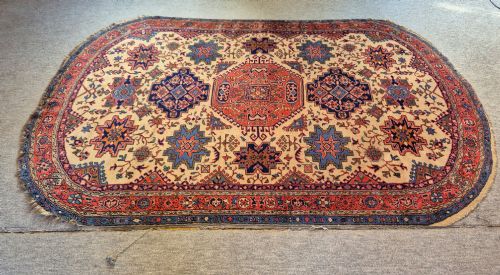
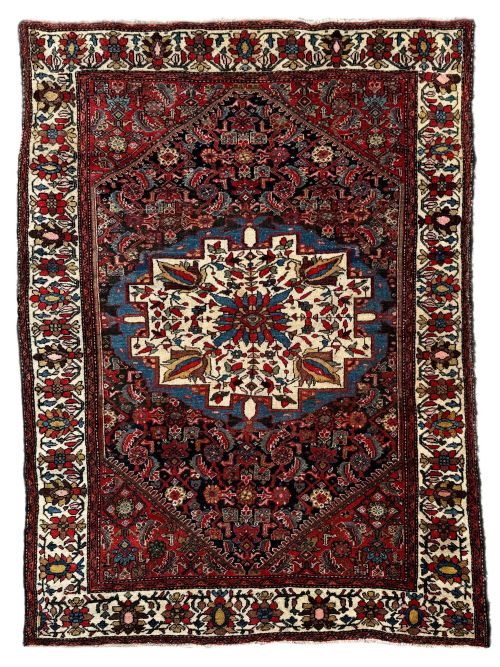
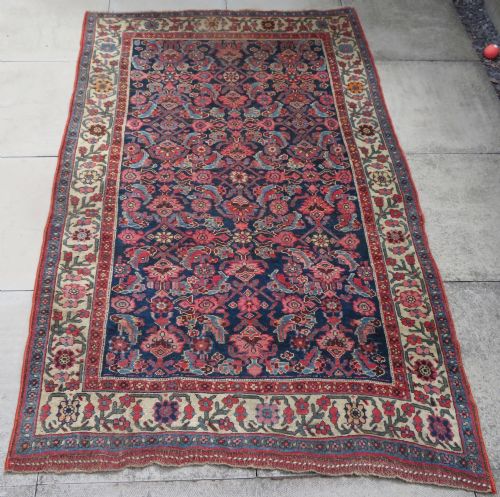
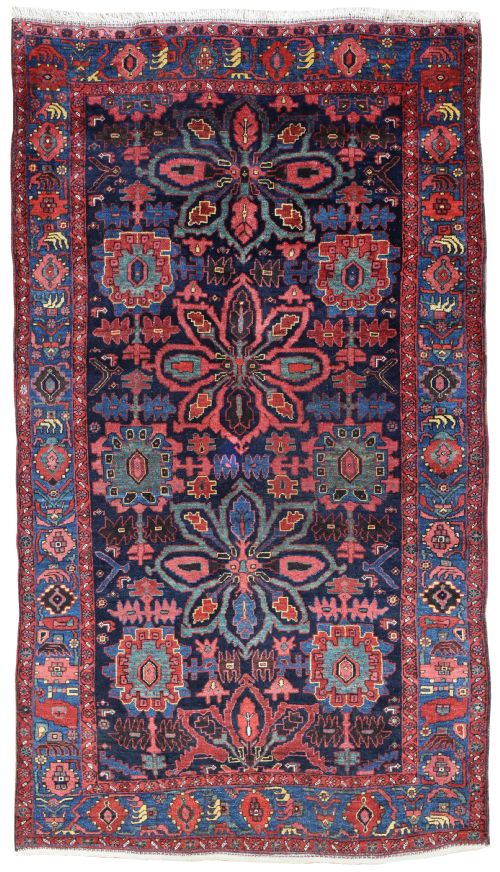
These bijar tribal rug pieces are heavy Persian village floor coverings offering exceptional density, constructed by Kurdish weavers to endure generations of daily use.
Bijar Tribal Rug
When searching for a bijar tribal rug, a buyer encounters dense Persian village floor coverings produced across various decades from the nineteenth century onward. The selection spans traditional rugs, runner rugs, and larger kelleh carpets featuring Kurdish designs from West Persia.
The version most commonly met on this page is the antique room-size or area carpet, often attributed to Kurdish tribes working in the Bijar region. These pieces incorporate traditional Persian styles alongside flatwoven kilim structures and curve-ended formats.
How they were made
Production relies heavily on natural wool pile secured to cotton foundations, with certain examples utilising hand-spun wool for added durability. The traditional technique involves rigorous packing of the wefts to create a stiff, heavy fabric.
Weavers employ distinct Kurdish village methods, yielding flatwoven kilim constructions alongside piled carpets adorned with floral motifs.
Some carpets are so densely packed they resist bending entirely, earning the nickname 'iron rugs of Persia'.
What varies in quality
The standard of execution separates dense, finely knotted room-size carpets from simpler village runner rugs. Knot density and the handling of floral design elements dictate the visual depth of the pile.
Condition and scale determine desirability, ranging from compact nineteenth-century fragments to substantial kelleh formats with intact kilim ends.
The Bijar Tribal Rug Glossary
- Kelleh
- A large format rectangular carpet, typically longer and narrower than standard room sizes. These grand pieces serve as central floor coverings in larger rooms.
- Kilim
- A flatwoven textile lacking a piled surface. These items utilise warp and weft interweaving to produce lightweight geometric or floral patterns.
- Kurdish
- Pertaining to the tribal groups of Western Persia responsible for weaving these heavy carpets. Their distinct aesthetic traditions shape the village designs.
- Senneh
- A regional style associated with fine Persian weaving techniques. Pieces bearing this attribution often show refined handling of traditional patterns.
Bijar Tribal Rug: Frequently Asked Questions
How do I clean a bijar tribal rug?
Professional dusting and specialist immersion washing preserve the wool pile and cotton foundation without disturbing the natural dyes. Regular gentle vacuuming without a beater bar removes surface grit.
Avoid chemical spot cleaning or excessive moisture, which damages the dense weave characteristic of these Persian village carpets.
Where were bijar rugs made?
These textiles originate from the Kurdish-populated towns and villages of West Persia. Local weavers utilised readily available sheep's wool to produce durable floor coverings.
The regional style developed distinct characteristics through generations of traditional village production.
Are these rugs suitable for hallways?
Narrow runner formats and flatwoven kilims fit well in high-traffic corridors and entryways. The heavy wool construction withstands repeated footfall without losing structural integrity.
Selecting the correct scale ensures the runner rests flat against the floorboards.
How do I date an antique bijar rug?
Examination of the wool texture, dye palette, and structural wear reveals the period of manufacture. Pieces from the nineteenth century display hand-spun materials and traditional village motifs.
Comparing structural details against known examples helps narrow down the decade of creation.