


Traditional Flower Still Life
A traditional flower still life brings botanical splendour to a room, offering enduring arrangements of blooms rendered in rich oils and watercolours.
Traditional Flower Still Life
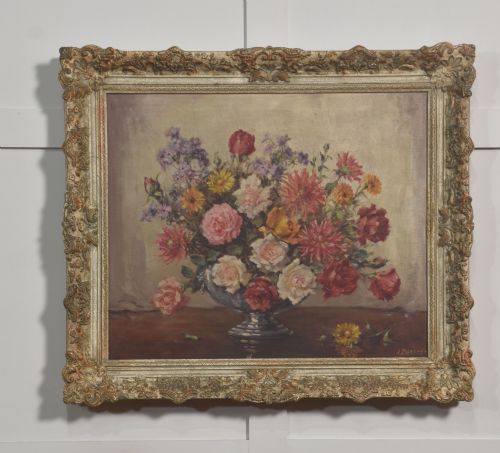
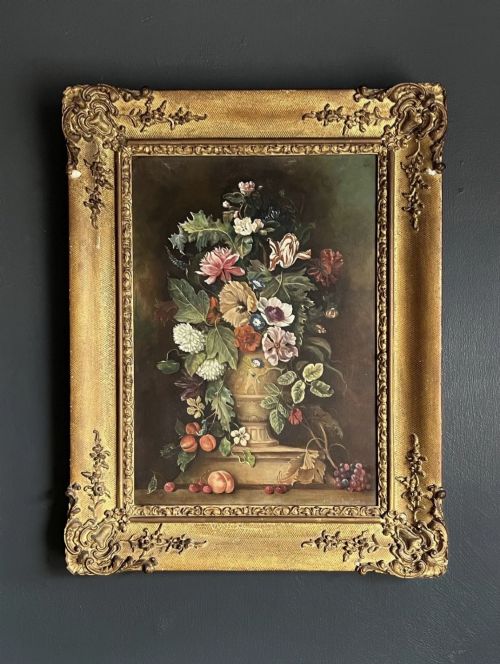
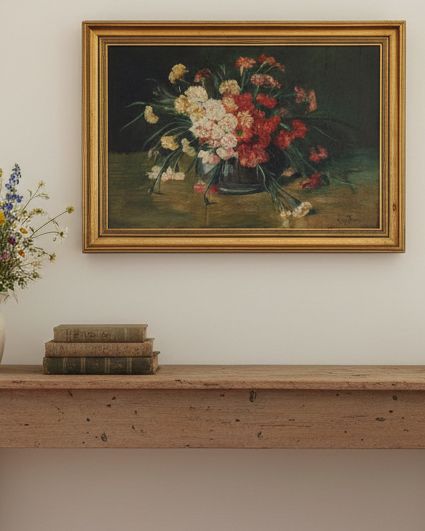
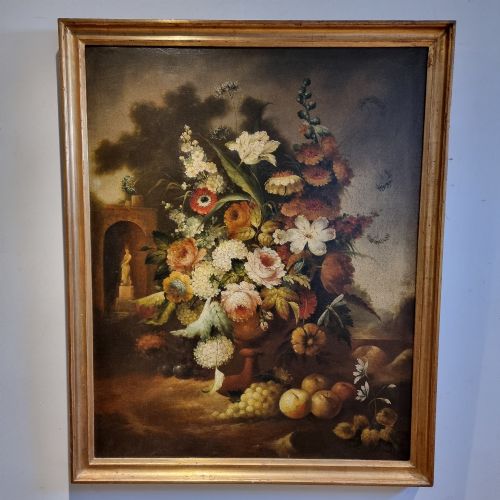
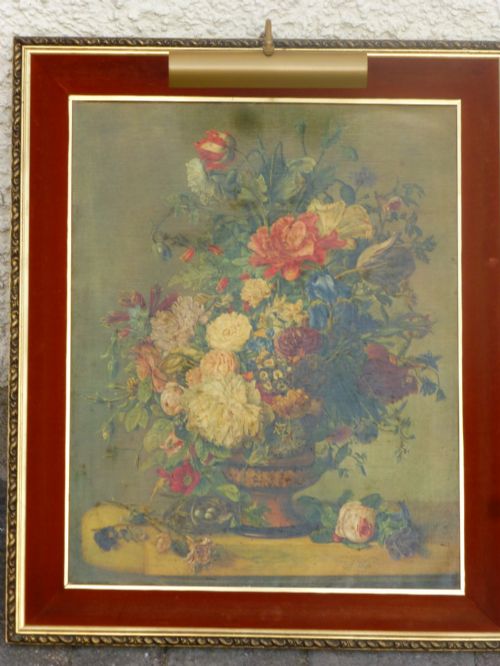
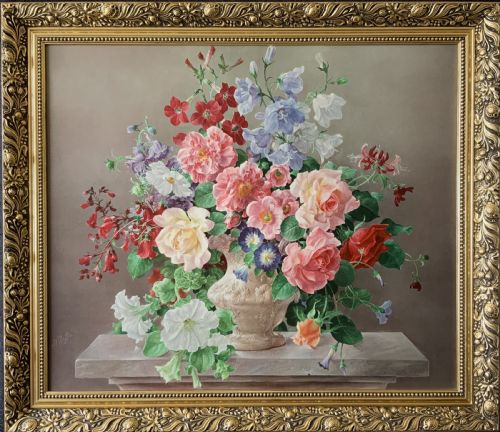
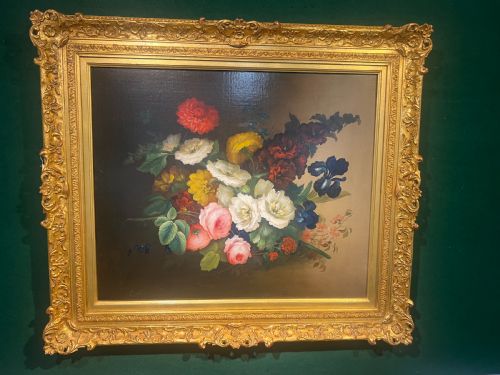
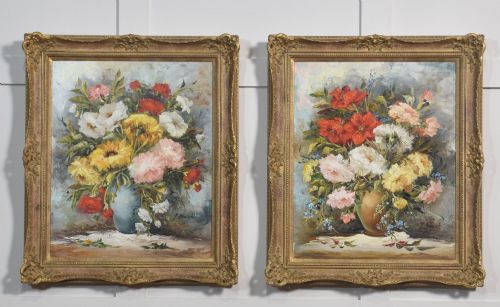
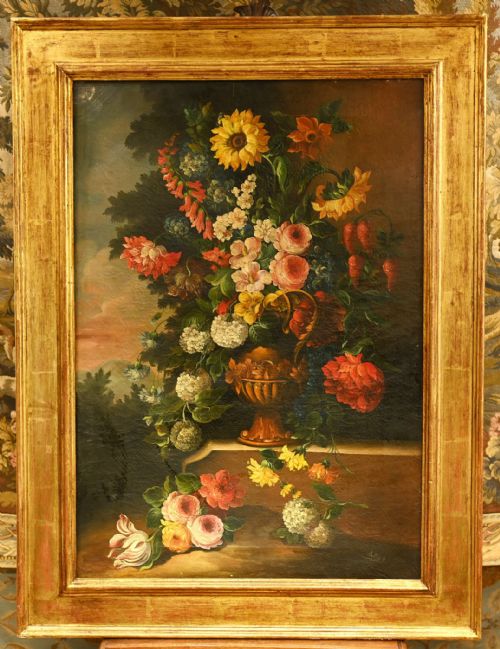
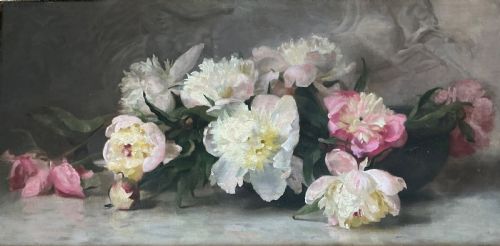
A traditional flower still life depicts carefully arranged blooms, often housed in vases, jugs or glassware, capturing the fleeting beauty of nature on canvas, wood or paper. These works span multiple centuries and stylistic revivals, reflecting both meticulous botanical observation and expressive brushwork.
Buyers frequently encounter oil paintings on canvas from the early twentieth century alongside nineteenth-century works and later watercolours. Common subjects include roses, peonies, carnations and tulips, presented either as standalone studies or as larger decorative pairs.
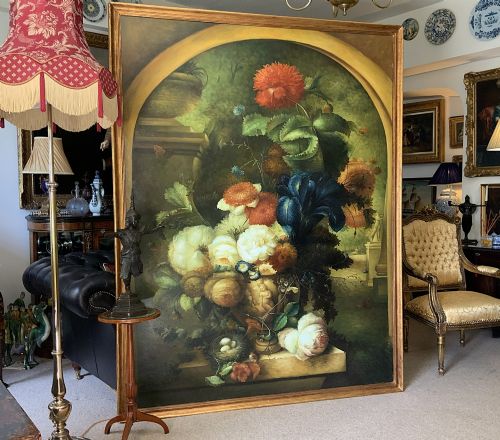
The aesthetic draws heavily on Dutch Golden Age and Flemish traditions, reinterpreted through British Impressionism, Victorian realism and post-war vintage styles. These pieces range from intimate miniature studies to monumental canvases designed for grand interiors.
How they were made
Artists built these compositions primarily using oil paint on stretched canvas or wooden panels, applying layers of pigment to achieve depth and texture in both petals and foliage. Some works incorporate watercolour on paper, capturing a lighter and more translucent botanical finish.
Framing played an integral role in the presentation of these artworks, with many pieces housed in gilt gesso frames that enhance the luminosity of the painted flowers. Gold leaf accents and decorative mouldings were frequently utilised to complement the richness of the palette.
Traditional Flower Still Life Retail Price Guide 2026
Typical asking prices for traditional flower still life among the pieces listed under this phrase on Sellingantiques today, from the lower quarter to the upper quarter. They describe what is for sale here now, not the wider market.
Several floral arrangements manage to squeeze fruit, wine glasses and pigeons into the vase sharing space with the flowers.
What varies in quality
The distinction between standard decorative pieces and finer works lies in the handling of light, shadow and botanical accuracy. Superior examples demonstrate a careful command of tone that gives depth to the arrangement and makes the petals appear tactile.
Material preparation and frame integrity also differentiate the range. High-quality pieces feature well-preserved canvas tension, stable paint layers and original or period-appropriate gilt frames that complement the composition without overpowering the subject.
I. Berezny·Anton Weiss·Harold Clayton·Edwin Steele·Manuela Bonati·Gertrude Hayes·Owen Bowen·William Edward Fox·Edward Ladell·Calzolari·Terence Loudon·Robin MacKertich·Henry Schouten·L. Wilford·Emily Selinger·Margaret Evangeline Wilson·Harold Edward Conway·Kershaw Schofield
The Traditional Flower Still Life Glossary
- Oil paint
- A slow-drying medium consisting of pigments suspended in a drying oil, typically linseed. This allows artists to blend colours smoothly and build rich, textured layers.
- Gesso
- A plaster-like mixture applied as a base to wood or canvas before painting, or used to create moulded reliefs on picture frames. Gilt gesso frames feature this base finished with a layer of gold leaf.
- Canvas
- A heavy woven fabric used as a surface for oil paintings, typically stretched tightly over a wooden frame. It provides a durable and slightly textured support for the pigment.
- Oleograph
- A type of chromolithograph printed on canvas to imitate the texture and appearance of an oil painting. These mechanical reproductions became popular for domestic display in the nineteenth and twentieth centuries.
- Dutch Golden Age Style
- An artistic approach emulating the detailed, dramatic floral compositions of seventeenth-century Netherlands. These works often emphasise dark backgrounds contrasting with vibrant, meticulously rendered blooms.
Traditional Flower Still Life: Frequently Asked Questions
Where should I hang a floral still life?
These paintings suit dining rooms, living spaces and hallways where their natural subjects can bring warmth and colour to the walls.
Consider pairing smaller studies in groupings or placing a monumental canvas above a mantelpiece for a striking focal point.
How do I care for an oil painting?
Keep the artwork away from direct sunlight and dramatic temperature fluctuations to protect the canvas and paint layers from cracking.
Dust the surface and frame gently with a soft, dry brush, avoiding water or chemical cleaning agents entirely.
Are these paintings original works?
The selection includes hand-painted original oils and watercolours alongside vintage oleograph reproductions after known artists.
Checking the listing details will confirm whether a piece is a unique painted artwork or a period print.
How do I identify the period of a painting?
Dating relies on stylistic clues, the framing materials, canvas preparation and any signatures or inscriptions left by the artist.
Victorian and early twentieth-century works often reflect the prevailing artistic movements of their respective decades, from Impressionism to traditional realism.