


Traditional Farmhouse Chairs
Traditional farmhouse chairs offer robust domestic utility and regional character, spanning Windsor, ladderback and rush-seat forms across the nineteenth and twentieth centuries.
Traditional Farmhouse Chairs
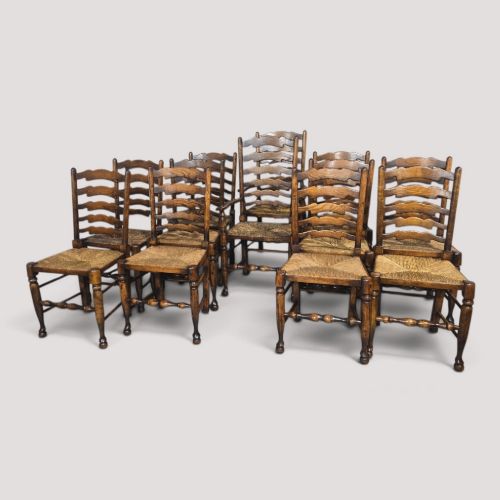
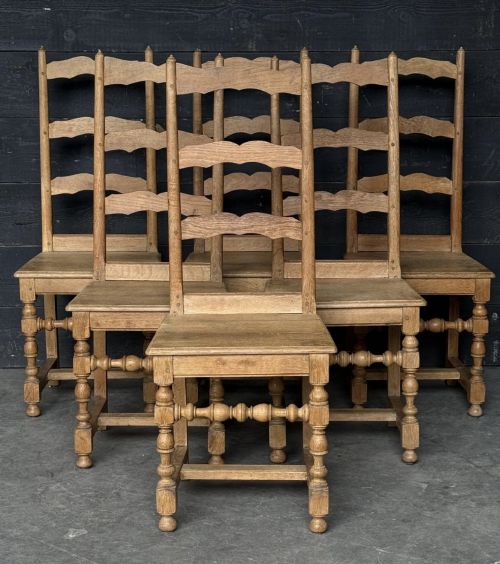
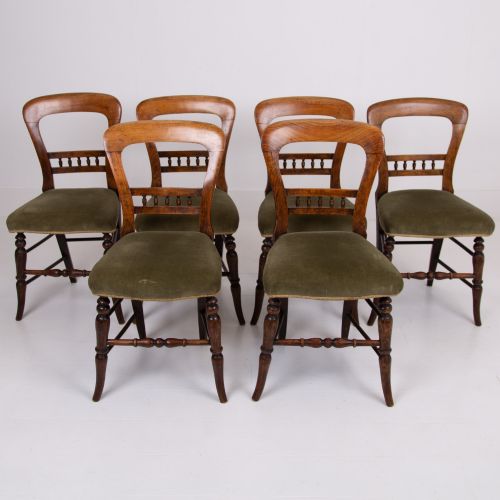
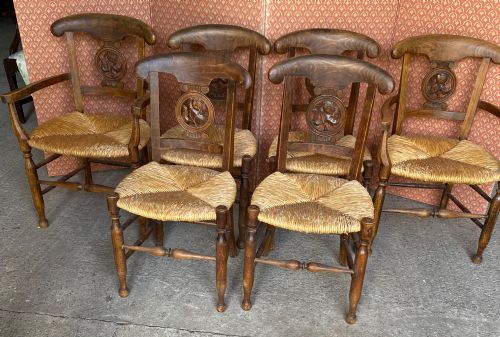
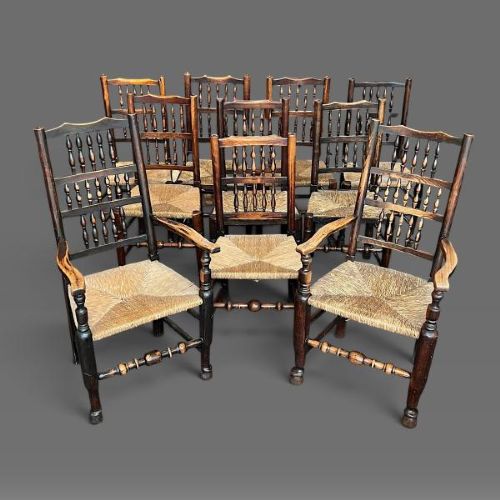
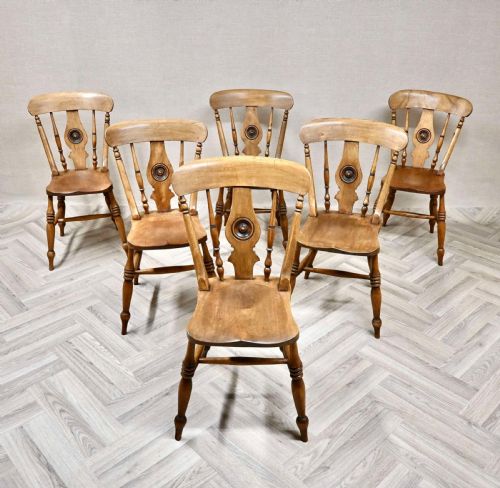
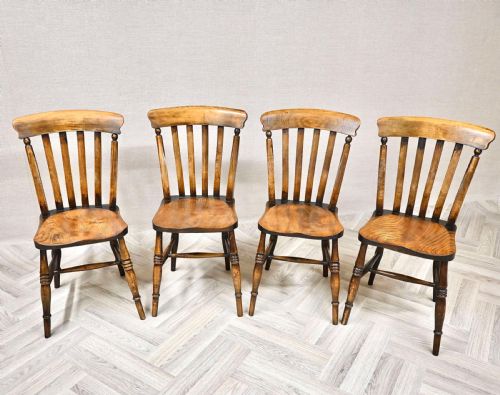
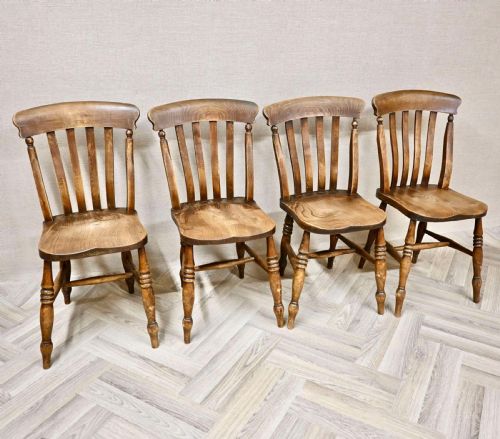
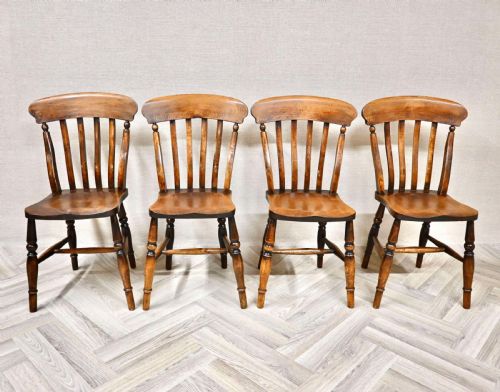
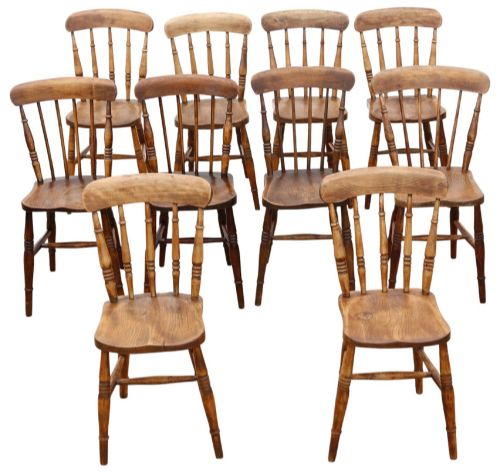
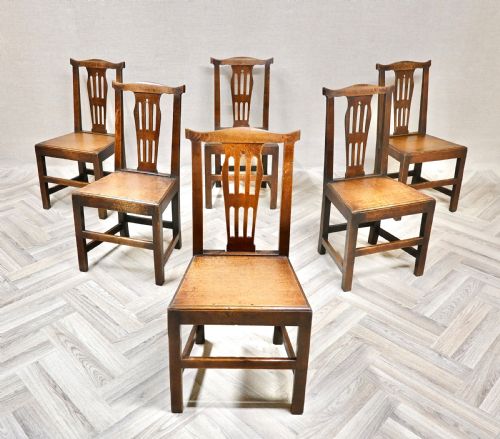
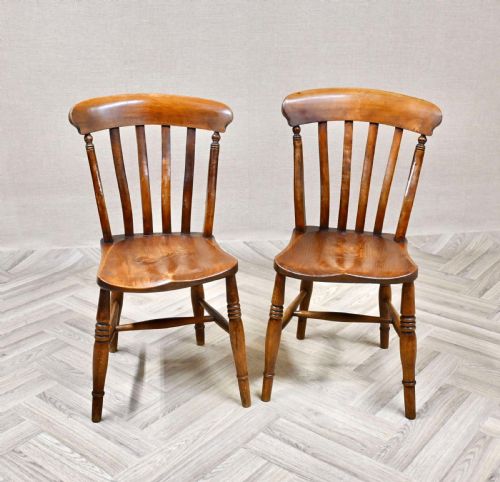
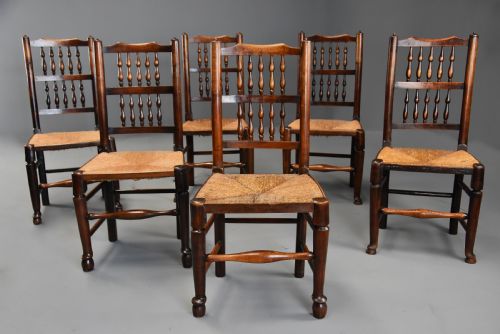
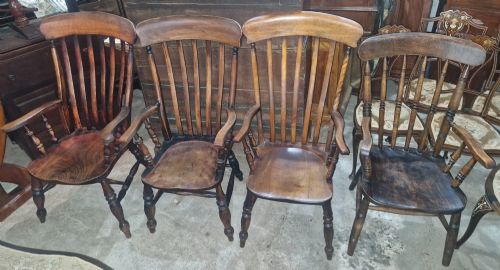
Traditional farmhouse chairs encompass utilitarian seating created for domestic spaces, drawing on regional vernacular designs from the Georgian period through the early twentieth century. Buyers seeking traditional farmhouse chairs encounter diverse configurations, from single spindle backs to large dining sets matching elm and beech.
The inventory on this page leans heavily toward nineteenth-century Windsor chairs, ladderbacks, and kitchen armchairs. These pieces reflect everyday rural life, constructed by local makers using accessible local timbers for sturdy service around the kitchen table.
How they were made
Maker operations combined solid elm seats with turned beech, ash, or oak for spindles, legs, and stretchers. Elm provided a tough, interlocking grain that resisted splitting when bored for legs, while ash and beech offered flexible strength for steam-bent hoops and backs.
Joinery relied on wedged tenons, pegged joints, and rush weaving for drop-in seats. Construction avoided nails where possible, utilising traditional timber shrinkage and wedged connections to keep joints tight through decades of hard use.
Several chairs bear the deep scuff marks of muddy boots braced against low stretchers by generations of weary diners.
What varies in quality
Quality rests in the harmony of timber selection, particularly the grain figure visible in the elm seat and the crispness of turned spindles. Superior examples display balanced proportions, deep saddle seats, and well-matched sets showing consistent regional turning styles.
Wear tells a story of survival, but the integrity of the original joints and the preservation of surface patina dictate standing. Chairs retaining their original stretchers and unpolished wood surfaces command greater appreciation than heavily sanded or structurally compromised replacements.
Worksop
The Traditional Farmhouse Chairs Glossary
- Windsor
- A chair built with a solid wooden saddle seat into which the legs, back, and bow are separately tenoned. This design evolved distinct regional variations across England.
- Ladderback
- A chair style featuring horizontal slats or rails between the vertical rear uprights. These frames often incorporate rush or woven seating.
- Spindle back
- A seating form utilising multiple slender turned vertical rods to support the backrest. These members are typically secured into a bentwood hoop or straight top rail.
- Patina
- The surface sheen and colour developed over decades through handling, wax, and natural oxidation. A good skin shows depth without artificial gloss.
- Harlequin set
- A collection of chairs that match in general style, period, or material but vary subtly in individual details. Such groupings occurred naturally as households gathered chairs over time.
Traditional Farmhouse Chairs: Frequently Asked Questions
What defines a traditional farmhouse chair?
These pieces are functional domestic seats rooted in regional vernacular traditions, built for everyday use in kitchens and dining spaces. They rely on local timbers and straightforward joinery rather than courtly ornament.
Characteristic forms include Windsor stick backs, ladderbacks with rush seats, and sturdy kitchen armchairs. Their design prioritises comfort, durability, and practical utility above stylistic fashion.
How do I date a farmhouse chair?
Dating relies on timber species, construction methods, and tool marks left on the underside of the seat. Early nineteenth-century examples often feature broader saddle seats and thicker turned components.
Later Victorian and Edwardian pieces show more standardised turning and lighter framing. Examining the wear around the foot stretchers and the nature of the wood finish also aids chronology.
Are harlequin sets authentic?
Harlequin sets represent the historical reality of how rural households accumulated dining seating over generations. Families bought or inherited chairs individually rather than purchasing large uniform sets.
Matching chairs by general type, height, and timber creates a cohesive dining arrangement while preserving this traditional method of gathering furniture.
How should I care for elm and beech chairs?
Maintenance requires stable indoor humidity and occasional application of traditional beeswax to nourish the dry wood. Avoid placing them near direct heat sources that cause timber to shrink and joints to loosen.
Gentle dusting with a soft cloth preserves the historic surface shine. Checking the undercarriage wedging periodically ensures structural stability during daily use.