
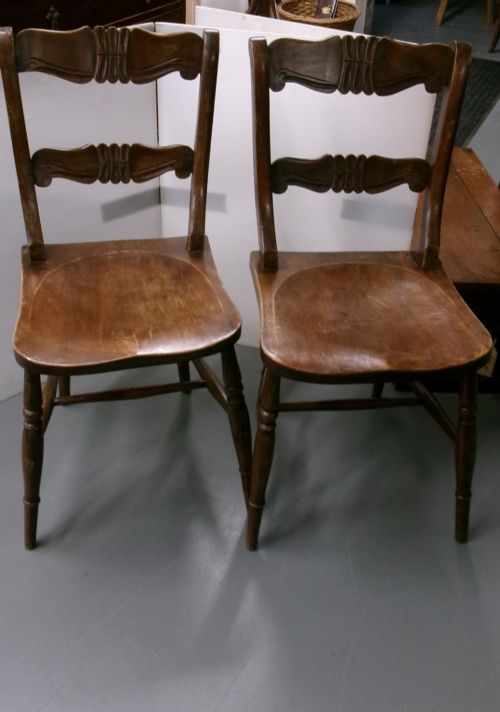
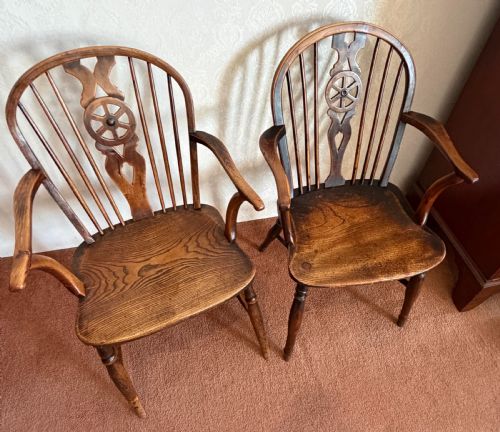


Pair Rustic Wooden Chairs
Pair rustic wooden chairs bring warmth to a room, offering honest vernacular design shaped by local hands and traditional country life.
Pair Rustic Wooden Chairs
When you search for pair rustic wooden chairs, you encounter honest vernacular seating shaped by local traditions and domestic needs. These pieces encompass everything from kitchen Windsors to country dining chairs, reflecting everyday utility rather than formal court taste.
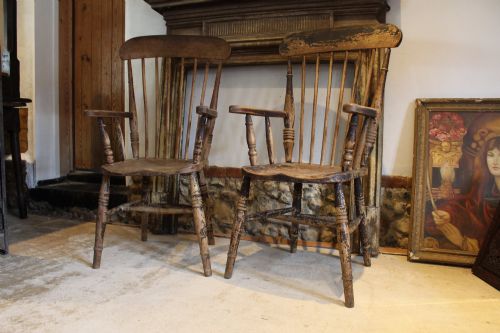
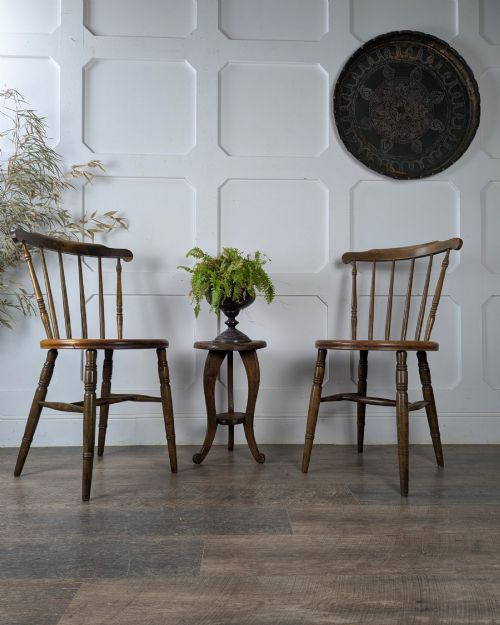
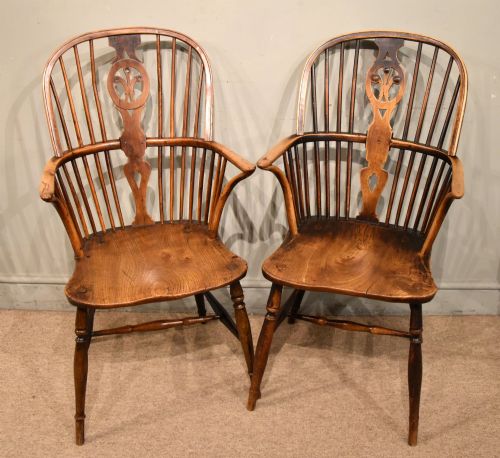
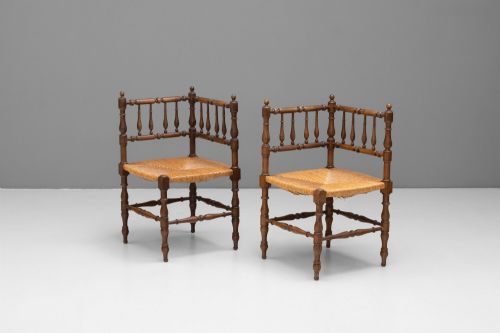
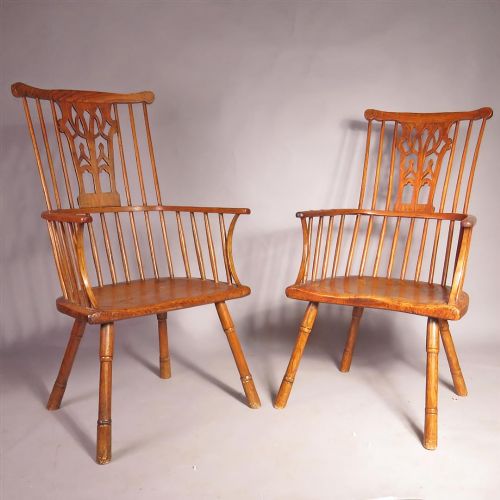
You are most likely to meet 19th-century examples on this page, alongside earlier Georgian items and later variations up to 1900. Forms range from wheelbacks and stick backs to ladderbacks, armchairs, and hall benches rooted in English, Alpine, and European folk styles.
The materials reflect the local woodlands where these seats originated, utilising native timbers like elm, ash, and oak. Surviving examples demonstrate how ordinary domestic furniture evolved to serve kitchens, parlours, and country halls with robust simplicity.
Materials and construction methods
Maker construction relied on combining contrasting native timbers to serve different structural purposes within a single frame. Elm frequently provided strong, figured seats that resisted splitting, while ash or beech supplied resilient spindles, legs, and bentwood bows.
Joinery methods depended on traditional techniques such as wedged through-tenons, stick-back socketing, and bobbin turning. Frames were built by hand using seasoned wood, occasionally finished with paint or left bare to acquire a natural patina through decades of daily use.
Some chairs retain centuries of kitchen polish on their armrests, shaped perfectly by generations of resting elbows.
Assessing quality and character
Quality in country seating rests on the harmony of the proportions and the integrity of the timber selection. A superior pair displays well-matched grain patterns, balanced turning, and comfortable ergonomics shaped by the original maker's eye.
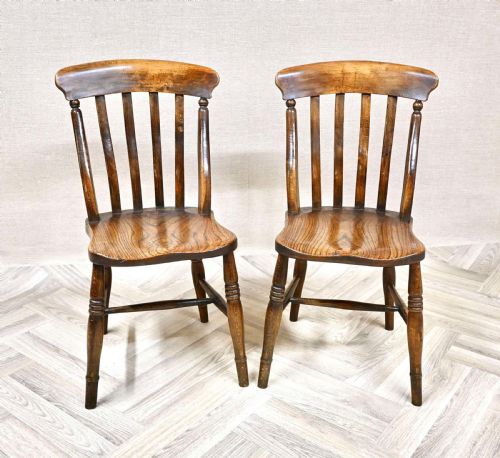
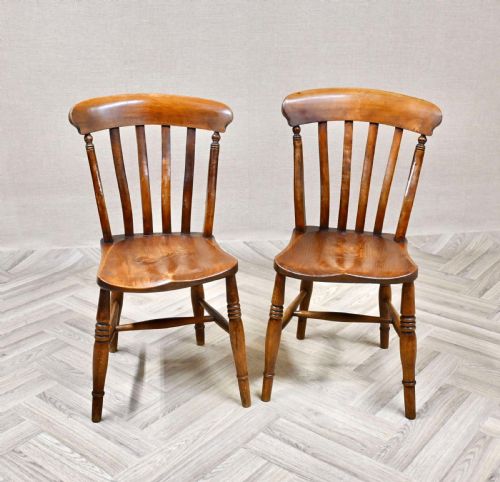
The character of the surface timber dictates much of the visual appeal, where untouched patination from years of polishing and handling elevates an ordinary seat. Subtle details such as nicely sculpted elm seats or refined comb backs separate utilitarian workshop output from finer vernacular craftsmanship.
The Pair Rustic Wooden Chairs Glossary
- Windsor
- A chair built with a solid wooden saddle-shaped seat into which the legs and back sticks are independently tenoned. This technique creates a sturdy and enduring domestic form.
- Comb back
- A Windsor variation where the top rail resembles the spine of a comb, featuring upward-projecting spindles. This style often dates to the 18th century.
- Bobbin turned
- A style of furniture leg or stretcher shaped on a lathe to resemble a series of rounded spools or bobbins. It is commonly found on mid-18th-century oak seating.
- Vernacular
- Localized furniture design created by regional craftsmen using available materials rather than following strict London fashion. These pieces tell the story of specific geographic traditions.
- Ladderback
- A chair back constructed from horizontal wooden slats set between two upright posts. This traditional form was widely used for vernacular dining and kitchen seating.
Pair Rustic Wooden Chairs: Frequently Asked Questions
How do I date an old wooden chair?
Dating relies on observing construction marks, timber choice, and tool evidence visible on the underside of the seat. Hand-turned spindles and accumulated surface wear often point toward earlier periods.
Style shifts also offer clues, moving from heavy 18th-century oak turnings to lighter elm and beech Windsor forms during the 19th century.
Are these chairs comfortable for daily dining?
Most country chairs feature generously scooped wooden saddles designed for long hours of sitting around the kitchen table. Adding loose cushions can enhance comfort without altering the historic frame.
Their sturdy construction makes them well-suited to everyday use in modern dining spaces.
What is the difference between a stick back and a wheelback?
A stick back utilises simple vertical spindles running from the seat up to a bentwood bow or crest rail. This clean arrangement defines many traditional country kitchen forms.
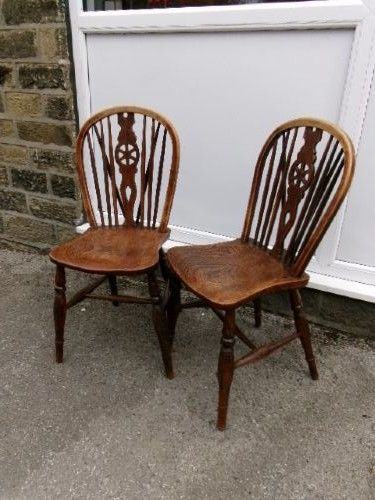
A wheelback incorporates a pierced central splat shaped like the wheel of a carriage, typically appearing on 19th-century dining seats.
How should I care for antique wooden seating?
Keep wooden furniture away from direct heat sources and drastic humidity changes to prevent the timber from splitting or warping. Dust gently with a dry cloth and occasionally apply a neutral beeswax to nourish the surface.
Avoid modern chemical polishes that can degrade the historic finish and patina over time.