


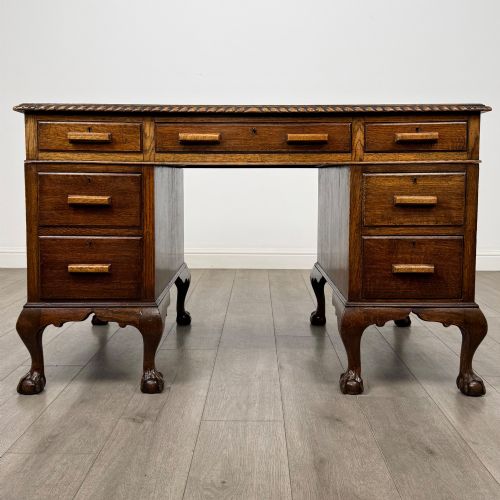
Traditional Executive Writing Table
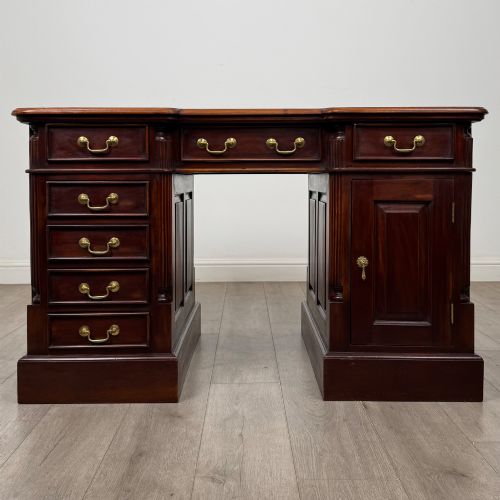
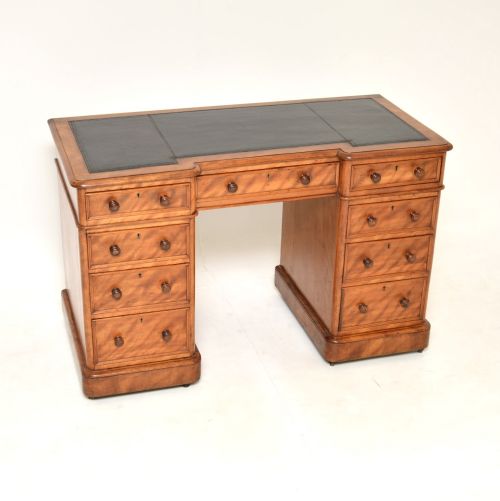
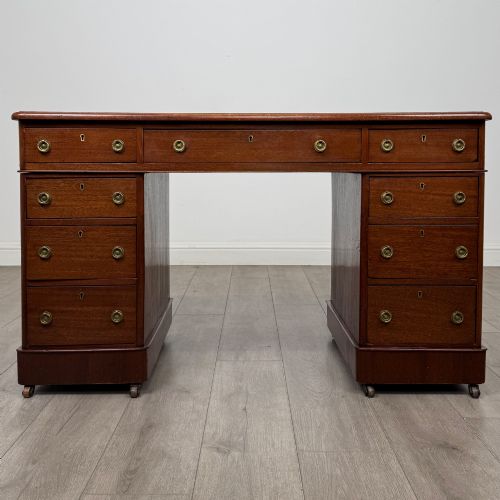
A traditional executive writing table brings substantial timber, leather writing surfaces and generous pedestals into a study.
Traditional Executive Writing Table
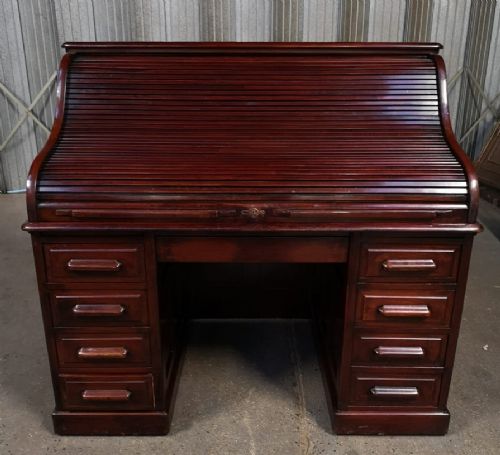
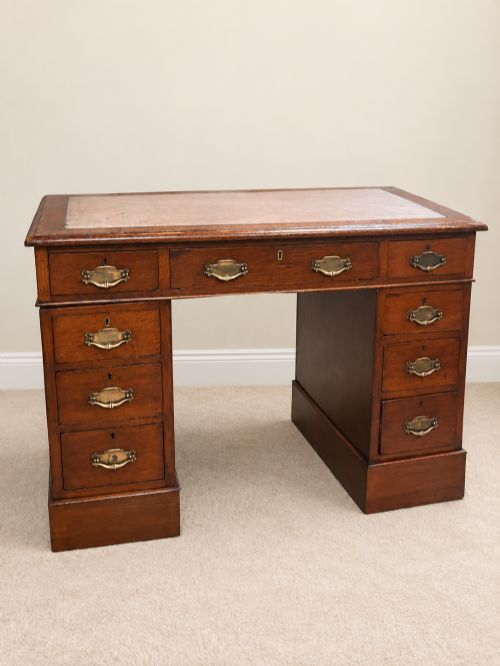
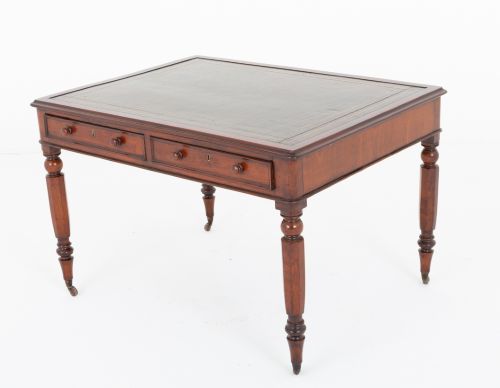
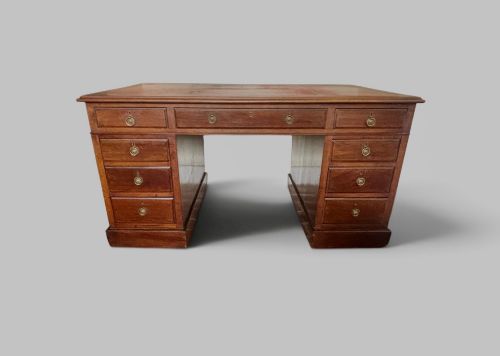
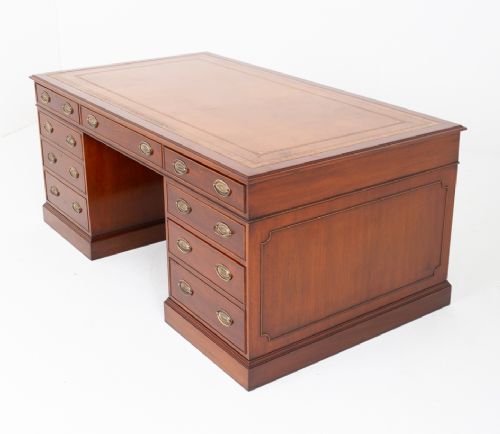
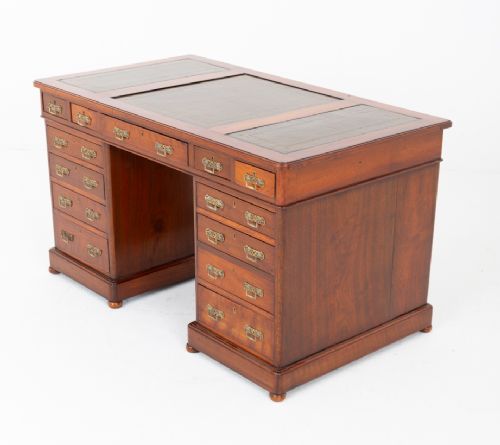
A traditional executive writing table appears primarily as a pedestal desk or partners desk, designed to stand freestanding within a room with drawers on both sides or fitted banks beneath the top. The selection spans the nineteenth century and the Edwardian era, drawing heavily on Victorian and Georgian design principles.
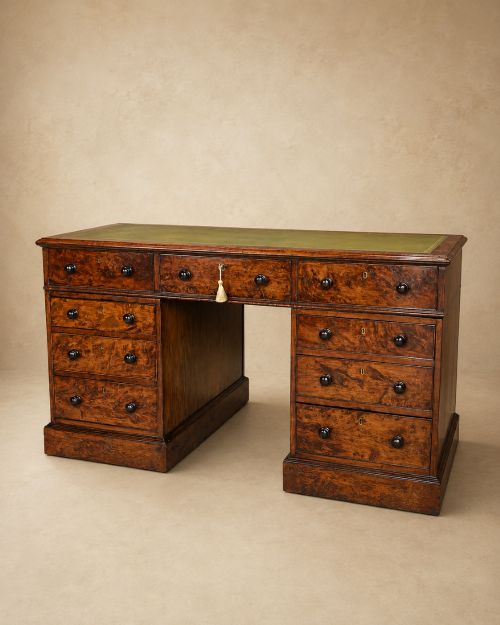
Mahogany and walnut form the core of these pieces, alongside oak and burr walnut veneers. Most examples incorporate inset leather writing surfaces, frequently accented with blind tooling.
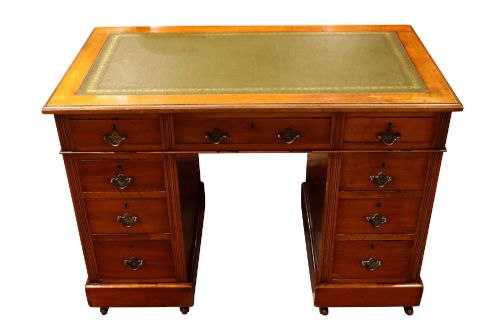
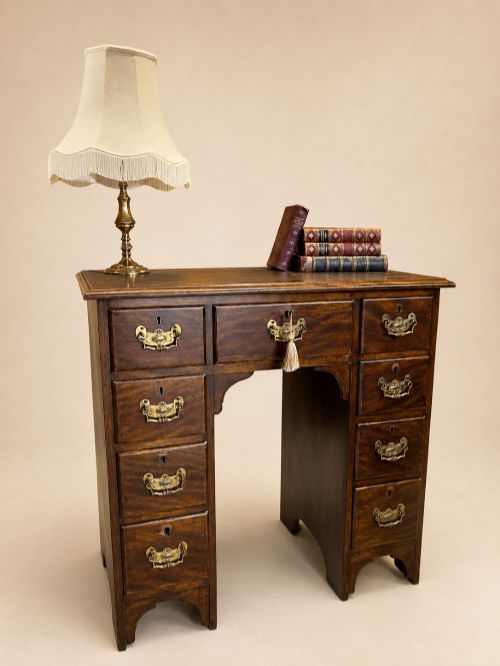
Proportions range from compact kneehole desks to large library tables and partners desks measuring up to six feet in length. Revival styles such as Chippendale and Queen Anne appear alongside simpler utilitarian forms.
Materials and construction
Cabinetmakers utilised solid mahogany, oak, and walnut for primary structures, framing large writing surfaces and pedestal carcases with timber built to endure daily administrative use. Burr walnut veneers provide highly figured decorative surfaces on drawer fronts and panels.
Leather inserts form the central writing platform on many desks, glued into recessed wooden channels and bordered by gilt tooling. Brass hardware, including drop handles and key escutcheons, secures the drawers and completes the joinery.
Several partners desks include hidden drawers tucked discreetly beneath the main writing surface for storing private correspondence.
Distinctions in manufacture
The standard of a traditional executive writing table rests upon the choice of timber figure, the precision of the dovetail joints in the drawer construction, and the integrity of the secondary woods used internally. Better examples employ densely grained mahogany or matched burr walnut throughout the visible carcase.
Hardware originality and the preservation of fitted leather writing surfaces elevate certain pieces above standard utilitarian desk forms. Tables constructed for dual-sided use as partners desks exhibit finished cabinetry on all four elevations rather than plain backing boards.
Trollope and sons·Wylie and Lochhead Glasgow
The Traditional Executive Writing Table Glossary
- Pedestal desk
- A heavy freestanding desk comprising two supporting pedestals of drawers beneath a single wide writing surface. This layout forms the standard configuration for executive office furniture.
- Partners desk
- A large double-sided desk built with drawers and cupboards facing outward on both longitudinal sides. This format allowed two people to work opposite one another.
- Kneehole desk
- A smaller pedestal desk featuring a central recess for the user's legs, flanked by vertical banks of drawers. These pieces suit more compact studies.
- Partners writing table
- A large library table without central pedestals, supported instead by four corner legs or trestle ends while maintaining workspace on both sides.
- Tooled leather
- A writing surface decorated around its perimeter with pressed gold leaf or blind impressions using brass hand tools.
Traditional Executive Writing Table: Frequently Asked Questions
What is a partners desk?
A partners desk is a large executive writing table designed with drawers and cupboards on both sides. This allows two people to sit opposite each other while working.
Such pieces typically feature finished wooden backs and generous proportions suited to central placement within a large study or library.
How do I maintain the leather top?
The leather writing surface requires occasional treatment with neutral leather balms to prevent drying and cracking. Avoid abrasive cleaners near the gold tooling borders.
Keep liquids away from the leather and wipe spills immediately with a dry cloth to protect the wood underneath.
Are these desks freestanding?
Most pedestal desks and partners desks in this selection are finished on all four sides. This allows them to sit centrally in a room rather than against a wall.
Check the back elevation in the listing photographs to confirm the finish matches the front and sides.
How to tell Victorian from Edwardian desks?
Victorian desks tend to feature dense solid mahogany, heavy brass handles, and robust proportions dating from the mid to late nineteenth century. Edwardian pieces often utilise lighter walnut or oak frames with refined revival detailing.
Drawer construction and internal secondary timbers also provide clues to the exact manufacturing decade.