


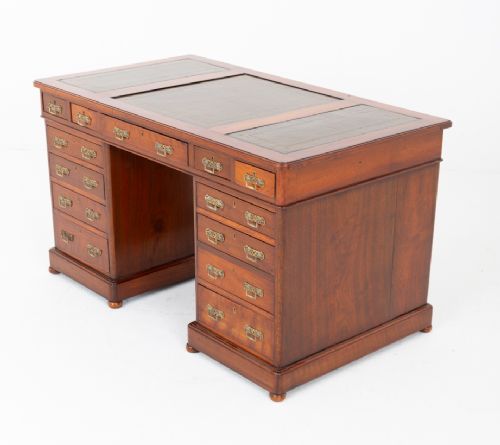
Traditional Executive Writing Desk
A traditional executive writing desk brings presence to a study through substantial timber pedestals and practical working surfaces.
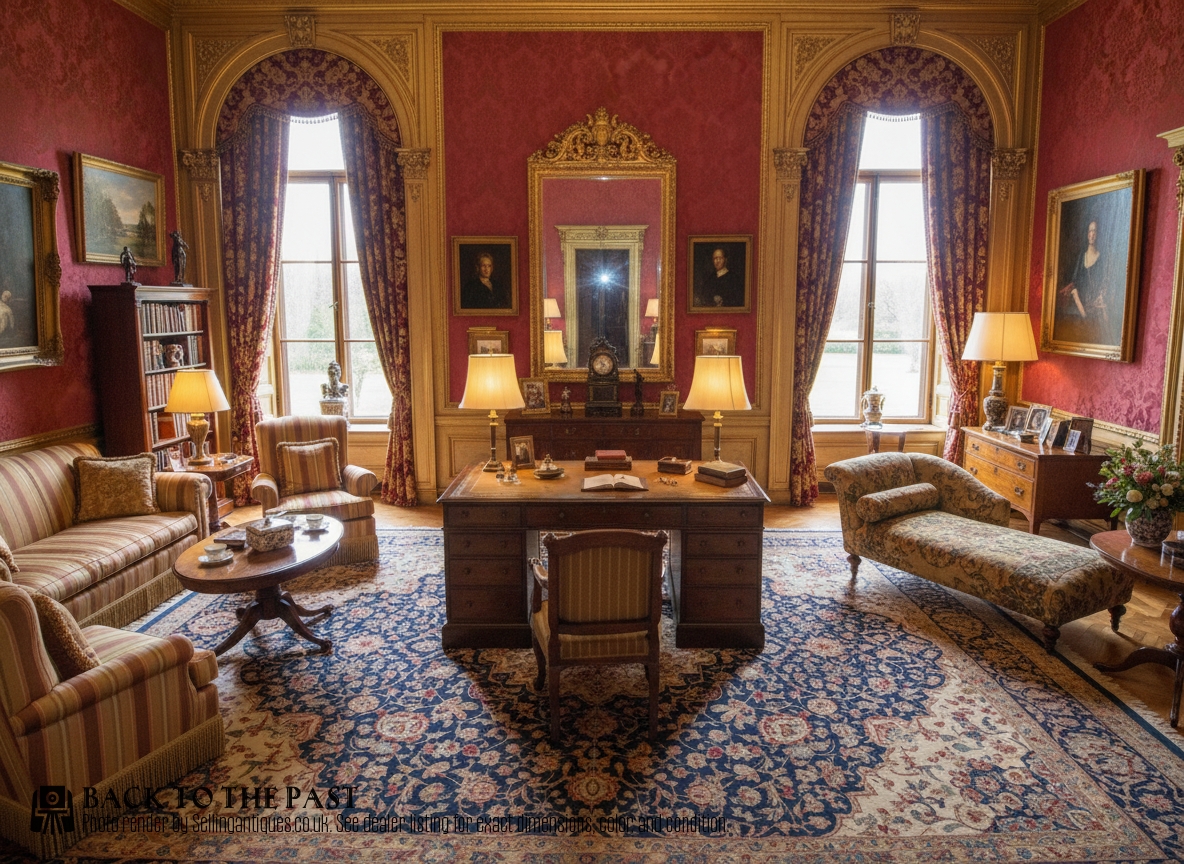
Traditional Executive Writing Desk
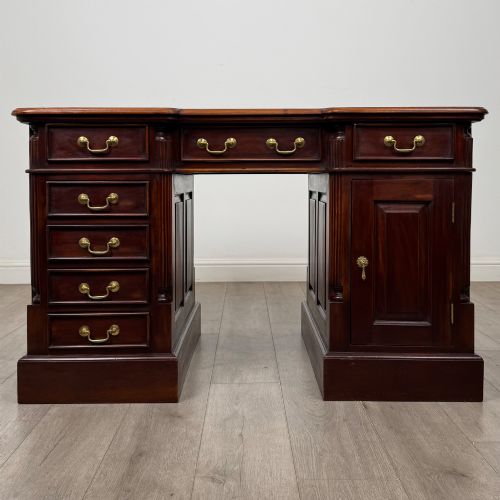
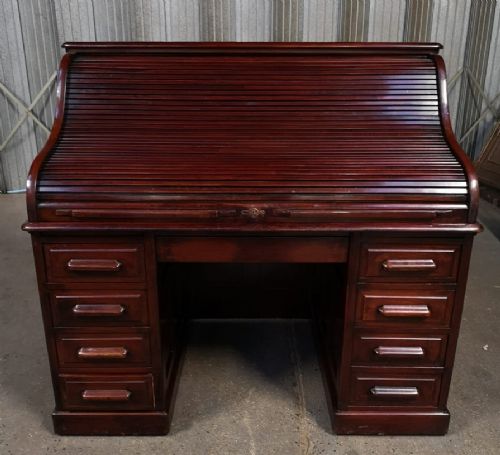
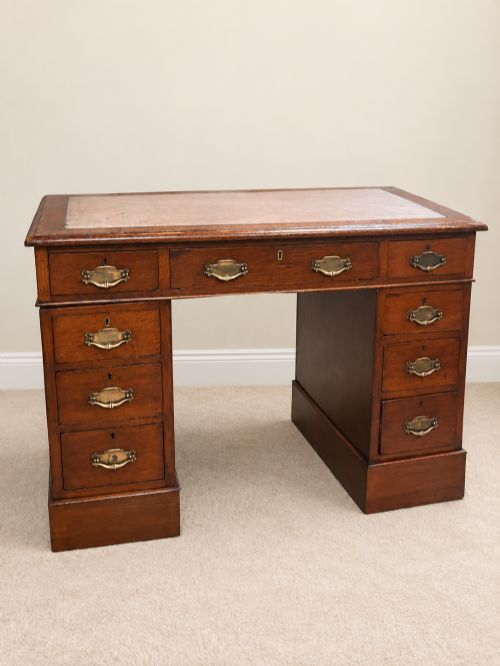
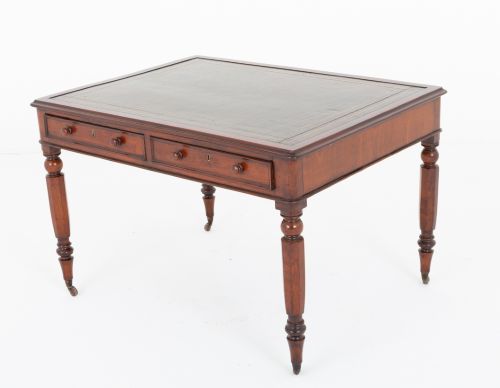
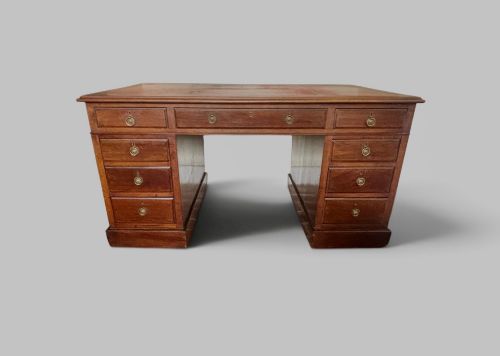
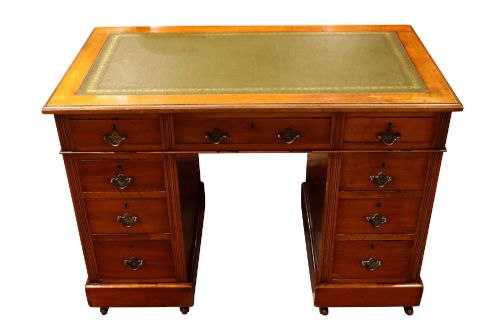
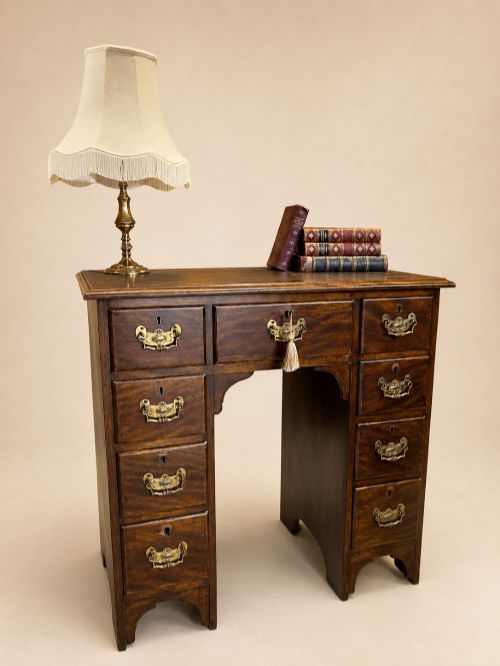
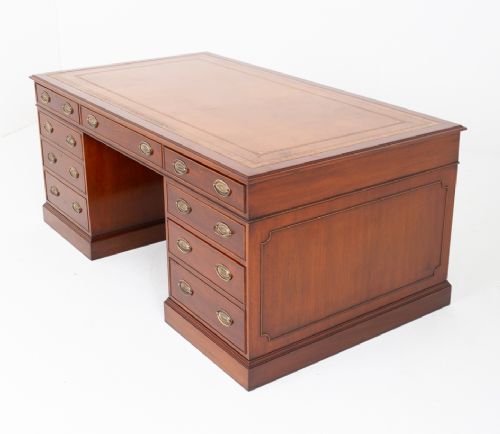
A traditional executive writing desk typically takes the form of a pedestal desk or partners desk, designed for freestanding placement in a room with drawers set into twin supporting columns. These pieces emerge predominantly from the nineteenth and early twentieth centuries, spanning the Victorian and Edwardian eras alongside revival aesthetics such as Queen Anne and Chippendale.
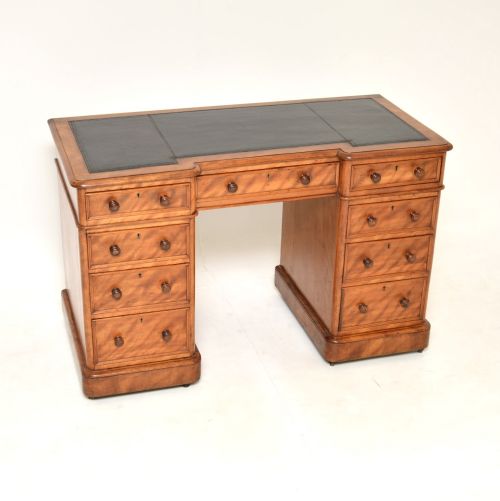
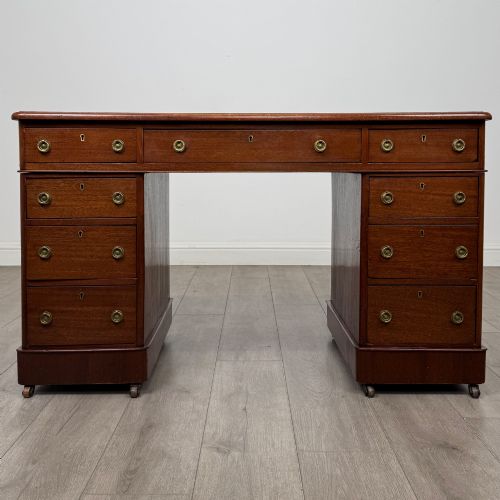
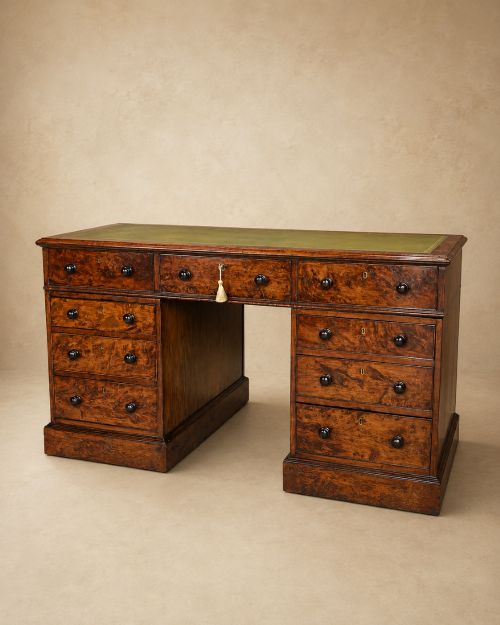
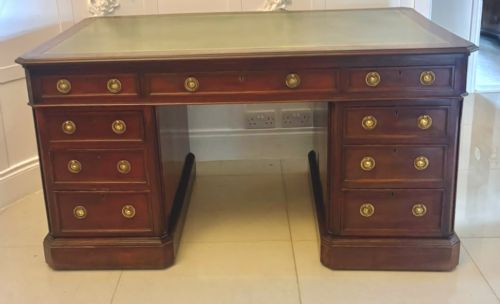
The version most commonly met on this page is the Victorian mahogany pedestal desk, often fitted with a leather inset writing surface and multiple drawers. Alongside these, examples in oak and burr walnut appear frequently, ranging from compact kneehole configurations to large partners tables built for shared use.
Materials and construction methods
Cabinet makers utilised dense hardwoods such as mahogany, oak, and walnut, often selecting burr walnut veneers to create figured panels on drawer fronts and top surfaces. Solid timber carcases house dovetailed drawers, while brass hardware secures handles, locks, and castors.
Working surfaces are commonly inset with tooled leather writing panels, bordered by blind tooling or gilt decoration. Secondary woods line the drawer interiors, and fitted internal compartments provide dedicated space for stationery and paperwork.
Listings span the nineteenth and twentieth centuries, incorporating Victorian, Edwardian, and George III periods alongside revival styles.
Distinctions in construction and finish
Quality rests upon the choice of timber and the precision of the cabinet work, particularly in the figuring of mahogany or burr walnut veneers and the neatness of drawer dovetails. Desks finished on all sides for freestanding central placement demand a higher standard of secondary timber and back-panel detailing.
Original elements such as brass handles, leather writing surfaces, and working locks elevate the integrity of a piece. The presence of maker signatures or retail stamps also distinguishes standard commercial output from workshop productions.
Trollope and Sons·Wylie and Lochhead Glasgow·Elkington
The Traditional Executive Writing Desk Glossary
- Pedestal desk
- A heavy office or library table comprising two vertical stacks of drawers with a central recess for the sitter.
- Partners desk
- A large double-sided desk designed to accommodate two people working opposite one another with drawers on both faces.
- Kneehole desk
- A compact pedestal desk featuring a central recess beneath the writing surface, often containing a single shallow drawer above.
- Writing slide
- A pull-out board positioned above the pedestals to extend the functional surface area for paperwork.
- Burr walnut
- A highly figured timber harvested from the root growth of the walnut tree, prized for swirling grain patterns.
Traditional Executive Writing Desk: Frequently Asked Questions
How do I care for a leather desk top?
The leather inset on a traditional writing surface requires gentle cleaning with a damp cloth and occasional treatment with specialist leather balsam or wax to prevent drying and cracking. Avoid using harsh chemical cleaners or placing hot cups directly onto the hide.
Keep the desk away from direct sunlight and strong heat sources, which can fade the leather and cause the timber beneath to warp or shrink over time.
Are these desks suitable for modern computers?
Many of these pieces offer ample surface area and sturdy construction capable of supporting modern monitors and equipment. However, the fixed height of antique kneeholes requires careful measurement against modern office chairs.
Drawers are proportioned for paperwork and stationery rather than modern tech storage, so cord management must be handled externally without modifying the historic structure.
How do I distinguish Victorian from Edwardian desks?
Victorian examples generally feature heavier proportions, rich dark mahogany timbers, and robust brass hardware. Drawer construction often employs hand-cut dovetails and solid secondary woods.
Edwardian pieces frequently embrace lighter oak or walnut timbers, sometimes reflecting revival styles like Queen Anne or Chippendale with simpler lines and brighter finishes.