
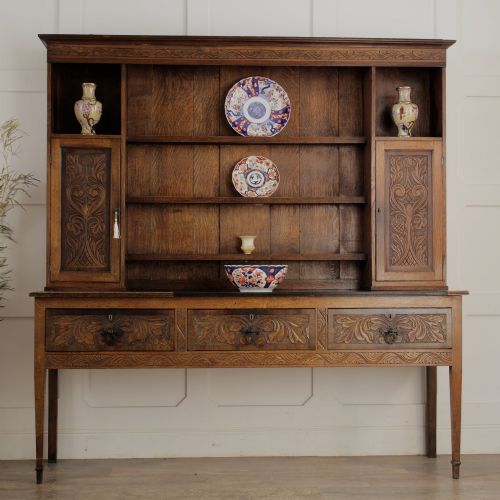


Traditional English Welsh Dresser
A traditional english welsh dresser brings centuries of vernacular utility into a room, offering robust storage and open display shelves for everyday kitchenware.
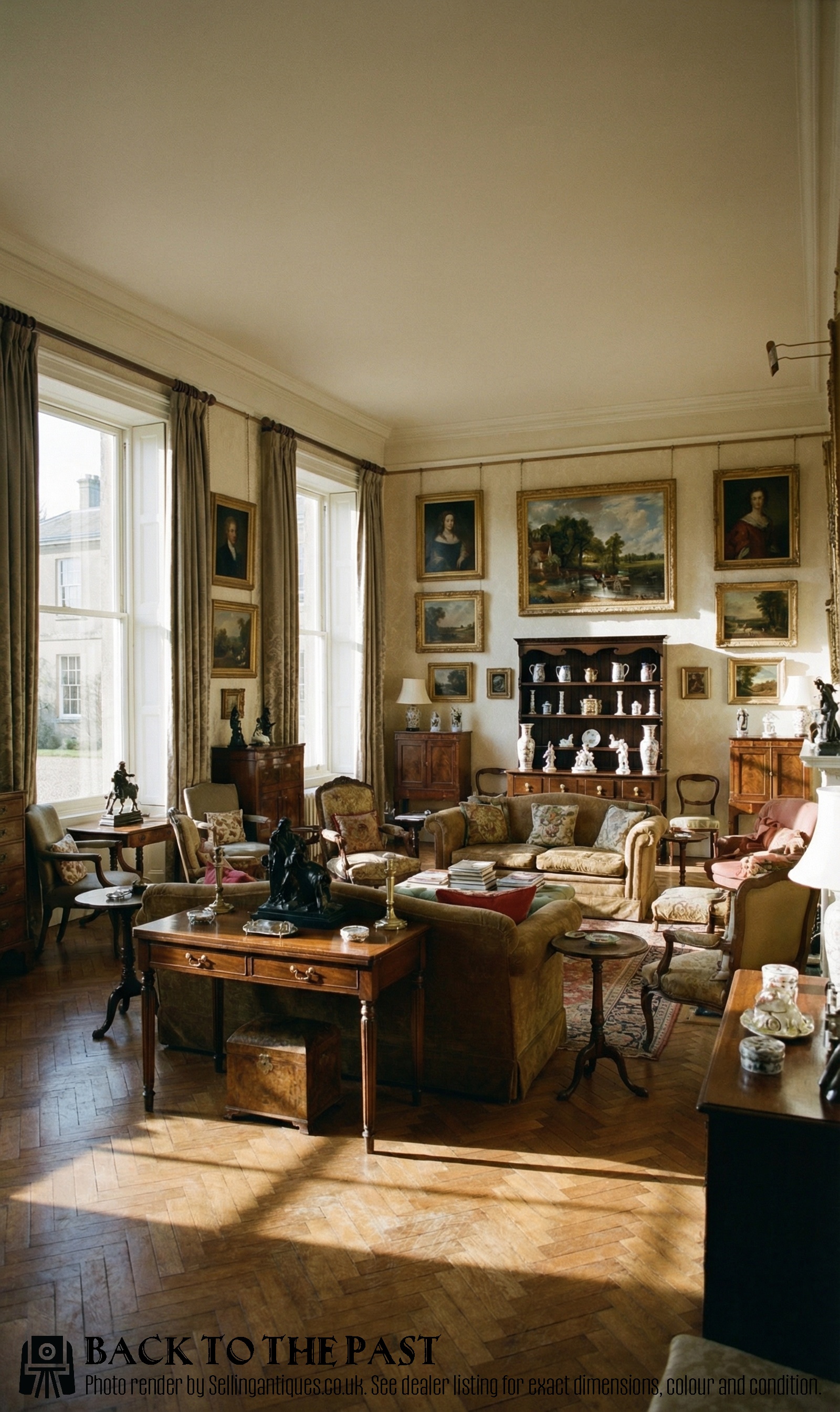
Traditional English Welsh Dresser
When you search for a traditional english welsh dresser, you encounter heavy timber furniture designed for storing and displaying domestic pottery. These pieces combine a lower base of cupboards or drawers with an upper plate rack for plates and bowls.
The examples gathered here span from the early eighteenth century through the nineteenth and into the early twentieth century. You will find vernacular forms ranging from stark eighteenth-century oak pieces to mid-nineteenth-century carved cupboards and revival styles.
Country and regional variants dominate the selection, including West Country kitchen pieces and farmhouse examples. They appear in solid timbers like oak, elm, and pine, often showing decades of honest wear and practical domestic use.
Materials and construction
Makers built these pieces primarily from native hardwoods such as oak and elm, supplemented by pine for secondary elements like drawer linings and backboards. Surfaces often received a painted finish or were left to develop a rich patina through simple waxing.
Construction relies on traditional joinery techniques appropriate for vernacular furniture, using pegged mortise and tenon joints for structural frames. Hardware typically includes brass or iron drop handles and hinges, fitted to withstand daily opening and closing.
The listings span from the early eighteenth century through the Victorian era to the early twentieth century, utilising oak, elm, and pine.
Judging quality and character
Quality rests upon the integrity of the timber and the honesty of the surface finish, distinguishing untouched period examples from later alterations. Pieces retain higher standing when their original boards, hardware, and structural proportions remain unaltered.
The presence of early carved decoration or pot boards beneath the base adds distinction to regional vernacular forms. Balance between the weight of the base and the height of the display rack governs the visual success of each individual dresser.
The Traditional English Welsh Dresser Glossary
- Pot board
- An open lower shelf fitted beneath a dresser base for storing heavy ceramic pots and serving dishes. This feature is characteristic of eighteenth-century vernacular kitchen furniture.
- Plate rack
- The upper tiered shelving unit attached to a dresser base designed to hold plates upright for display and drying. It typically incorporates narrow grooves to prevent ceramics from slipping.
- Vernacular
- Furniture built by local country joiners using regional traditions rather than following metropolitan stylistic decrees. These pieces prioritise practical utility above academic design.
- Patina
- The deep surface sheen and colour acquired by wood over centuries through handling, polishing, and light exposure. It marks genuine age and distinguishes period pieces from modern reproductions.
Traditional English Welsh Dresser: Frequently Asked Questions
What is a traditional english welsh dresser?
A traditional english welsh dresser is a large two-part piece of furniture consisting of a lower storage base with drawers or cupboards and an upper open rack for displaying plates.
Historically used in farmhouses and country kitchens, these units held the household's everyday ceramics and cooking utensils within easy reach.
How do I date an antique dresser?
Dating relies upon examining the timber species, construction methods, tool marks, and overall joinery style. Eighteenth-century pieces typically show hand-planed surfaces and pegged joints, whereas later nineteenth-century examples often incorporate machine-sawn elements.
Changes in hardware styles and the presence of regional vernacular traits also help narrow down the period of manufacture.
Where should I place a dresser?
These large timber pieces suit dining rooms, kitchens, or spacious hallways where their display capacity can be utilised for tableware. They require a sturdy wall to anchor the upper rack securely and sufficient floor space to allow drawers to open fully.
Keep them away from direct heat sources and strong sunlight to protect the aged timber and any historic painted finishes.
Are these dressers made of solid wood?
Period examples utilise solid native timbers such as oak, elm, and pine throughout their primary construction and internal components. Secondary woods like pine frequently appear in backboards and drawer linings, reflecting standard regional cabinetmaking practices of the time.