







Traditional English Hall Furniture
Traditional English hall furniture spans robust oak settles and elegant mahogany lowboys designed for welcoming spaces.
Traditional English Hall Furniture
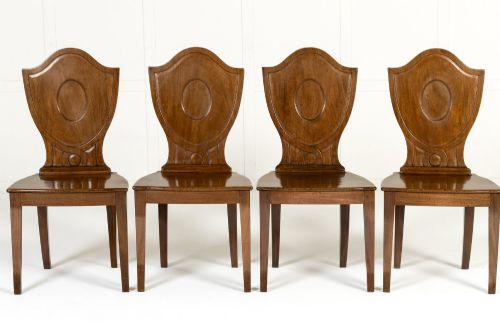
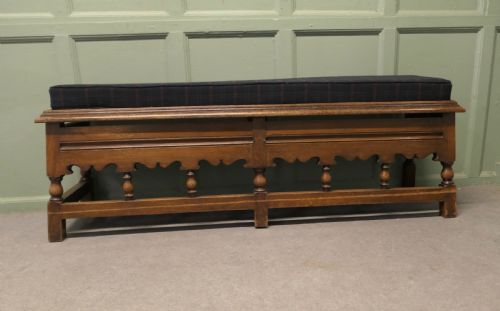
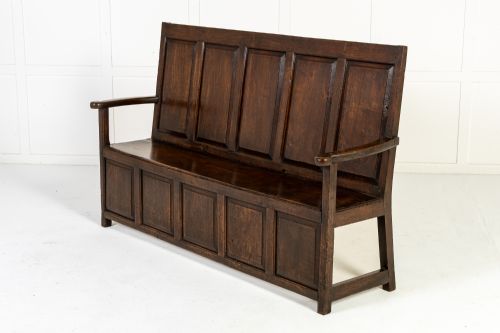
The selection ranges from sturdy 18th century elm court cupboards and oak settles to refined Georgian lowboys and 19th century Regency hall chairs. Oak and elm predominate in rustic farmhouse and vernacular forms, whilst mahogany and walnut appear in more formal Georgian and later revival pieces.
How these pieces were made
Cabinet makers utilised native timbers such as oak, elm and pine for structural resilience in heavy-use entrance areas, employing traditional joinery like mortise and tenon. Finer surfaces in mahogany and walnut display careful polishing and occasionally carved details such as linenfold panelling.
Utility elements integrate brass and iron fittings, seen in folding boot jacks and umbrella racks. Painted finishes also occur on pine and functional storage benches, providing both protection and a specific aesthetic finish.
Traditional English Hall Furniture Retail Price Guide 2026
Typical asking prices for traditional english hall furniture among the pieces listed under this phrase on Sellingantiques today, from the lower quarter to the upper quarter. They describe what is for sale here now, not the wider market.
A walnut folding shoe pull proves that Victorian visitors faced the exact same muddy boot removal struggles as modern guests.
What varies in quality
Quality in these items rests upon the selection of timber and the integrity of the original construction rather than decorative excess. Pieces fashioned from dense, figured oak or well-turned mahogany demonstrate superior longevity and material selection.
The degree of original surface preservation, from polished mahogany to untouched painted pine, distinguishes fine survivals. Proportions and the subtlety of vernacular or period styling also separate standard utility items from more distinguished examples.
The Traditional English Hall Furniture Glossary
- Settle
- A wooden bench with a high back, solid arms and often a storage compartment beneath the seat, designed to block draughts in hallways.
- Lowboy
- A small side table with drawers, typically standing on four legs, functioning historically as a writing desk or dressing table.
- Boot jack
- A small hinged or V-shaped device, often in walnut or iron, used for pulling off boots without soiling the hands.
- Linenfold
- A style of wood panelling carved to resemble folded vertical sheets of linen, frequently found on early oak cupboards.
Traditional English Hall Furniture: Frequently Asked Questions
What is an English settle?
An English settle is a high-backed wooden bench, frequently constructed from solid oak or elm, designed to provide sturdy seating near entrances while shielding occupants from cold drafts.
Historically placed in hallways and common rooms, these pieces often feature panelled backs and occasionally incorporate integrated storage beneath the seat for boots or heavy garments.
How do I use a lowboy in a hall?
A lowboy functions effectively as a compact side table or reception desk within a hallway, offering a surface for correspondence and keys.
The inclusion of small drawers provides discreet storage for everyday items, whilst the shallow depth ensures the table fits narrow corridors without obstructing movement.
What woods were used for hall furniture?
Cabinet makers relied heavily on native hardwoods such as oak, elm and walnut for durability in high-traffic entrance areas.
Mahogany and pine also appear frequently, utilised respectively for refined 19th century chairs and painted functional storage benches or tables.
Are these pieces suitable for modern hallways?
These historical utility pieces adapt easily to contemporary homes, offering practical solutions for coat storage, seating and boot management.
Their robust construction in timber ensures they withstand daily use whilst introducing period character to entrance spaces.