
Traditional Elm Chair
A traditional elm chair brings organic grain and honest country craft into a modern interior.
Traditional Elm Chair
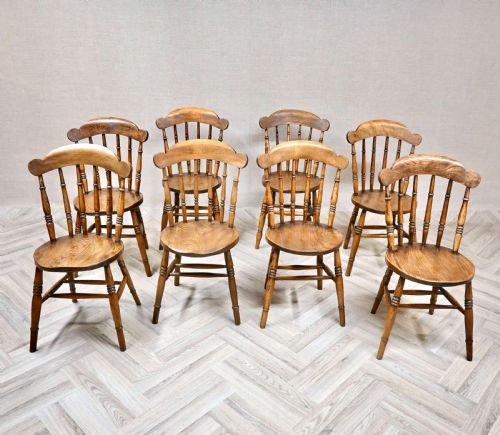
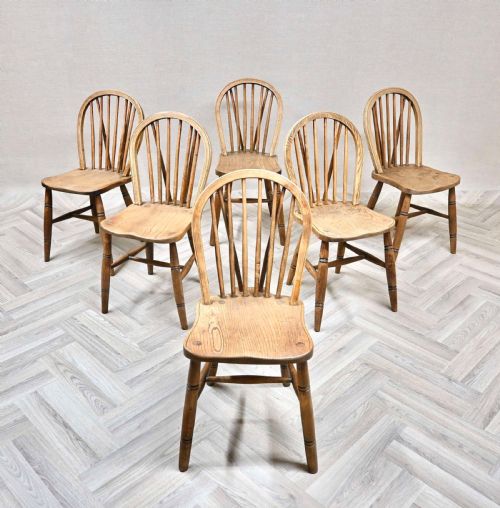
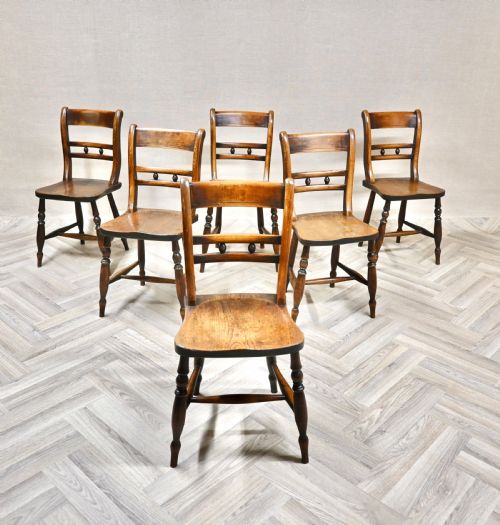
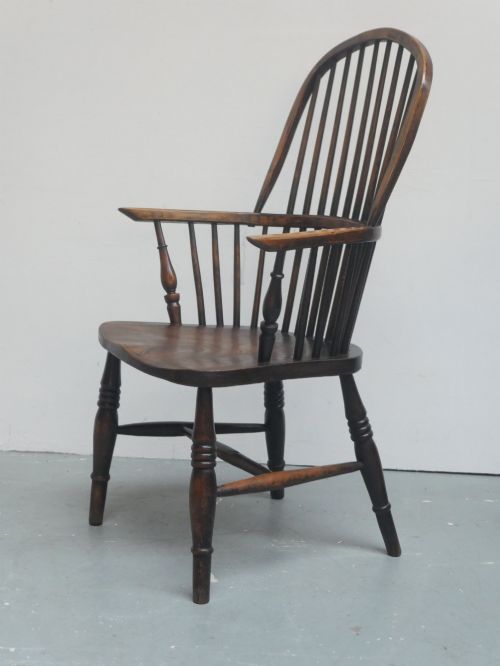
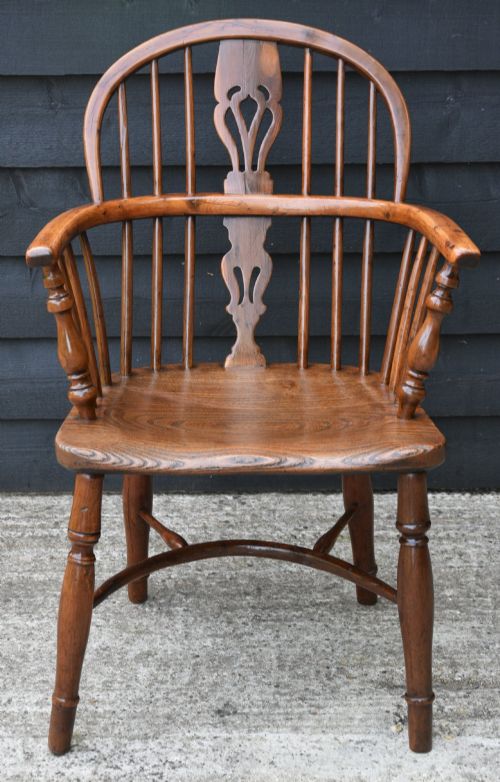
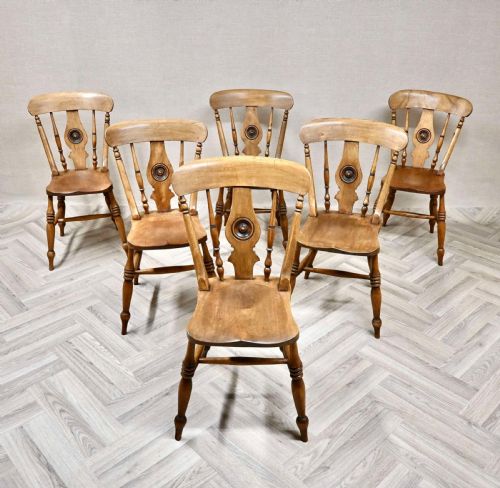
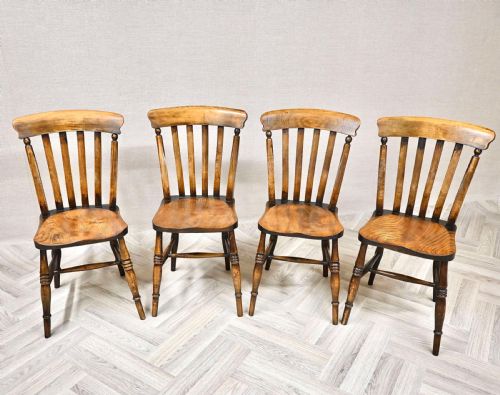
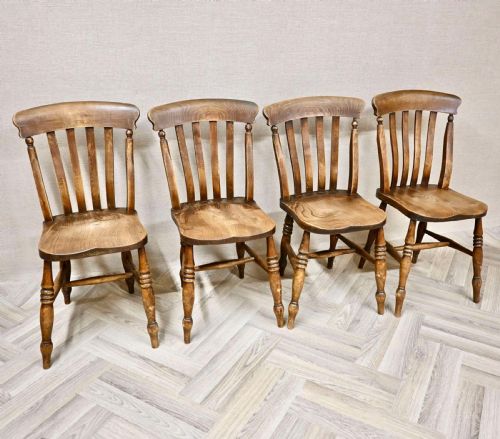
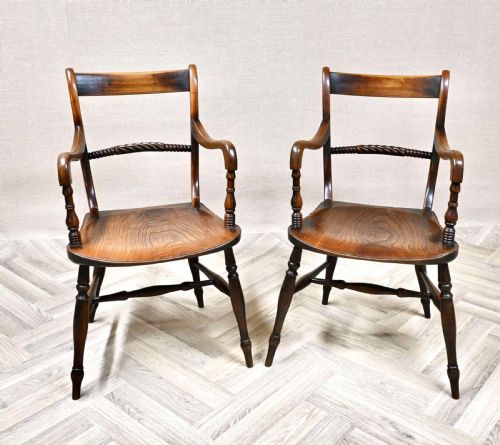
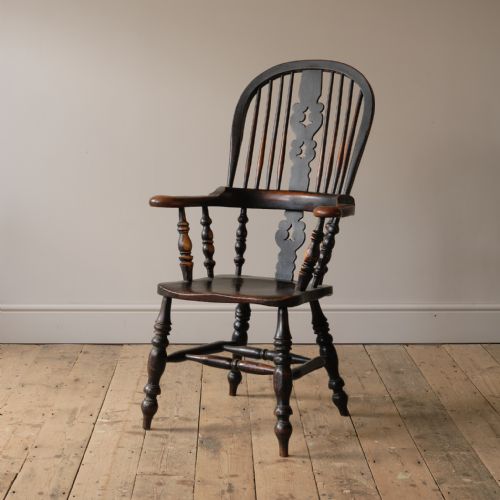
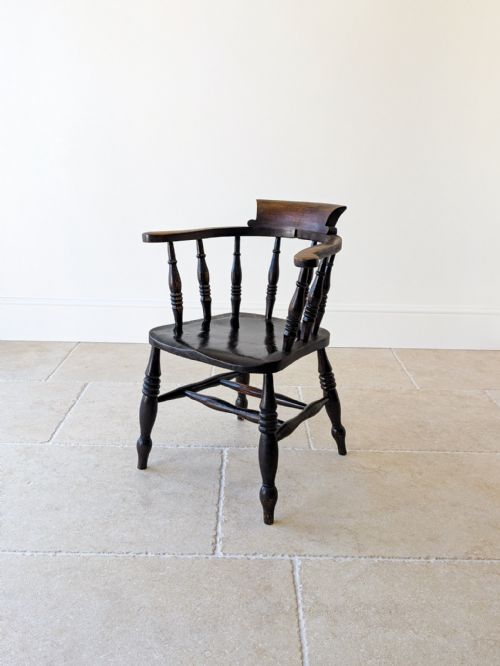
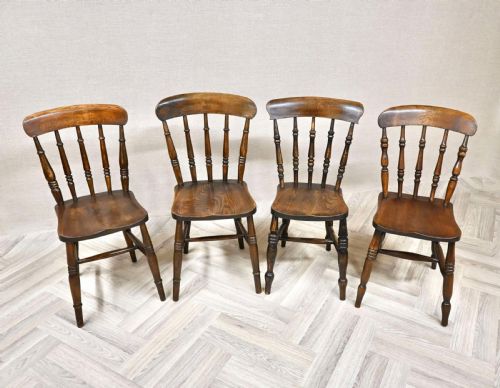
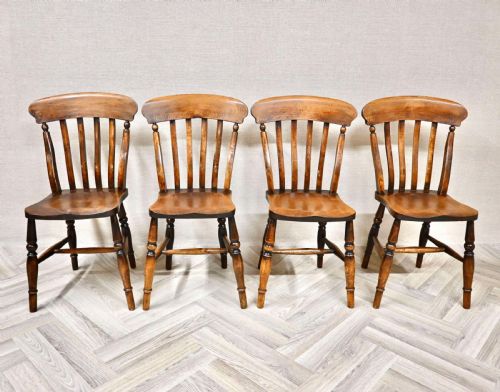
When searching for a traditional elm chair, collectors encounter robust seating rooted in English country vernacular design, spanning the Georgian, Victorian, and Edwardian eras. The selection comprises sturdy Windsor armchairs, matched dining sets, and captain's chairs designed for practical domestic utility.
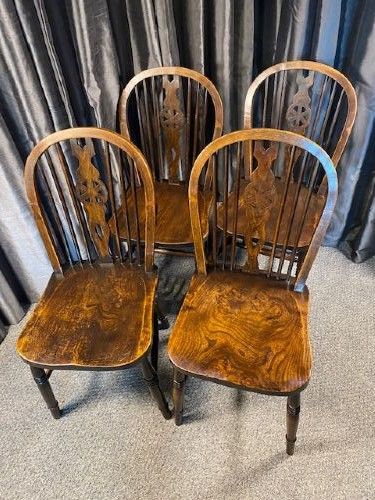
Makers utilised resilient regional timbers to construct seating forms that range from low-back library chairs to towering wheel-back kitchen arrangements. These pieces emerged from workshops across the Thames Valley, West Country, and wider provincial England to serve daily life.
How they were made
Craftsmen paired tough elm for shaped seats with flexible ash or beech for spindles, bows, and legs. This combination exploited the natural grain structure of elm, which resists splitting under heavy weight, while steam-bent ash formed sweeping hoop backs and arm rails.
Joinery relied on traditional wedged mortise and tenon construction, anchoring uprights directly into solid plank seats without metal fasteners. Frame components were turned on pole lathes, leaving subtle tool marks that confirm manual shaping before final assembly.
Makers occasionally carved initials underneath the thick elm seats, leaving hidden signatures for future generations to discover.
What varies in quality
Quality rests in the architectural harmony of the turned undercarriage and the sculptural depth of the saddle seat. Superior examples display balanced proportions in thecomb or hoop back, with tapering spindles that flow naturally into a well-carved armrest.
Surface preservation dictates long-term appeal, separating pieces retaining deep historical patination from those stripped or overly refinished. The finest seating exhibits original surface ageing that highlights the contrasting tones of the elm grain.
J Spencer
The Traditional Elm Chair Glossary
- Windsor
- A traditional wooden chair featuring a solid carved seat into which the legs and back spindles are directly fitted. This construction method provides exceptional structural rigidity.
- Captain's Chair
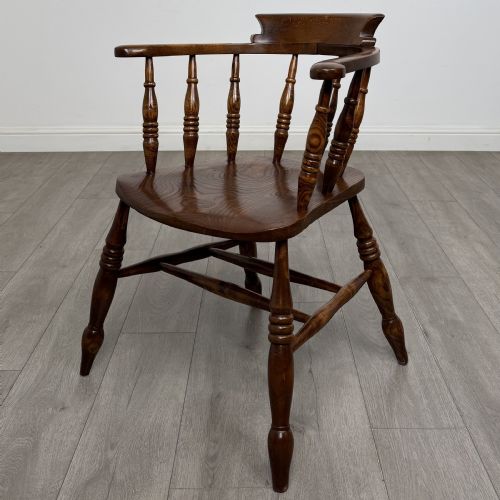
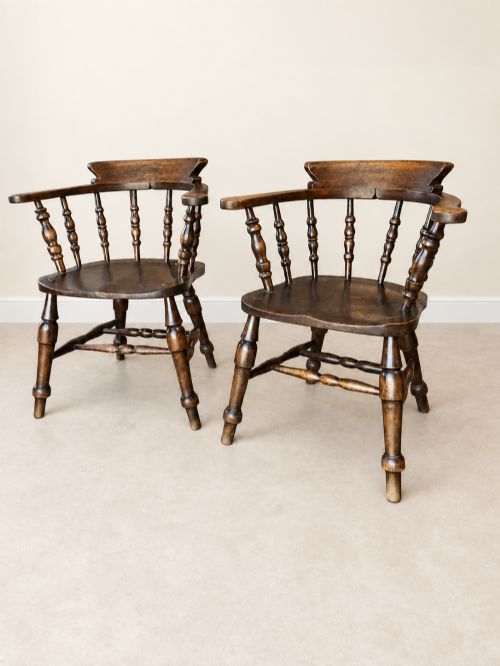
- A low, rounded armchair traditionally utilised in offices or ships' cabins, featuring a continuous curved arm rail supported by numerous small spindles. These compact seats offer robust lumbar support.
- Smoker's Bow
- A sturdy vernacular armchair with a low hoop back and turned spindles, closely related to the Windsor form. Such seating was standard in nineteenth-century public houses and farmhouses.
- Comb-Back
- A distinctive Windsor variation where the vertical back spindles extend upward through a horizontal crest rail, resembling the teeth of a dressing comb. This regional style emerged during the eighteenth century.
- Patina
- The deep surface lustre and varied tone acquired by timber through decades of handling, polishing, and natural ageing. A rich patina indicates authentic historical preservation.
Traditional Elm Chair: Frequently Asked Questions
What is a traditional elm chair?
A traditional elm chair is a piece of vernacular wooden seating built around a solid elm plank seat, typically featuring turned legs and a supportive spindle back. These domestic and farmhouse furnishings evolved through regional English traditions to provide durable seating for daily use.
Craftsmen combined elm with ash and beech to handle the physical demands of rural households. The resulting forms include Windsor armchairs, kitchen sets, and low library seats.
How do I date a traditional elm chair?
Dating relies on examining the turning style of the legs, the thickness of the seat plank, and the construction methods used for the back bow. Georgian examples often feature slender, elegant undercarriages, whereas Victorian versions tend to be heavier and more robust.
Tool marks and timber selection also offer clues to age. Hand-adzed seats and distinct pole-lathe turning indicate nineteenth-century or earlier provincial production.
Are these chairs comfortable for daily use?
These chairs are remarkably comfortable because the solid elm seats were traditionally carved to fit the contours of the body. The ergonomic rake of the spindle backs supports upright sitting during long dining or writing sessions.
Adding a loose sheepskin or linen pad provides extra cushioning without altering the historic character of the timber seat. Their sturdy frame construction handles everyday domestic activity with ease.
How should I care for elm wood?
Maintain elm furniture by keeping it away from direct heat sources and dramatic humidity fluctuations, which can cause the solid timber seats to check or split. Apply a microcrystalline wax periodically to nourish the surface and preserve the historic finish.
Dust the frame regularly with a soft, dry cloth to prevent dirt accumulation in the carved joints and grain depressions. Avoid liquid polishes that leave silicone buildup on older surfaces.