

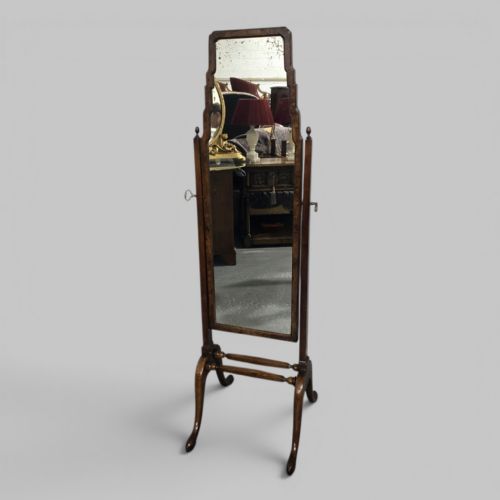


Traditional Dressing Mirror
A traditional dressing mirror brings purposeful reflection into a room, spanning cheval formats and tabletop glass from the Georgian era onwards.
Traditional Dressing Mirror
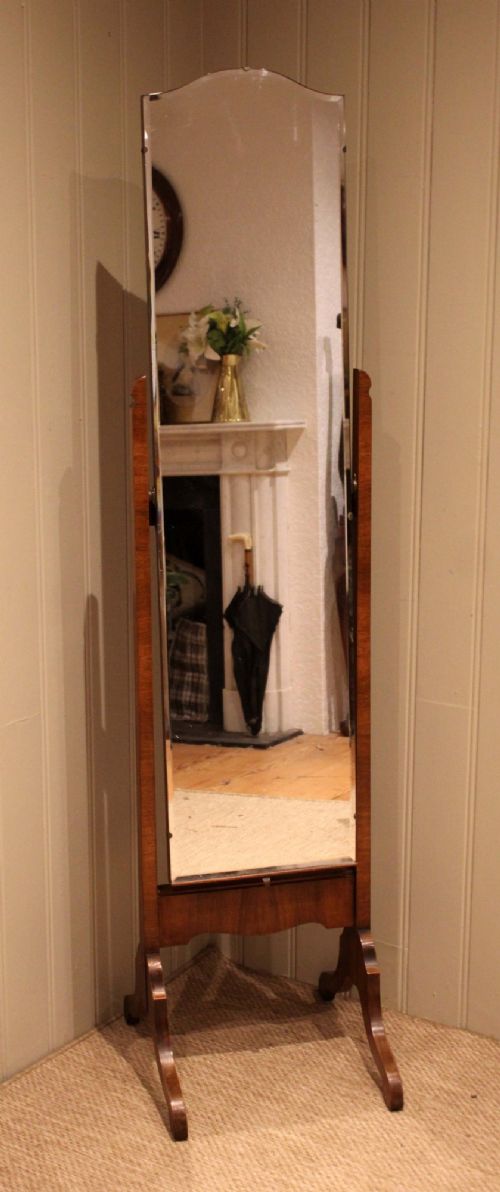
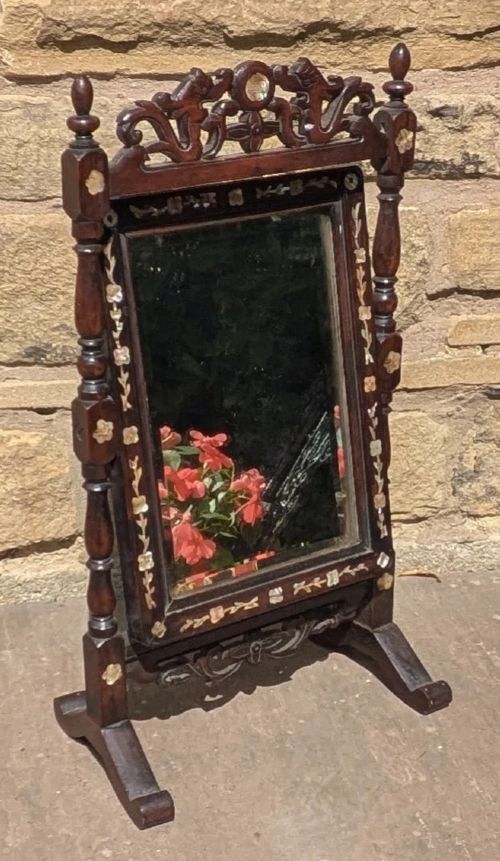
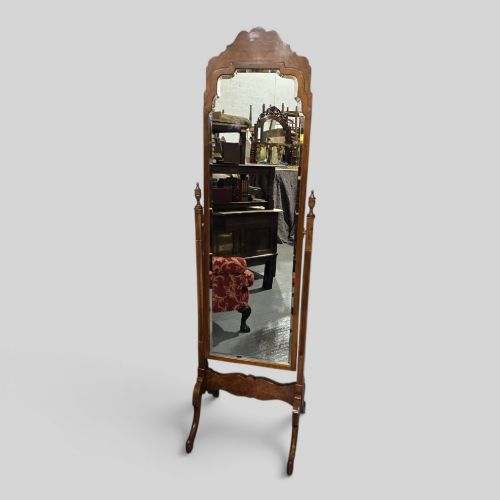
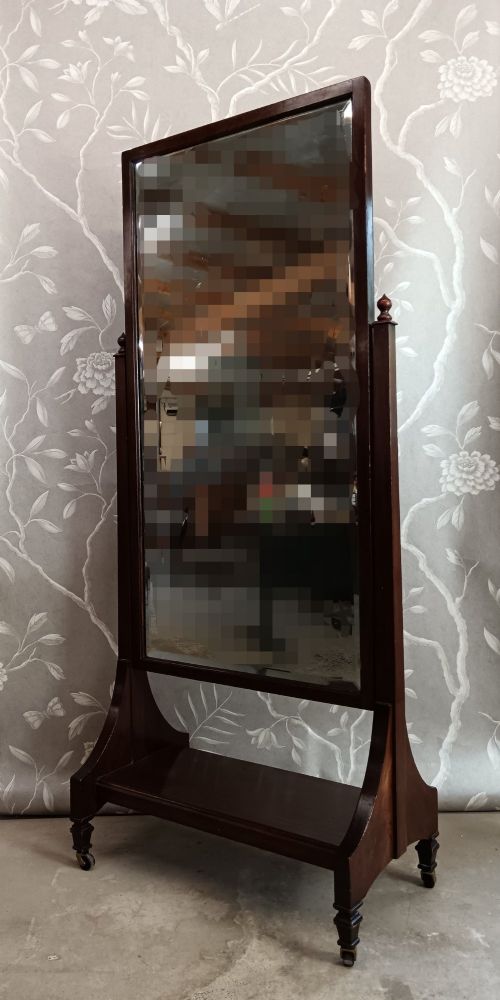
A traditional dressing mirror is a functional piece designed for personal grooming, appearing in forms from full-length cheval frames to compact table mirrors and dressing table attachments. These pieces emerge across the Georgian, Victorian, and Edwardian periods, utilising timbers such as mahogany, walnut, pine, and satin walnut.
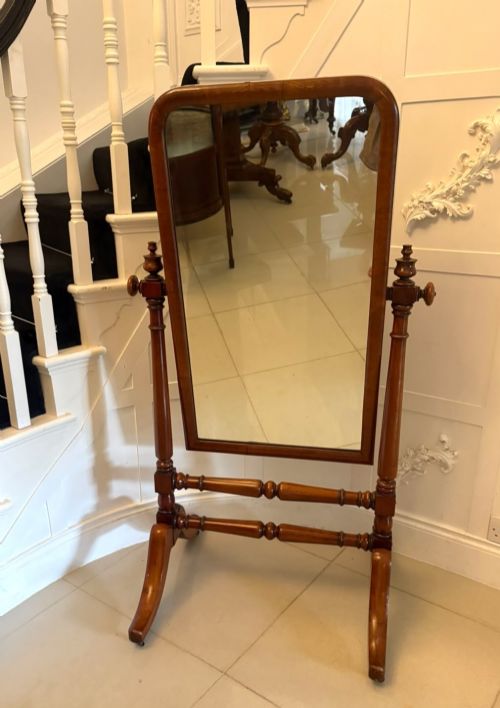
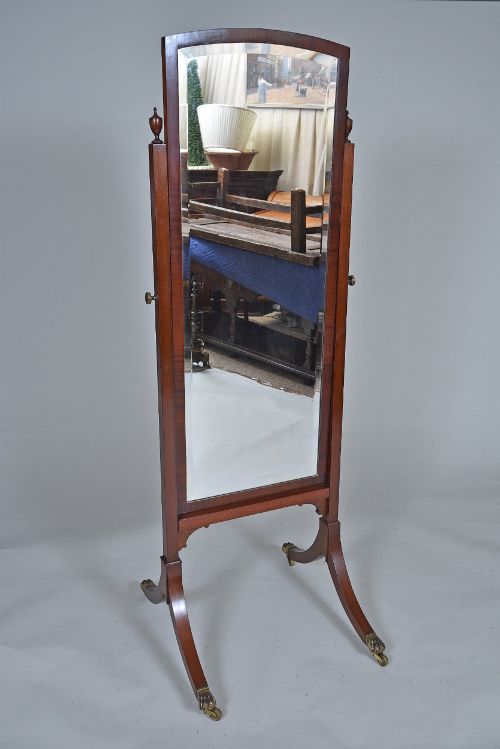
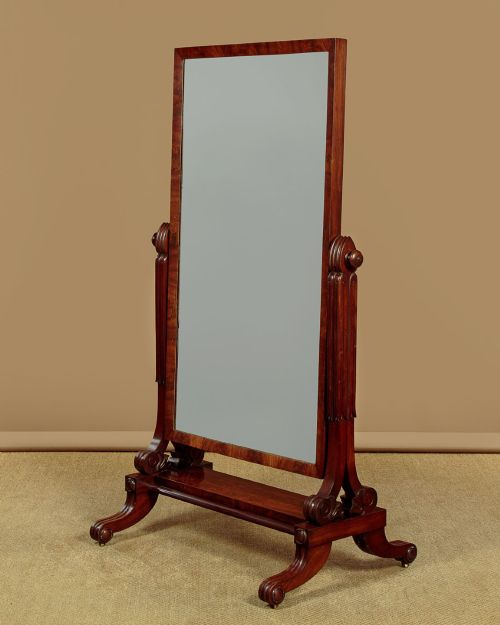
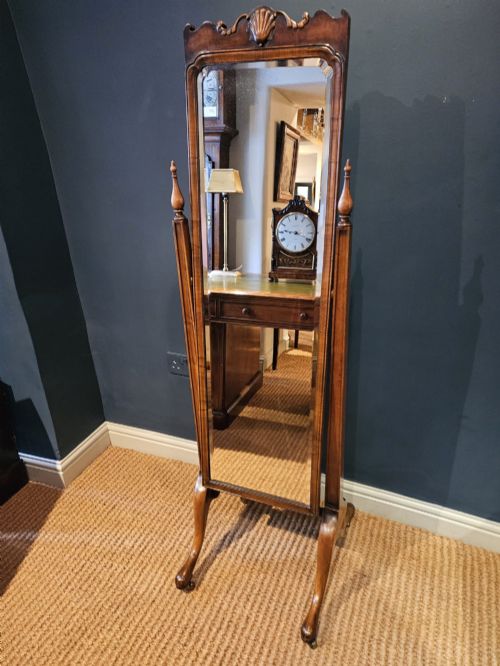
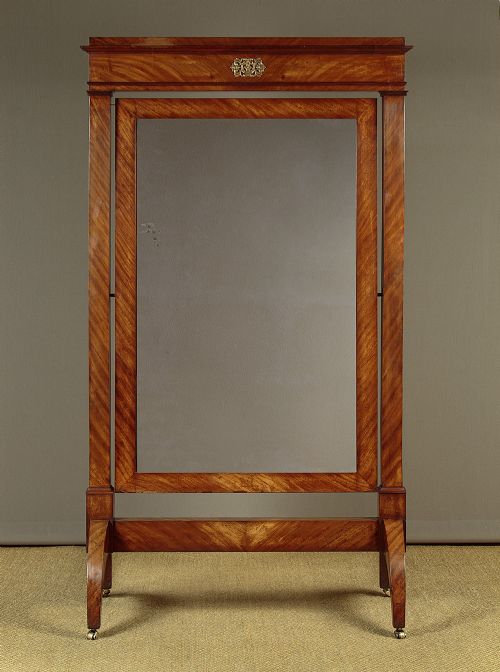
The most common version met on this page is the mahogany cheval mirror, often standing on upright pivots that allow the glass to swing. Alongside these tall freestanding examples, buyers encounter smaller toilet mirrors designed to sit upon chests of drawers and dressing tables.
How they were made
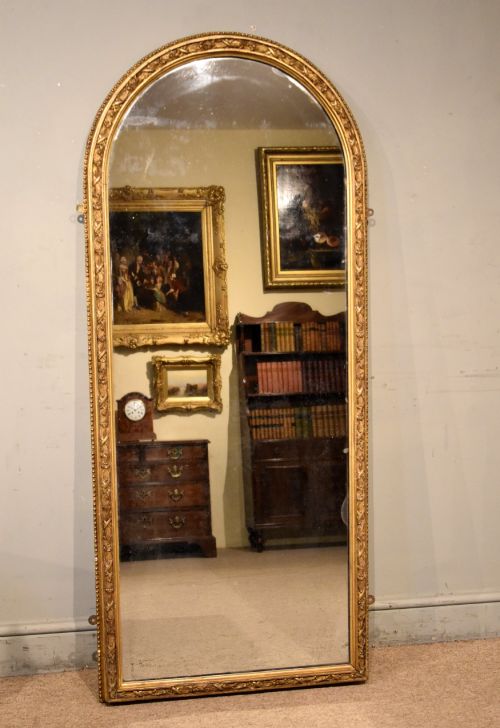
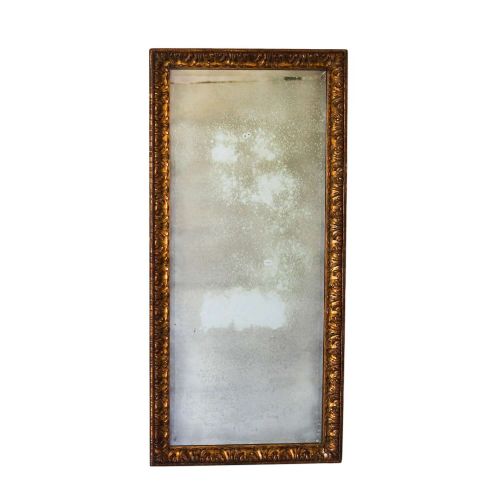
Makers constructed traditional dressing mirrors primarily from solid and veneered timbers including mahogany, walnut, and pine, frequently supported by brass hinges, arm pivots, and candle arms. Glass plates are set into shaped frames, sometimes augmented by giltwood mouldings, hand-painted finishes, or inlaid mother-of-pearl.
Joinery techniques rely on traditional cabinet-making methods to sustain the weight of swinging glass frames, utilising sturdy tenon joints and turned wooden supports. Freestanding cheval versions depend on stable feet or heavy pedestal bases to balance the pivot frame securely.
Traditional Dressing Mirror Retail Price Guide 2026
Typical asking prices for traditional dressing mirror among the pieces listed under this phrase on Sellingantiques today, from the lower quarter to the upper quarter. They describe what is for sale here now, not the wider market.
One exceptional piece carries a history linked to a nineteenth-century American general, proving mirrors travel just as much as their owners.
What varies in quality
Quality in a traditional dressing mirror rests upon the selection of timber and the sophistication of the cabinet work, particularly in the figuring of mahogany or burr walnut veneers. Superior examples display refined proportions, hand-carved details, and original brass hardware that operates smoothly.
The integrity of the frame construction and the clarity of the glass plate distinguish finer pieces from simpler utilitarian items. Elements such as inlaid decoration, sophisticated serpentine woodwork, and secondary timbers like pitch pine or satin walnut indicate a higher grade of manufacture.
The Traditional Dressing Mirror Glossary
- Cheval mirror
- A large freestanding mirror supported by a frame with vertical posts and pivots, allowing the glass to swing. This form stands independently on the floor to provide a full-length reflection.
- Toilet mirror
- A smaller dressing mirror designed to sit atop a table, chest of drawers, or washstand. These pieces typically feature a small box base fitted with small drawers.
- Serpentine
- A curved line or shape featuring a convex centre flanked by concave curves. This contour appears frequently on the front edges of dressing table mirror bases.
- Giltwood
- Timber that has been coated with a thin layer of gold leaf or gilt paint. It is commonly found on decorative frames from the eighteenth and nineteenth centuries.
Traditional Dressing Mirror: Frequently Asked Questions
What is a cheval mirror?
A cheval mirror is a tall, freestanding dressing mirror mounted on a frame with side pivots that permit the glass to tilt.
These pieces provide a full-length reflection and stand directly on the floor, appearing in mahogany, walnut, and hardwood across various nineteenth and twentieth-century periods.
Where do you place a dressing table mirror?
A dressing table mirror sits securely on top of a dressing chest, pedestal table, or dedicated dressing table surface.
Many of these smaller toilet mirrors feature small base drawers designed to hold personal trinkets or grooming accessories.
How do you date an antique mirror?
Dating a mirror involves examining the timber species, construction joints, backboards, and the manufacturing characteristics of the glass plate.
Periods such as Georgian, Victorian, and Edwardian exhibit distinct proportions, hardware types, and decorative styles like serpentine moulding or inlaid mother-of-pearl.
What is satin walnut?
Satin walnut is a timber derived from the American sweetgum tree, valued for its warm tone and distinctive grain pattern.
Cabinet makers utilised this material extensively during the Edwardian period for dressing chests and matching mirrors.