
Traditional Desk Lamp Base
A traditional desk lamp base brings period character to a workspace, offering sturdy metal or timber illumination shaped by centuries of design.
Traditional Desk Lamp Base
A traditional desk lamp base provides the structural foundation for task and ambient lighting on a workspace or table. Buyers seeking a traditional desk lamp base will find forms ranging from classical column designs to turned timber candlesticks and converted oil lamps.
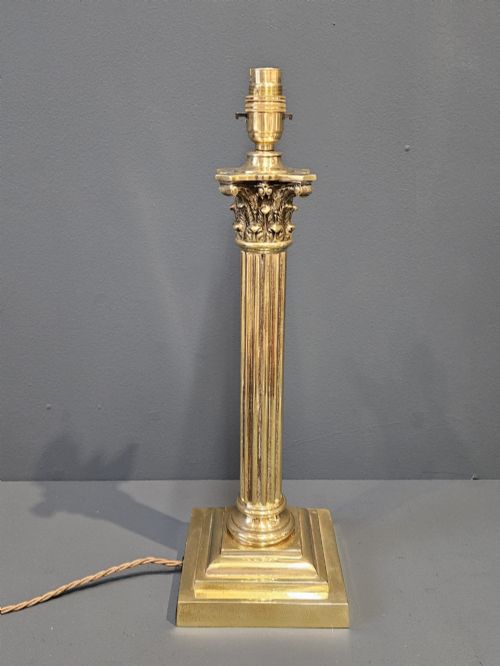
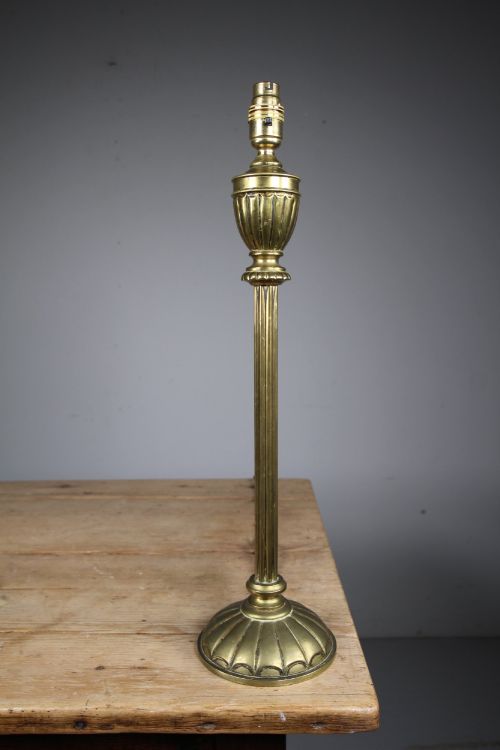
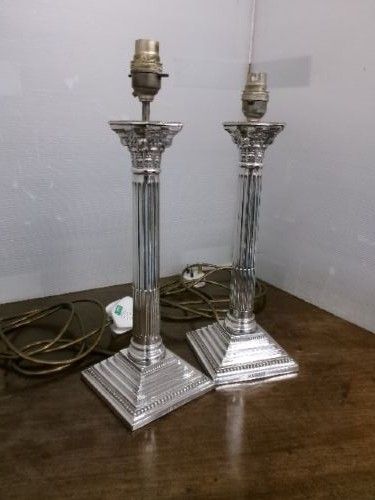
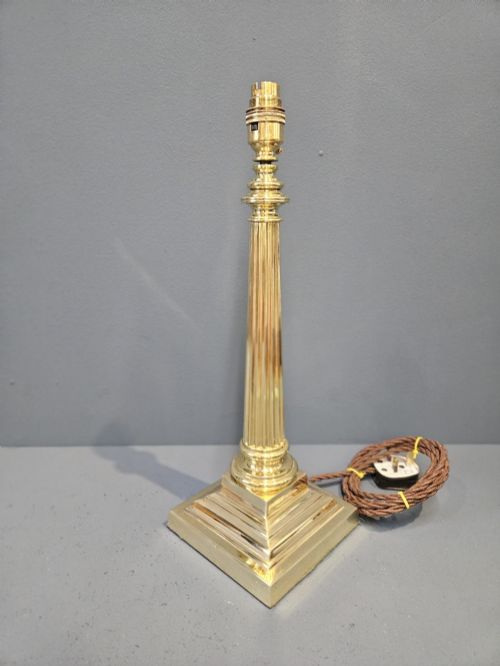
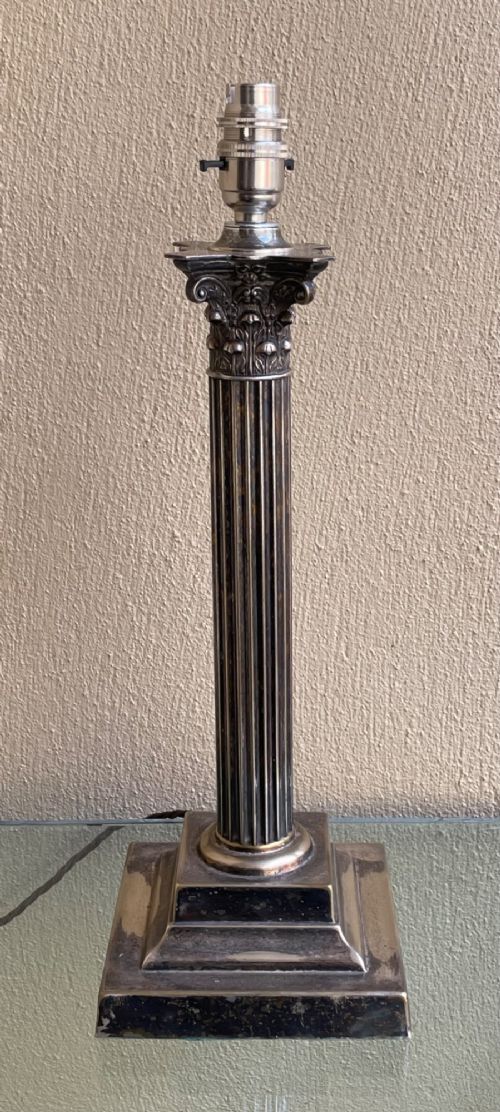
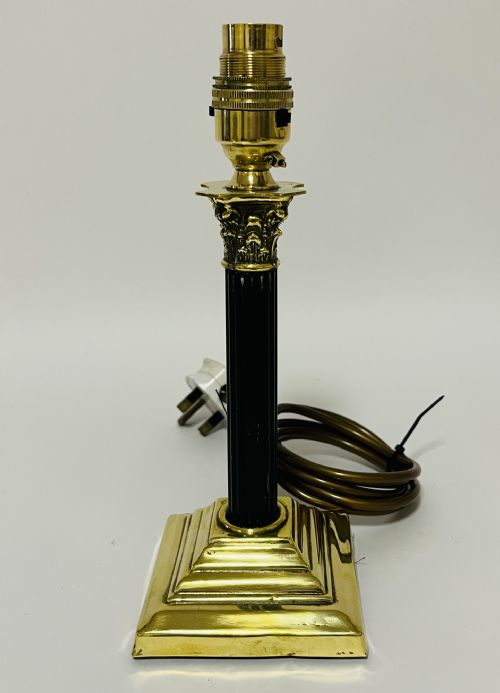
The selection on this page spans several distinct eras, featuring heavy brass columns from the Victorian and Edwardian periods alongside earlier oak and mahogany forms. Many examples reflect classical revival styles, incorporating Corinthian capitals, reeded shafts, and stepped square plinths designed to anchor the weight of the fitting.
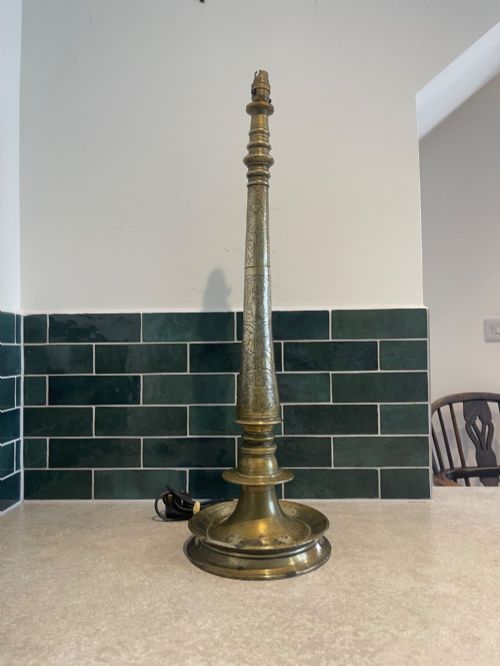
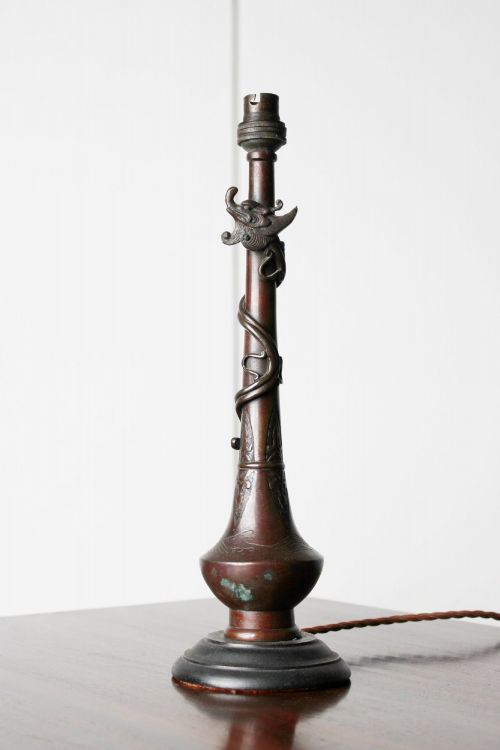
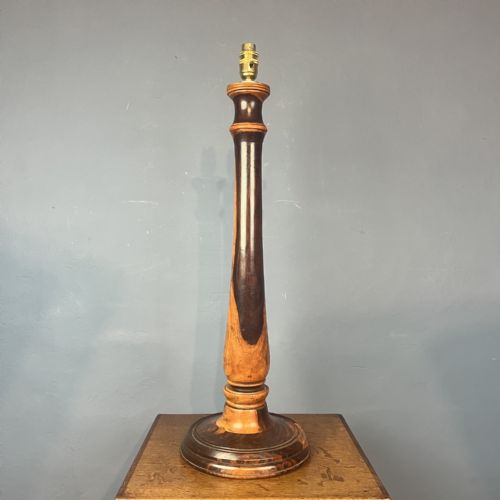
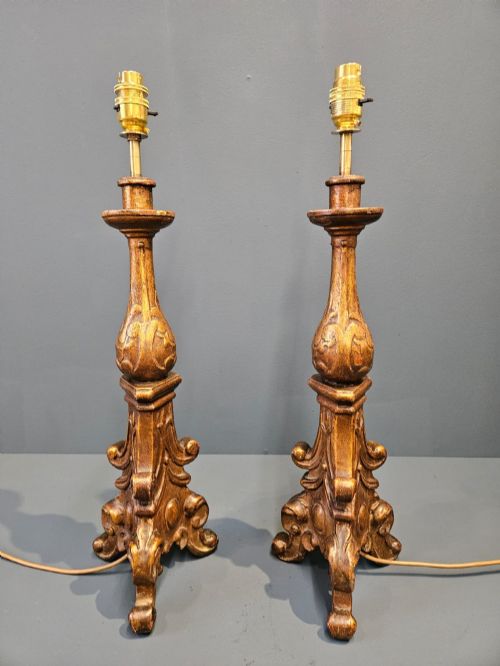
Alongside standard metal castings, the inventory includes regional variations such as Kashmiri painted surfaces, Japanese bronze figures, and carved timber bodies. These pieces demonstrate how utilitarian lighting fixtures were adapted from earlier candlesticks, vases, and architectural fragments across the nineteenth and early twentieth centuries.
How they were made
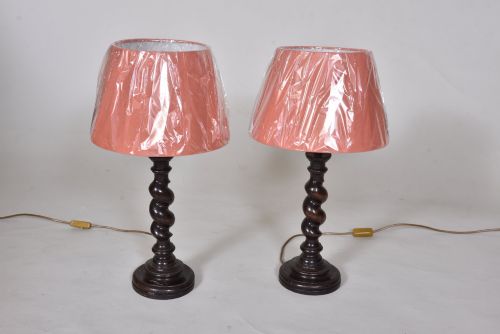
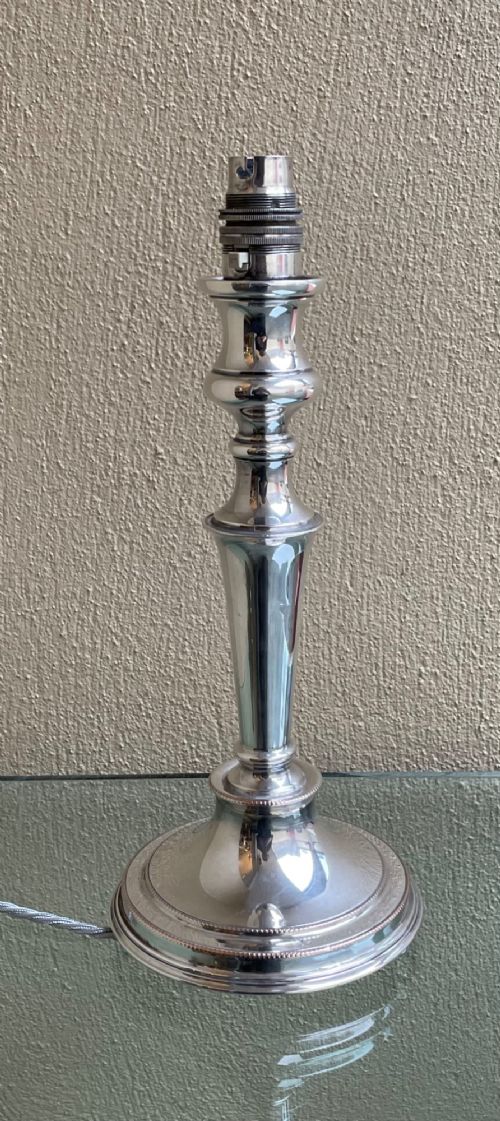
Metal bases rely on casting and turning techniques, particularly in brass, bronze, and silver plate. Founders cast columns and capitals in sections before assembling them around weighted cores, while turned wooden examples utilise dense timbers like oak, mahogany, and lignum vitae shaped on a lathe.
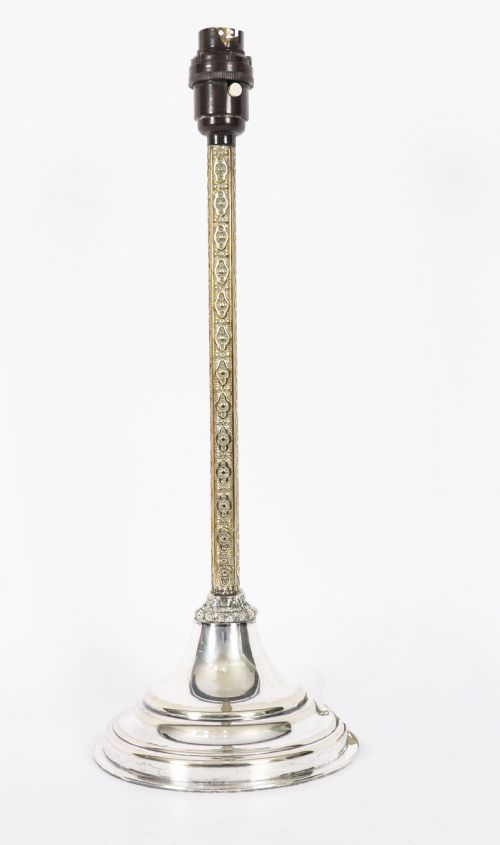
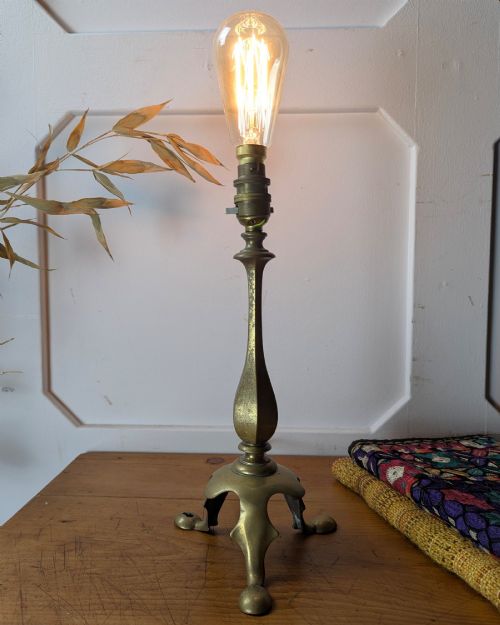
Surface finishes vary according to material, encompassing parcel gilt highlights, polished silver plating, and hand-painted lacquer work. Many nineteenth and twentieth-century examples integrate converted elements, such as transformed oil lamp fonts and repurposed ceramic vases fitted for electrical wiring.
One exceptional Meiji period Japanese bronze base enlists an elephant to hold the light.
What varies in quality
Quality rests in the weight of the metal casting or the density of the timber, alongside the crispness of applied detail such as acanthus leaves on a Corinthian capital. Superior pieces maintain structural balance with heavy bases that prevent tipping, whereas lighter constructions rely on internal weighting.
The integrity of the original surface finish separates standard production from finer examples, particularly where silver plating, gilding, or hand-painted ornamentation remains intact. Finer manufacturing is further evident in the precision of threaded joints and the stability of multi-component assemblies.
Mappin & Webb's·Faraday & Sons
The Traditional Desk Lamp Base Glossary
- Corinthian column
- A classical architectural order featuring an ornate capital decorated with acanthus leaves, frequently utilised on tall nineteenth-century metal lamp bases.
- Reeded shaft
- A series of parallel convex mouldings running vertically along the column of a lamp, adding texture and visual weight to the design.
- Parcel gilt
- A surface decoration technique where specific portions of a silver-plated or bronze object are highlighted with gold leaf.
- Lignum vitae
- An extremely dense and heavy dark wood sourced from tropical American trees, prized for its durability and smooth turned finish.
- Baluster form
- An architectural support shaped with a swelling lower portion tapering towards the top, commonly seen in turned timber and metal lamp bodies.
Traditional Desk Lamp Base: Frequently Asked Questions
How do I date a brass lamp base?
Dating relies upon stylistic markers such as neoclassical column orders, method of assembly, and weight. Victorian and Edwardian examples often feature cast brass components with threaded fittings rather than modern welded joints.
Examination of the base underside and any maker stamps or registry marks helps establish the period of manufacture. Earlier pieces frequently show hand-finished surfaces and heavier gauge metal castings compared to later twentieth-century reproductions.
Are these bases suitable for modern desks?
Many historical lamp bases suit contemporary workspaces, provided the footprint matches the available desk area. Column and candlestick styles offer a compact vertical profile that leaves the work surface clear.
Buyers should verify the height and base dimensions to ensure the scale complements modern desks and monitor setups. Several examples have been rewired for contemporary electrical standards while retaining their period appearance.
What is a converted oil lamp?
A converted oil lamp is a nineteenth-century lighting fixture originally designed to burn paraffin or kerosene that has been adapted for electricity. These pieces retain their original brass or ceramic fonts, burners, and reservoirs.
During conversion, internal channels are utilised to run modern wiring safely through the central axis of the base. This process preserves the exterior silhouette and historical patina while enabling modern domestic use.
How do I care for antique metal bases?
Maintaining metal lamp bases requires gentle dusting with a soft, dry cloth to prevent the accumulation of grime in recessed ornament. Abrasive cleaners and chemical polishes should be avoided to protect the aged patina and any delicate silver plating or lacquer.
For wooden or lacquered sections, maintaining stable indoor humidity prevents timber movement and surface cracking. Periodic checks of the felt or baize lining on the underside protect furniture surfaces from scratches.