


Bronze Column Lamp
These bronze column lamps unite classical proportions with domestic illumination, bringing structural weight and patinated metal into interiors.
Bronze Column Lamp
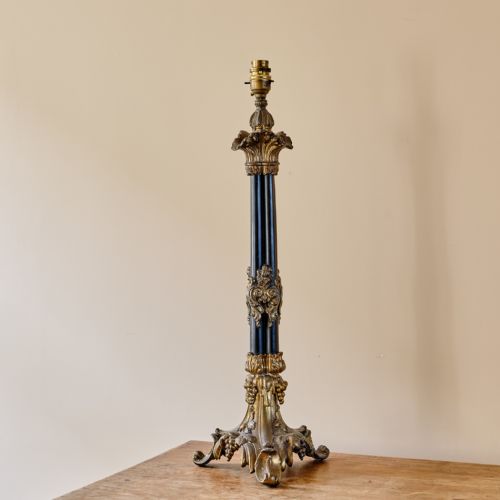
A bronze column lamp brings classical architecture into domestic lighting through vertical shafts of cast metal raised on stepped or figured bases. The search phrase covers everything from diminutive desk examples to towering floor standards.
Nineteenth-century French and English workshop pieces dominate, with Regency, Empire, and Neoclassical styles appearing most frequently. These items often begin life as oil lamps, torcheres, or candlesticks before conversion to electricity.
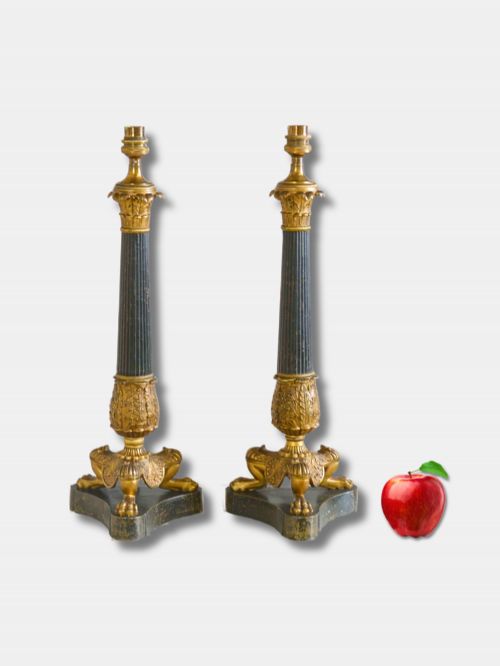
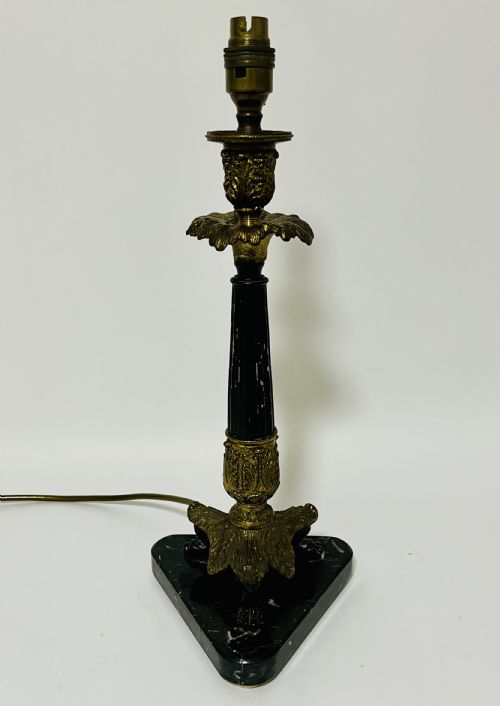
The vertical element takes many forms, including fluted Doric or Corinthian shafts, tapering Grand Tour obelisks, and smooth patinated tubes. Ormolu mounts and marble plinths frequently accompany the dark bronze metalwork.
Materials and construction methods
Foundry casting yields the heavy bronze, brass, and gilt ormolu components that form the structural core of each piece. Artisans chased the cooled metal surfaces by hand to sharpen fluting, acanthus leaves, and figural details.
Combinations of materials define the upper tier of production, pairing cast bronze with white marble, onyx, rock crystal, or opaline glass columns. Gilt highlights applied through mercury gilding or fire-gilding contrast against dark patinated bronze bodies.
Assessing quality in column lamps
The crispness of the bronze chasing and the weight of the casting determine the initial grade of the object. Superior examples display sharply defined fluting and naturalistic paw feet, whereas inferior pieces rely on soft, blurred factory casting.
Material integration separates standard production from exceptional design. High-quality items incorporate heavy marble plinths, fire-gilded ormolu mounts rather than lacquered brass, and substantial proportions that anchor a room.
Humphrey Hopper·Joseph Hinks
The Bronze Column Lamp Glossary
- Ormolu
- Gilt bronze produced by applying a mercury and gold amalgam to a bronze base and heating it. This technique creates a durable, warm golden surface found on Regency and Empire pieces.
- Torchere
- A tall decorative stand or lamp base derived from ancient lighting supports. These pieces often feature classical column shafts raised on tripod or stepped pedestal feet.
- Corinthian column
- An architectural order featuring an ornate capital decorated with acanthus leaves. It frequently tops nineteenth-century desk and table lamp shafts.
- Patination
- The surface coloration and ageing acquired by bronze over decades through handling and exposure. Original dark patination is prized by collectors.
- Grand Tour
- The nineteenth-century practice where wealthy travellers collected classical antiquities and souvenirs across Europe. Such items often inspired tapering bronze column designs.
Bronze Column Lamp: Frequently Asked Questions
How do I date a bronze column lamp?
Examine the casting method, base construction, and wiring channels. Nineteenth-century examples typically feature heavy hand-chased bronze components and heavier marble or brass bases than later twentieth-century reproductions.
Stylistic cues such as Regency paw feet, Empire mounts, or Edwardian adjustments help narrow the decade. Look at the assembly screws and threading, as modern machine screws differ significantly from older hand-cut fasteners.
Were these always electric lamps?
Most antique pieces began life as oil lamps, Argand burners, candlesticks, or torcheres. Conversion to electricity usually happened much later during the twentieth century.
Original fuel reservoirs and burners are frequently replaced with lamp fittings during these conversions. Collectors often value pieces that retain their original structural height and proportion despite adaptation.
How do I choose the right shade?
Proportion dictates shade selection for column lamps. A drum or empire fabric shade should complement the width of the base without overwhelming the slender column shaft.
Traditional styles often pair well with silk, parchment, or toile de Jouy shades that reflect the period of the base. Ensure the drop of the shade conceals the lamp holder while leaving the decorative capital visible.
How should I care for patinated bronze?
Dust bronze and ormolu gently with a dry microfiber cloth. Avoid commercial metal cleaners or polishes, which strip the aged patination and ruin the surface finish.
Keep these lamps away from direct heat sources and damp environments to protect marble plinths and gilt surfaces. Gentle handling preserves the original patination acquired over generations.