


Gilt Bronze Column Lamp
A gilt bronze column lamp brings classical proportion and warm metallic light to a room, drawing the eye with its stately vertical form.
Gilt Bronze Column Lamp
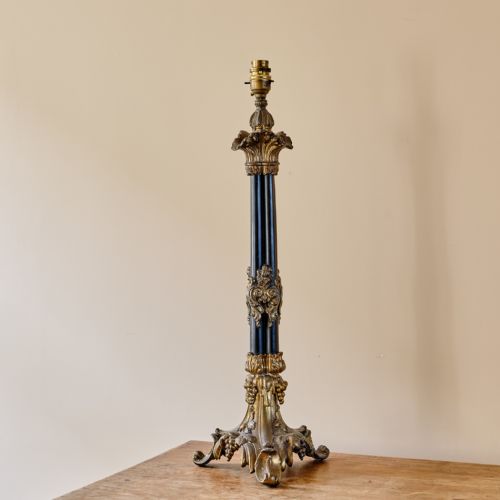
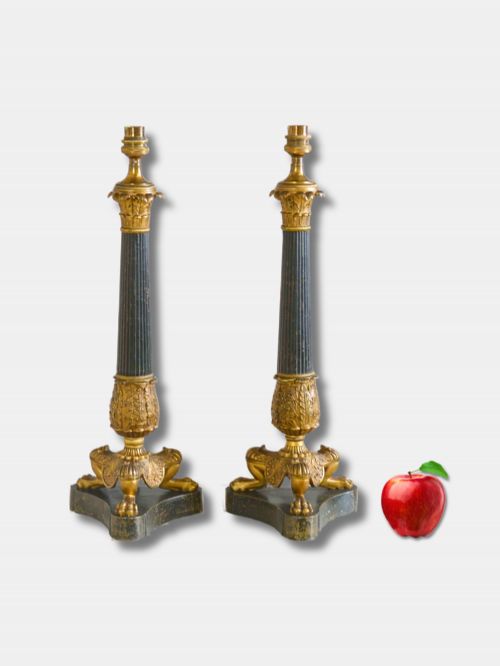
When searching for a gilt bronze column lamp, collectors look for vertical lighting fixtures that combine cast metal shafts with classical architectural detailing. These pieces draw heavily on historical design vocabularies, often taking the form of fluted columns resting on substantial bases.
The versions most commonly met on this page span the nineteenth and early twentieth centuries, with a strong representation of French Empire and Neoclassical aesthetics. They appear primarily as table lamps, alongside taller floor and standard lamp variants adapted from earlier lighting forms.
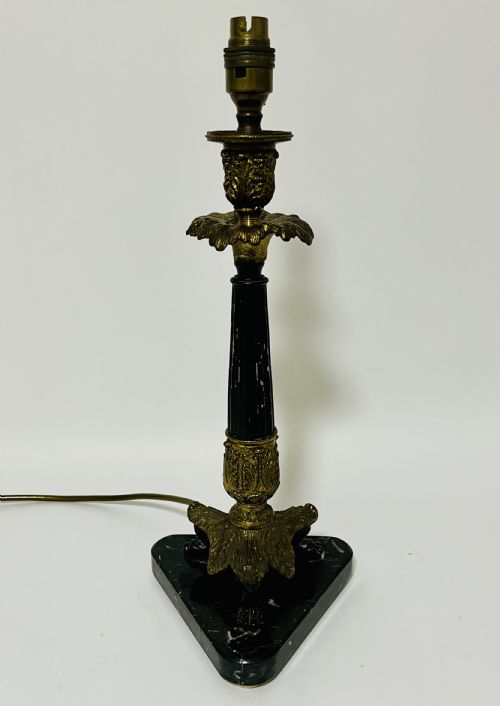
Many examples originate from French workshops, utilising classical motifs such as Corinthian capitals, lion paw feet, and mounted ormolu. Others reflect Regency or William IV British tastes, employing bronze, marble, and faux lapis lazuli to achieve a weighty presence.
How they were made
The construction of these pieces relies on metal casting and mercury gilding or modern electroplating to achieve the characteristic rich surface sheen. Founders cast bronze, brass, and ormolu components separately before assembling them around a central structural core.
Artisans frequently combined these metallic elements with contrasting natural materials such as white marble, onyx, rock crystal, and blue glass. Fabric shades, often in silk, complete the construction when fitted to standard lamp and table lamp configurations.
Listings feature materials including ormolu, patinated bronze, marble, onyx, rock crystal, and silk across nineteenth and early twentieth-century periods.
What varies in quality
Quality in these lighting fixtures reveals itself in the crispness of the chased detail and the depth of the gilding. Superior examples display sharply defined acanthus leaves on capitals and deeply undercut relief work on bases.
The choice and integration of secondary materials also set pieces apart. Heavy bases of solid marble or onyx, combined with substantial cast bronze shafts rather than plated alternatives, denote superior manufacture.
The Gilt Bronze Column Lamp Glossary
- Ormolu
- A gilt bronze surface finish produced by applying a mercury and gold amalgam to cast bronze, or through modern electrogilding. This technique gives the metal a deep, warm golden colour that resists tarnishing.
- Column lamp
- A lighting fixture featuring a vertical shaft shaped like an architectural column. They often incorporate classical orders such as the Corinthian or Doric.
- French Empire
- A decorative style spanning the early nineteenth century characterised by classical Roman and Greek motifs. Pieces from this aesthetic frequently utilise military trophies, laurel wreaths, and sphinxes.
- Patinated bronze
- Bronze that has been chemically treated to alter its surface colour, usually to a dark brown or greenish tone. This treatment provides contrast against bright gilt ormolu mounts.
- Neoclassical
- A style reviving classical antiquity in architecture and decorative arts during the eighteenth and nineteenth centuries. It prioritises symmetry, straight lines, and ancient Greek or Roman ornamentation.
Gilt Bronze Column Lamp: Frequently Asked Questions
How do I wire an antique lamp?
Rewiring requires running modern flexible cable through the central channel of the metal shaft to meet contemporary safety standards. Professional electricians can perform this work without altering the original structural components or damaging the exterior metal.
Historic fittings are typically replaced with modern lamp holders that accommodate standard bulbs while remaining concealed beneath the shade or within the original burner assembly.
What is the difference between ormolu and brass?
Ormolu refers to gilded bronze or brass, where a layer of gold is applied to the base metal surface. This provides a richer, warmer tone than untreated yellow brass.
Brass is a copper and zinc alloy that shows a brighter yellow metal beneath wear, whereas gilt bronze reveals a duller reddish bronze substrate.
Where should I place a floor lamp?
Standard and floor lamps suit corners of reception rooms or beside reading chairs where their vertical height can project light downward. Their architectural presence allows them to function as sculptural elements even when unlit.
Placement should account for the weight of the marble or bronze base to ensure the tall shaft remains stable on floor surfaces.
How do I clean gilt bronze?
Dusting with a soft, dry cloth prevents the accumulation of grime in the recessed chased details of the metal. Water and chemical cleaning agents risk stripping historic surface treatments and should be avoided.
Handling the metal with bare hands leaves oils that can tarnish unlacquered bronze surfaces over extended periods.