
Traditional Cut Glass
Traditional cut glass brings brilliant sparkle and tactile weight to a room, spanning useful tableware and grand lighting.
Traditional Cut Glass
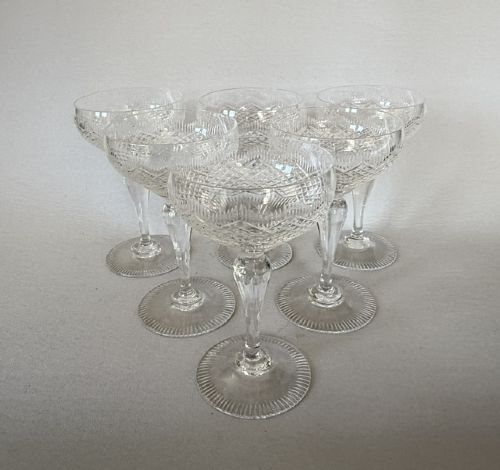
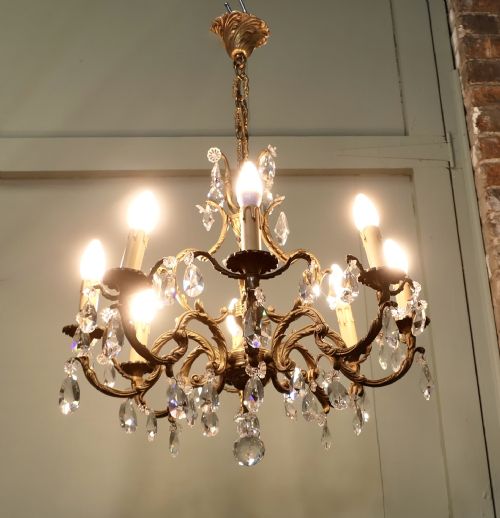
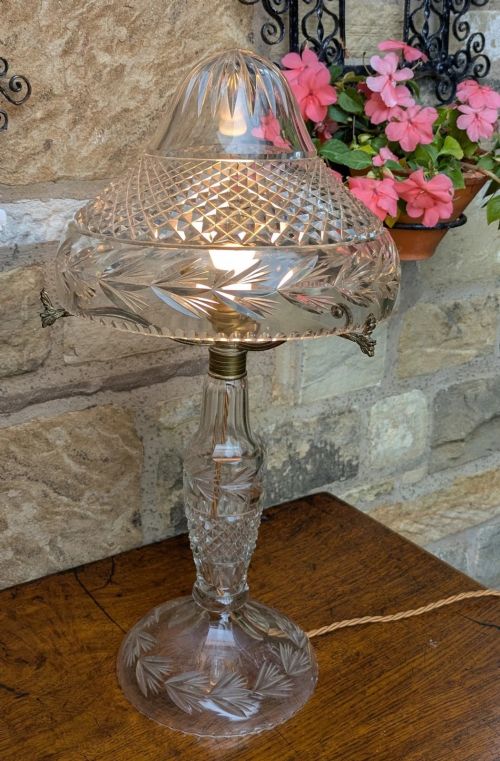
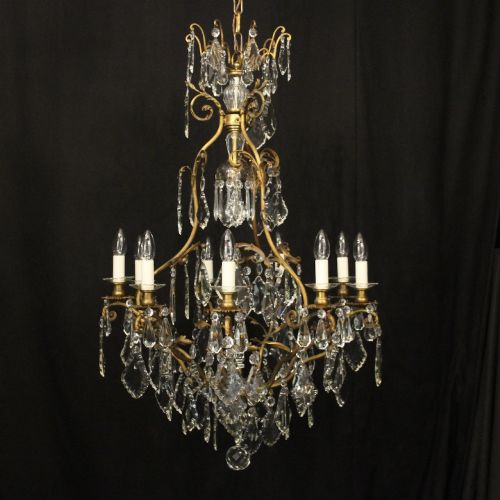
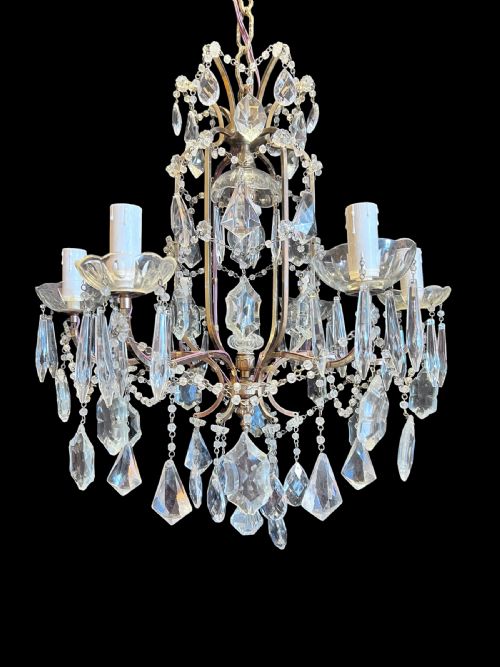
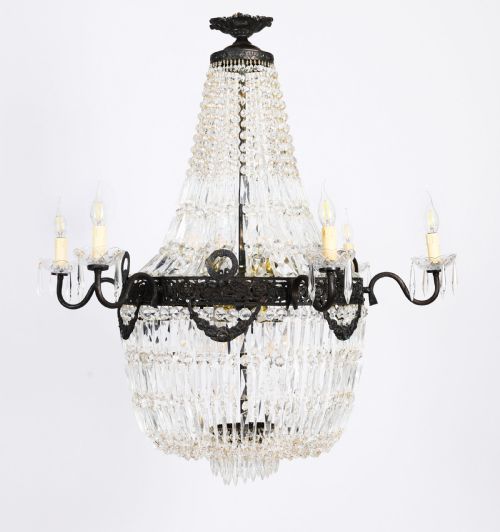
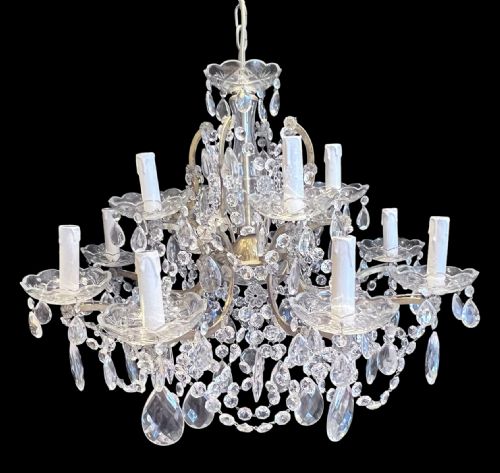
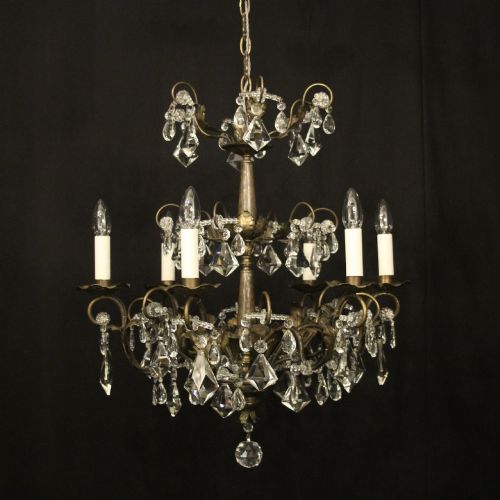
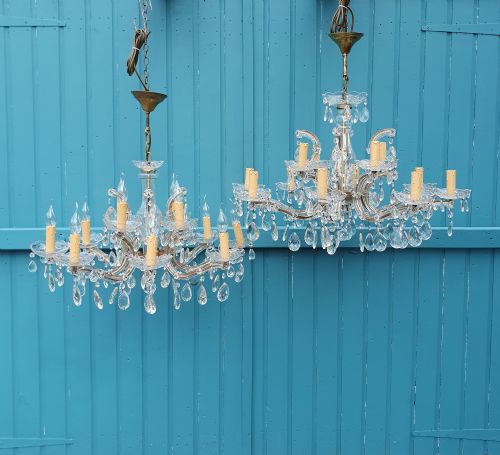
Traditional cut glass encompasses both functional tableware and decorative lighting fixtures shaped from heavy glass and crystal. When searching for traditional cut glass, buyers encounter diverse forms ranging from Victorian wine glasses and decanters to Edwardian ceiling lights and large multi-arm chandeliers.
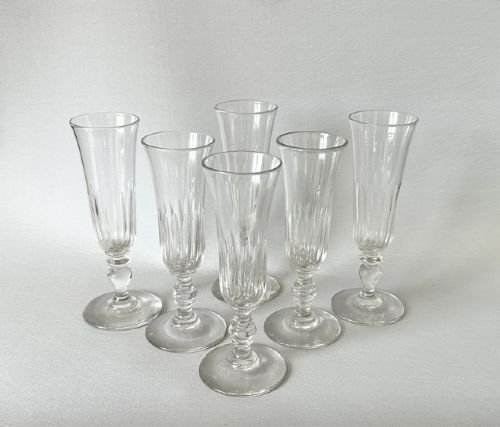
The objects span multiple eras, with pieces originating from Victorian, Edwardian, and Art Deco periods alongside items referencing Georgian or French styles. Tableware sets include champagne bowls, flutes, whisky tumblers, and finger bowls, while lighting encompasses table lamps, wall lights, and substantial crystal chandeliers.
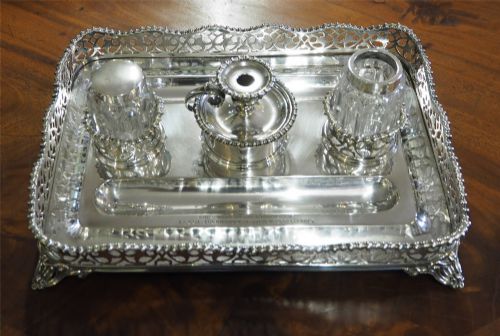
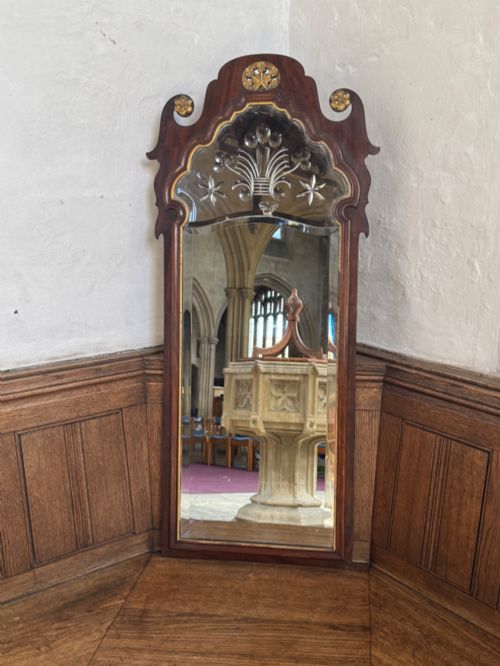
Many items combine glass elements with supporting frames made from brass, silver plate, or gilded metal. These mixed-media pieces include fitted tantalus sets, hallway lanterns, desk accessories, and mirrored wall sconces.
What varies in quality in traditional cut glass
The clarity and weight of the glass or crystal foundation set the baseline for a piece, determining how brilliantly light disperses through the faceted cuts. Heavier lead crystal naturally yields sharper facet edges and a more resonant ring when struck.
The precision and depth of the wheel-cut patterns distinguish standard production from finer work, where lines remain crisp and symmetrical across complex curves. In lighting and mounted objects, the weight of the brass or silver-plated framing and the quality of the gilding contribute significantly to the overall presence of the piece.
Listings feature cut glass items spanning from the mid-nineteenth century through the Art Deco era, incorporating brass, silver plate, and crystal materials.
Elkington·Stuart Crystal·F. & C. Osler
The Traditional Cut Glass Glossary
- Lead crystal
- Glass containing a high proportion of lead oxide, which increases weight, clarity, and light refraction. This material allows for deeper and sharper cutting by artisans.
- Plafonnier
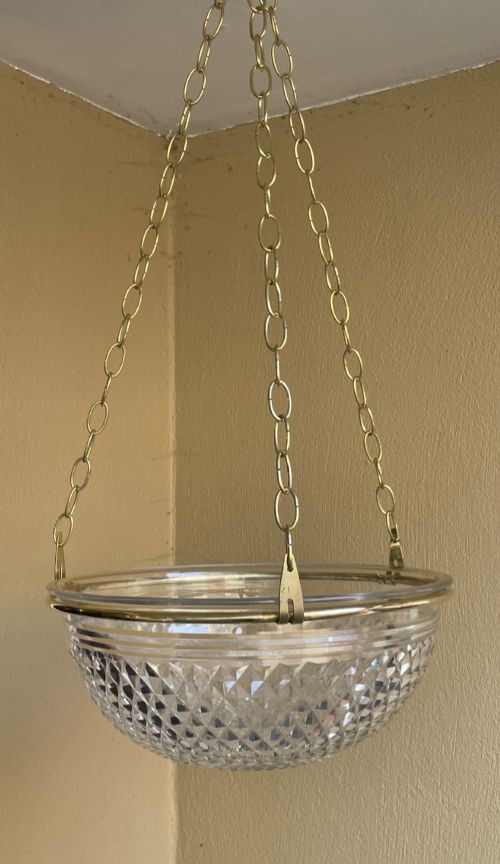
- A shallow, bowl-shaped ceiling light mounted close to the ceiling surface. These fixtures often feature cut glass or crystal panels held in metal frames.
- Tantalus
- A locking wooden frame designed to secure decanters while revealing their contents. They commonly house three cut crystal decanters fitted with stoppers.
- Finger bowl
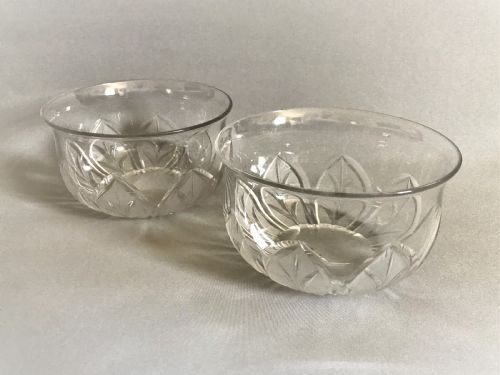
- A small bowl filled with water, used historically at the dining table between courses to rinse the fingers. Victorian examples frequently feature cut and frosted glass surfaces.
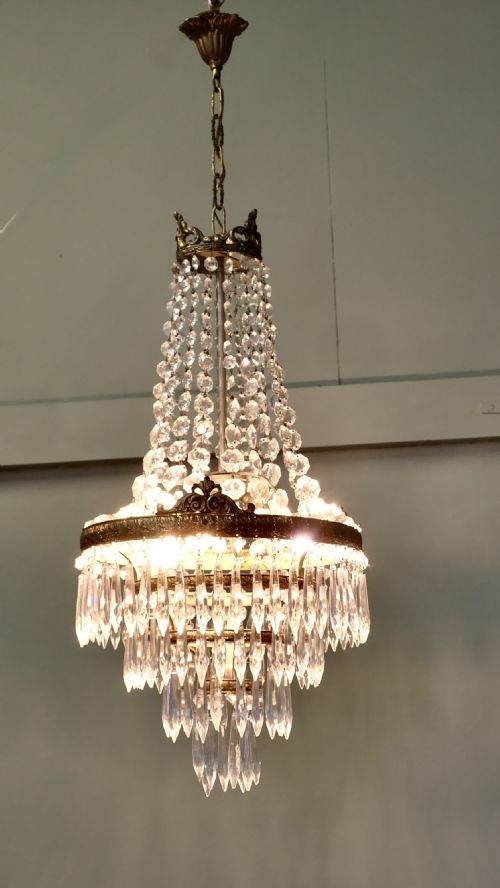
- Bag chandelier
- A lighting fixture featuring a dense mass of crystal drops suspended in a bag-like contour beneath a metal corona. They project intense sparkle through concentrated prismatic effects.
Traditional Cut Glass: Frequently Asked Questions
How do I clean cut glass chandeliers?
Cleaning requires a mild solution of warm water and dish soap applied gently with a soft cloth to each crystal element. Metal frames should be wiped carefully to avoid moisture damage to old gilding or silver plate.
Many components can be cleaned in place without dismantling the entire fixture, provided the power remains switched off during the process. Drying each prism immediately with a lint-free cloth restores maximum brilliance.
Are old decanters safe for holding wine?
Antique decanters made from lead crystal are suitable for serving wine during meals or gatherings. Thorough washing removes any residual sediment accumulated over decades of storage.
Care should be taken to avoid storing liquids in antique glass for extended periods. Hand washing preserves the clarity and surface finish of the historical material.
How can I tell Victorian cut glass from later pieces?
Victorian glassware often displays heavier walls, deeper hand-cut facets, and a slightly greyish or warm tone to the metal content. Forms like heavy whisky tumblers and finger bowls carry distinct tactile weight.
Later Edwardian and Art Deco items frequently introduce lighter frames, sleeker lamp profiles, or moulded elements alongside traditional cutting. Comparing the sharpness of the facet edges provides further clues to the manufacturing period.
How do I incorporate antique lighting into modern rooms?
Hanging a crystal chandelier or mounting brass wall lights introduces a focal point that contrasts effectively with minimalist interior schemes. The reflective glass elements amplify natural daylight and warm artificial illumination alike.
Ensuring that electrical wiring meets contemporary safety standards is essential before installation. Professional fitting guarantees that heavy brass and crystal fixtures are securely anchored to ceiling joists.