



Traditional Cut Glass Bottle
These heavy lead crystal vessels catch the light across a sideboard and pour spirits with a satisfying heft.
Traditional Cut Glass Bottle
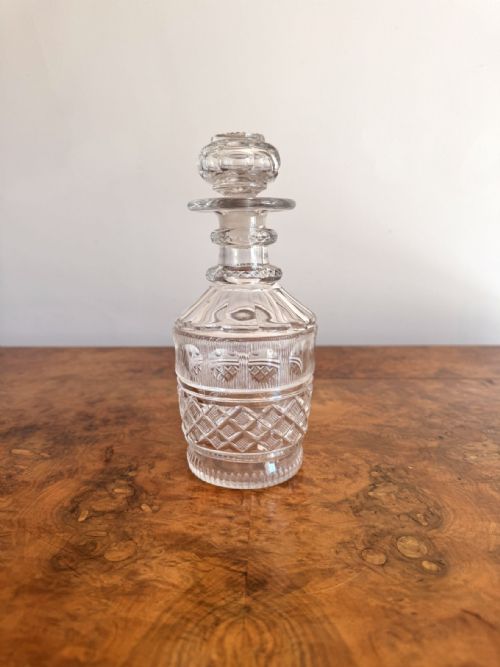
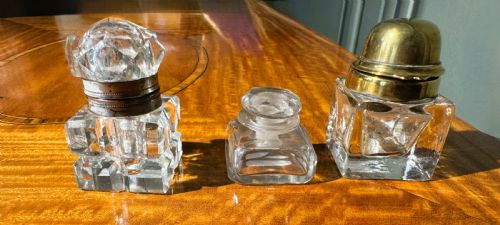
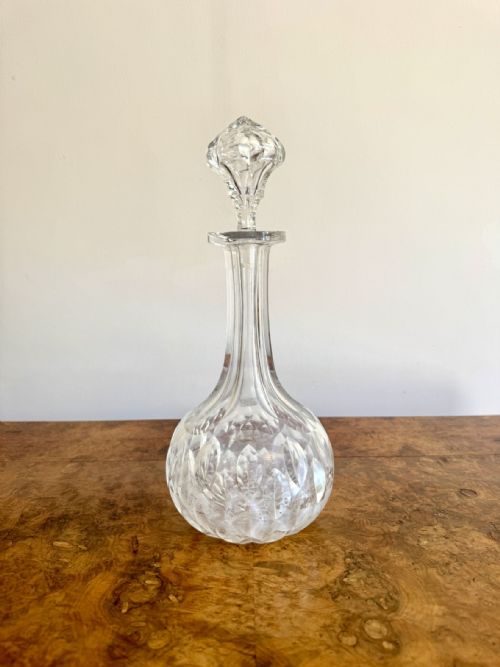
A traditional cut glass bottle on this page is most frequently encountered as a Victorian or Edwardian decanter designed for port, whisky or wine. The selection also yields practical carafes, inkwells, cruet sets and spirit noggins spanning the nineteenth and early twentieth centuries.
Makers shaped these vessels into bell forms, tall cylinders and pairs suitable for formal dining or service on a tray. The core of the inventory draws from Victorian and Edwardian periods, supplemented by late Regency examples.
Lead crystal and wheel cutting
Artisans formed these pieces from heavy lead crystal and clear glass, utilising metal and brass mounts for specific items such as spirit noggins. The characteristic facets and patterns were achieved through wheel cutting, creating sharp geometric profiles across the surface.
Makers occasionally applied engraved decoration to the glass body, complementing the deep prismatic cuts. This combination of heavy material and precise cutting produces the substantial weight expected of the form.
Traditional Cut Glass Bottle Retail Price Guide 2026
Typical asking prices for traditional cut glass bottle among the pieces listed under this phrase on Sellingantiques today, from the lower quarter to the upper quarter. They describe what is for sale here now, not the wider market.
One tiny silver-mounted whisky noggin sneaks into the lineup, demanding its own miniature dram.
Clarity and depth of cut
Quality rests upon the clarity of the crystal and the crispness of the wheel cutting. Superior examples display deep, sharp facets that refract light cleanly without softness in the edges.
The weight of the lead crystal and the balance of the vessel during pouring further distinguish the finer pieces from standard production.
The Traditional Cut Glass Bottle Glossary
- Lead crystal
- Glass containing a high proportion of lead oxide, which increases brilliance, weight and workability for deep cutting. This heavy material characterises the finest decanters.
- Decanter
- A vessel designed for holding and serving wine or spirits, fitted with a stopper. These pieces range from bell-shaped bodies to tall cylindrical forms.
- Cruet
- A small glass bottle used for holding condiments, vinegar or oil at the dining table. They frequently appear in matched sets within this category.
- Carafe
- An open-topped glass container used for serving water or wine without a stopper. They share the clear cut glass construction of their heavier counterparts.
- Noggin
- A small vessel used for serving a single measure of spirits, sometimes fitted with a metal mount. These portable pieces date primarily from the Edwardian era.
Traditional Cut Glass Bottle: Frequently Asked Questions
How do I clean a cloudy decanter?
Residue inside a traditional cut glass bottle responds best to warm water and non-abrasive cleaning beads rather than harsh chemicals.
Allowing the vessel to dry fully upside down prevents moisture rings from forming inside the base.
Can these bottles hold wine daily?
These vessels suit regular service on the dining table or sideboard just as they did in Victorian and Edwardian households.
Keeping the stopper slightly loose when storing liquids prevents it from sticking firmly in the neck over time.
How do I tell Victorian from Edwardian?
Victorian examples often feature heavier, deeper cutting and robust proportions dating from the mid to late nineteenth century.
Edwardian pieces tend toward lighter forms and brighter crystal, frequently appearing around the turn of the twentieth century.
Are stoppers usually original?
Matching stoppers share the cut pattern and glass tint of the base vessel, fitting snugly into the neck.
Checking the ground glass mating surface reveals whether the stopper belongs to that specific bottle from the period.