



Traditional Country Cottage Artwork
Traditional country cottage artwork brings domestic rural scenes into your rooms through the brush of Victorian and Edwardian painters.
Traditional Country Cottage Artwork
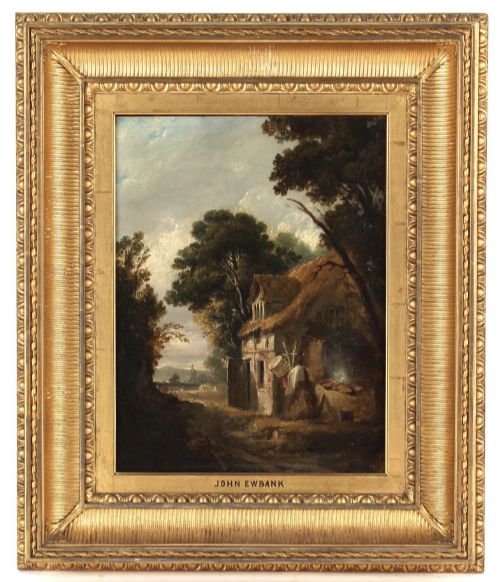
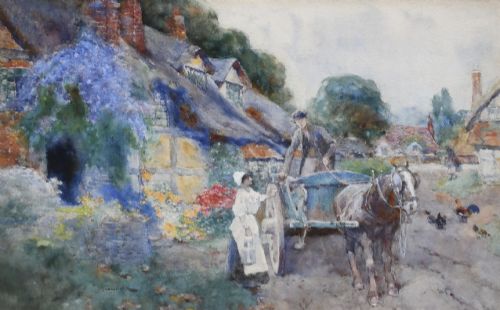
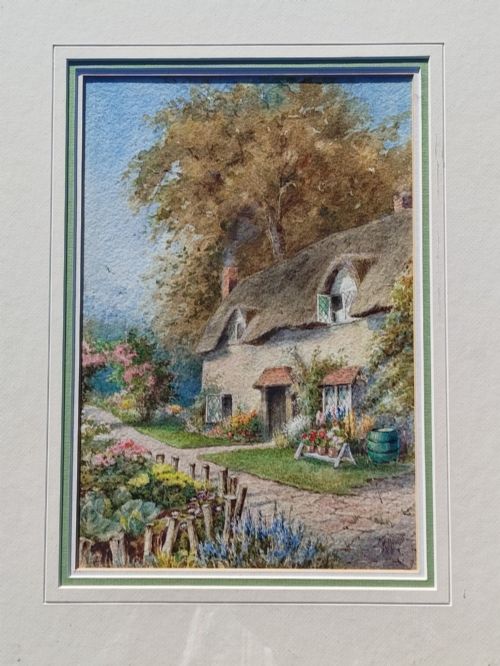
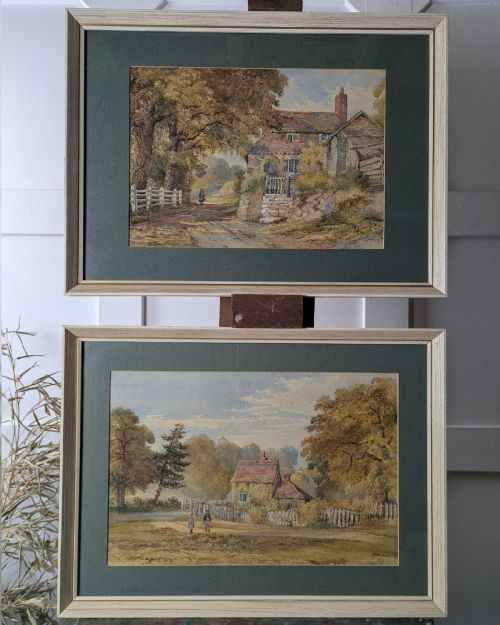
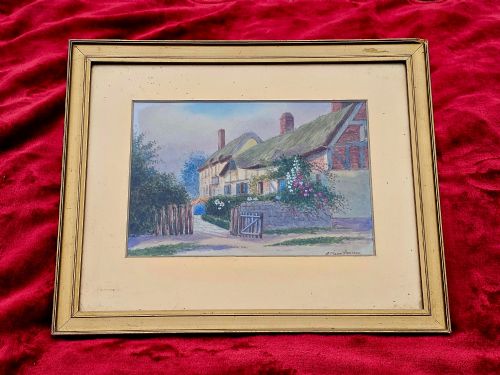
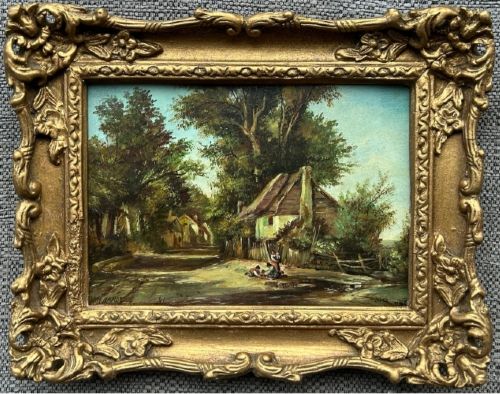
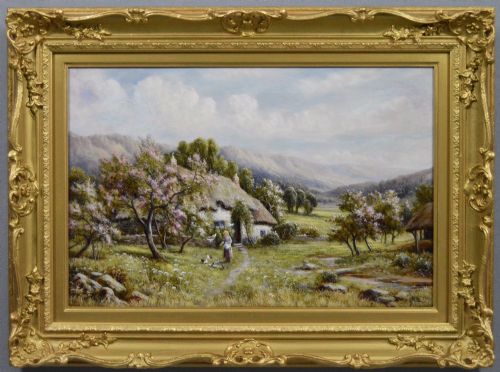
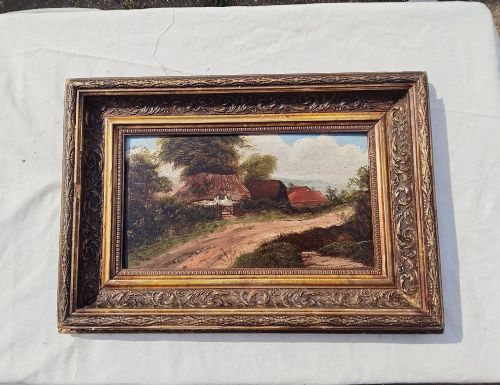
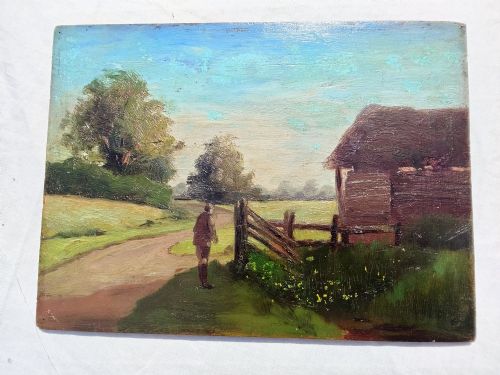
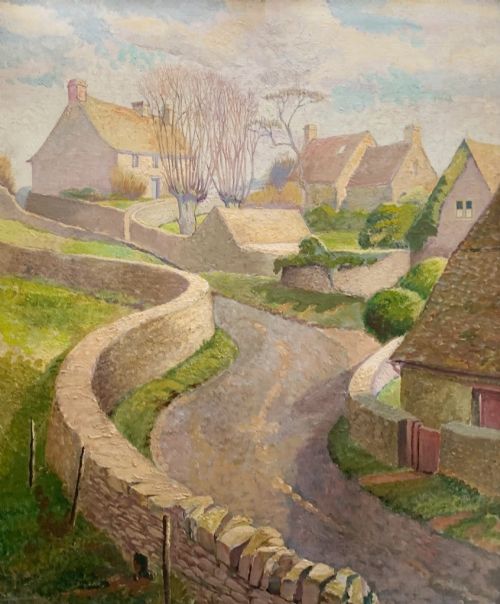
Traditional country cottage artwork captures rural scenes, farmsteads, and village dwellings across the nineteenth and twentieth centuries. These paintings focus on thatched roofs, garden paths, and figures outside cottages in various English and Scottish localities.
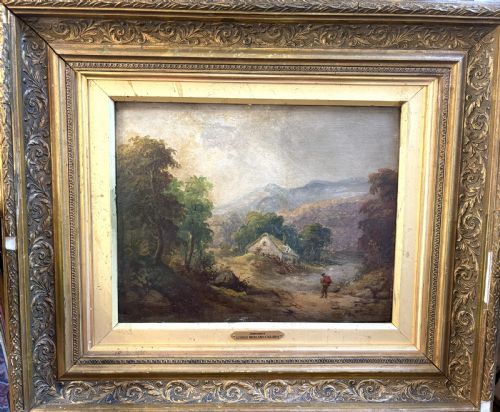
The pieces on this page are predominantly oil paintings and watercolours executed on canvas, panel, card, or paper. Artists of the English School and British Impressionism recorded these pastoral subjects during the Victorian, Edwardian, and later periods.
Materials and techniques in the works
Painters applied oil paint or watercolour onto supports such as canvas, wooden board, card, and heavy paper. Many works rely on the fluid transparency of watercolour for cottage gardens, whilst oils on panel or canvas provide richer texture for architectural stonework and rural landscapes.
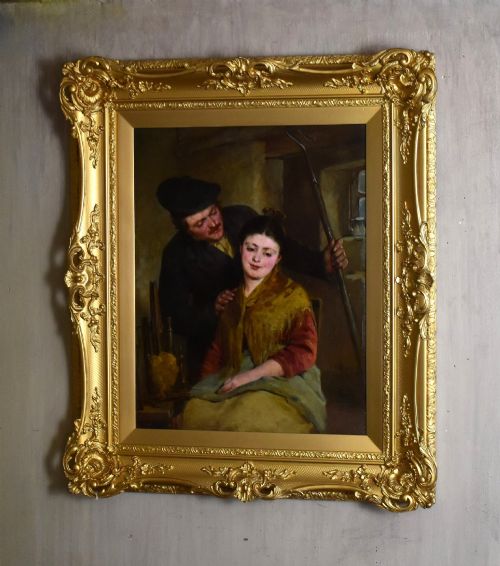
The framing often matches the period of the art, utilising gilt wood or moulded timber frames that complement the domestic pastoral subject. Pigments were handled by named artists and regional painters who documented local farms and village streets.
Traditional Country Cottage Artwork Retail Price Guide 2026
Typical asking prices for traditional country cottage artwork among the pieces listed under this phrase on Sellingantiques today, from the lower quarter to the upper quarter. They describe what is for sale here now, not the wider market.
Listings feature works spanning the nineteenth century to nineteen-fifty, executed in oil and watercolour on canvas, paper, and wood.
Distinctions in quality
Quality rests in the fidelity of the draughtsmanship and the artist's handling of light upon architectural elements like thatched roofs and stone walls. Stronger works convey atmosphere and specific topography rather than generic rural scenery.
The skill with which figures and livestock are integrated into the landscape distinguishes accomplished paintings from simpler decorative watercolours. Original framing and clear provenance from known practitioners also elevate the standing of a piece.
William Howard Hardy·A. Marie Parsons·Robert A. Nottingham·Robert John Hammond·Howard Helmick·George Morland·J S Ainley·James Hardy Junior·William Greaves·Theresa Stannard·Henry Charles Fox·Will Anderson·Robert Hollands Walker·John Falconar Slater·Thomas James Lloyd·Abraham Hulk Junior·David Woodlock·Harry Pennell·Ernest Cox·Herbert Royle·Walter Henry Sweet·Thomas Nicholson Tyndale·Ernest Higgins Rigg·James William Stamper·James Ward
The Traditional Country Cottage Artwork Glossary
- English School
- A term used to describe artists working in England whose styles share regional traditions rather than belonging to a formal continental movement. It frequently appears on unsigned nineteenth-century cottage paintings.
- Oil on Panel
- A painting executed on a wooden board rather than stretched canvas. This surface offered a rigid support favoured by artists depicting detailed rural scenes.
- Watercolour
- A paint consisting of water-soluble pigments applied to paper. It allows for delicate washes that suit cottage gardens and atmospheric skies.
- Genre painting
- Artwork depicting scenes from everyday life, often including figures working outside rural cottages or farmsteads. These pieces record social history alongside landscape details.
- Gilt wood
- Wood coated with a thin layer of gold leaf or metallic paint, commonly found on Victorian and Edwardian picture frames. It enhances the visual weight of traditional artworks.
Traditional Country Cottage Artwork: Frequently Asked Questions
What periods do these paintings come from?
The works span from the nineteenth century through the Edwardian era and into the mid-twentieth century. Many pieces date specifically from the Victorian period up to the nineteen-thirties.
This broad timeline encompasses Victorian academic painting, Edwardian pastoral scenes, and later twentieth-century interpretations of English villages and country cottages.
How should I display traditional cottage artwork?
These paintings suit traditional living spaces, studies, and hallways where their pastoral subjects complement classic interior decor. Hanging them at eye level in natural light allows the details of the brushwork to be fully appreciated.
Pairing a watercolour or oil painting with its original gilt wood frame preserves the historical integrity of the piece. Avoid placing works in direct sunlight to protect watercolours and paper supports from fading.
What subjects appear in these cottage artworks?
The primary subjects are rural dwellings, thatched cottages, village lanes, and farmsteads across England and Scotland. Artists often included figures such as farmworkers, gardeners, or children outside the houses.
Scenes frequently capture specific regional locations, ranging from Devon and Somerset to Yorkshire and Warwickshire, documenting historic rural architecture.
How can I tell watercolours and oil paintings apart?
Watercolours are executed on paper or card, often showing delicate washes and the texture of the paper beneath the pigment. They are typically displayed behind glass for protection.
Oil paintings utilise heavier paint applied to canvas, wood panels, or board, offering a textured surface that catches the light differently. Oils generally do not require glass over the painted surface.