
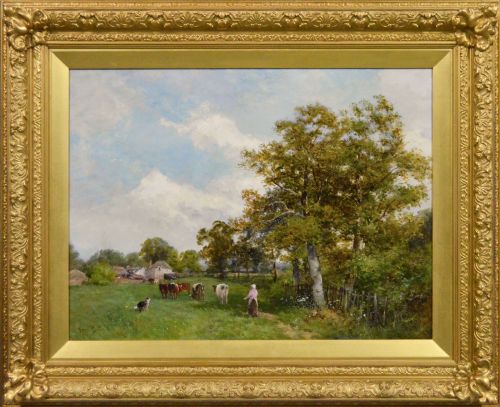
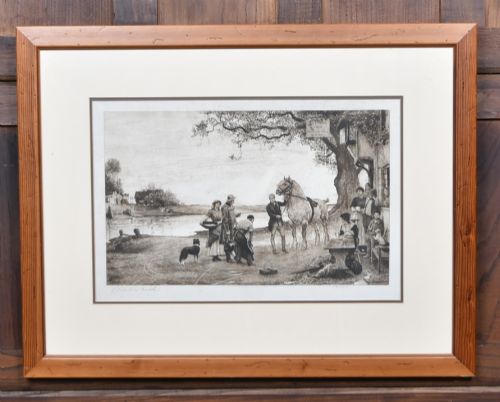
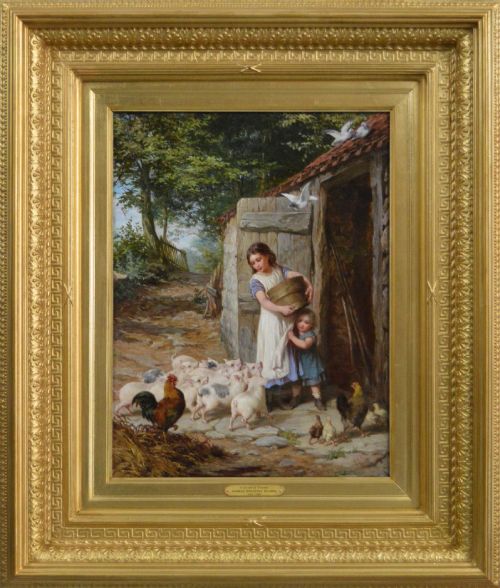
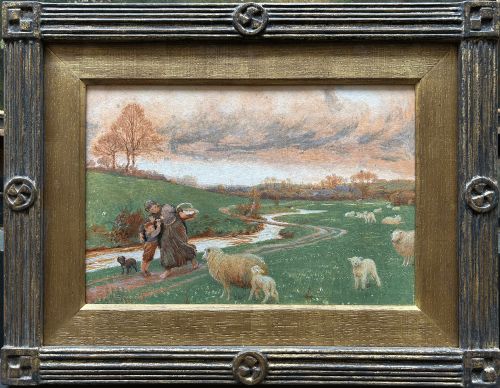
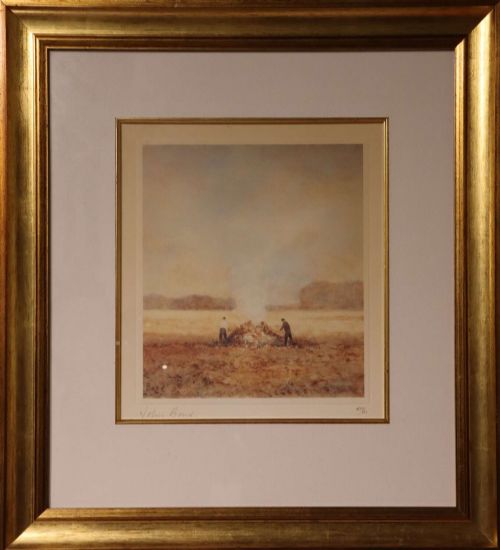
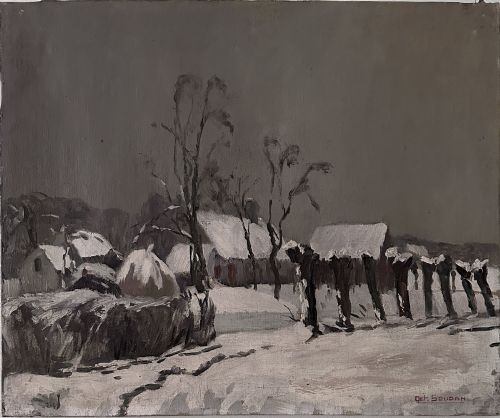
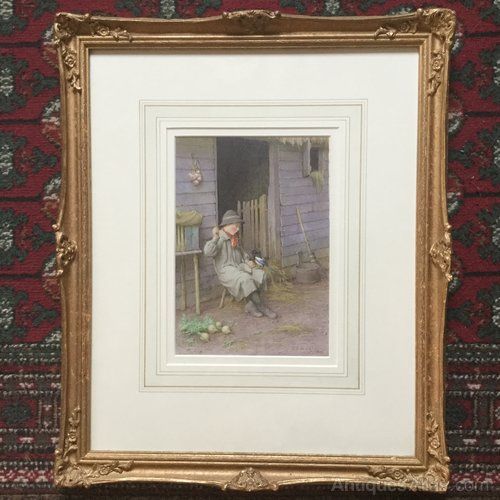


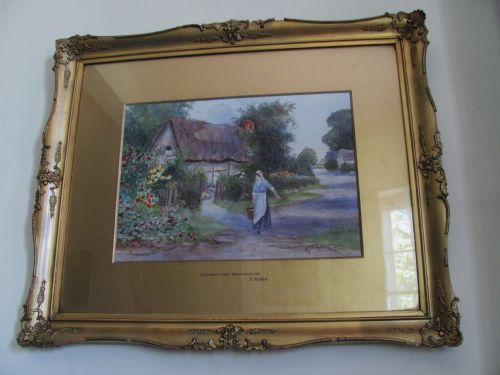

Framed Rural Scene Print
A framed rural scene print brings the quiet texture of the countryside directly indoors, offering pastoral calm through traditional imagery.
Framed Rural Scene Print
A framed rural scene print captures pastoral life, agricultural work and quiet country cottages across various periods. When exploring this selection, buyers encounter depictions of farmyards, livestock and village landscapes.
The objects span the nineteenth century, Victorian era, Edwardian period and mid twentieth century. Works range from nineteenth century etchings and mezzotints to later lithographs after original paintings.
Makers and artists represented include George Morland, Robert W. Macbeth and Charles Edward Wilson. These pieces serve as historical windows into rural life, preserved behind glass in wooden or gilt frames.
How they were made
These works utilise traditional paper and printmaking techniques such as etching, mezzotint and lithography. Artisans transferred ink onto fine paper to capture the intricate details of rural subjects.
Mounting and framing involved wood, gilded wood and gold leaf combined with protective glass. These materials secured the paper works while enhancing the visual depth of each pastoral scene.
Listings span the nineteenth century, Victorian era, Edwardian period and mid twentieth century, using paper, wood, glass and gold leaf.
What varies in quality
Quality rests in the precision of the line work, the depth of the plate impression and the fidelity of the tonal gradations. Finer examples display meticulous attention to anatomical details in figures and livestock, alongside subtle handling of atmospheric light.
The integrity of the surrounding frame also influences the overall character. Original gilt wood and carved wooden frames that complement the period of the print elevate the presentation significantly.
David Bates·Robert W. Macbeth·George Augustus Holmes·Frederick Walker·John Bond·Charles Edward Wilson·James William Booth·B. Kaufmann·Joseph Kirkpatrick·Herbert Royle·George Morland·I R Smith·V Jordan·Lois Wilton
The Framed Rural Scene Print Glossary
- Etching
- A printmaking technique where lines are bitten into a metal plate with acid before being inked and pressed onto paper. This process allows for fine, fluid lines similar to pen drawings.
- Mezzotint
- A tonal printmaking method where the copper plate is roughened to achieve rich darks and smooth gradients. It produces velvety shadows well suited to atmospheric pastoral subjects.
- Lithograph
- A planographic print made from a flat stone or metal plate treated to repel ink everywhere except where the design is drawn. It enabled accurate reproduction of original paintings.
- Gilt wood
- Wood coated with a thin layer of gold leaf or metallic paint. This finish adds a reflective border that frames the artwork.
- Pastoral
- Relating to the rural countryside, farms and rustic life. This genre focuses on idyllic or realistic depictions of agricultural routines.
Framed Rural Scene Print: Frequently Asked Questions
What subjects do these prints show?
The imagery centres on rural life, including farm animals, agricultural labour and country cottages. Scenes feature figures herding cows, harvesting hay and feeding livestock in various village settings.
These depictions reflect historical British countryside traditions, capturing the daily routines of rural workers and quiet landscapes across different seasons.
How should I hang these framed prints?
Display these works away from direct sunlight to protect the paper and pigments from fading. Maintaining stable room humidity also prevents the wooden frames and paper from warping over time.
Positioning them at eye level in domestic spaces allows the fine details of the etching or lithography to be appreciated up close.
How do I identify the period of a print?
Dating relies on stylistic clues, framing materials and the printing technique used. Nineteenth century pieces often utilise hand pulled etchings and mezzotints, while twentieth century items frequently feature lithography.
Signatures, artist inscriptions and the type of paper stock also provide concrete evidence for placing a work within the Victorian, Edwardian or later eras.
What is the difference between a print and a painting here?
Prints are mechanical or chemical reproductions of an original design, created through techniques like lithography or etched metal plates. Paintings involve direct application of pigment onto canvas or paper by the artist's hand.
Both categories appear within rural scene collections, offering different textures and methods of capturing pastoral subjects.