

Traditional Country Artwork
Traditional country artwork captures rural life and landscapes, offering buyers a window into historic agricultural scenes, sporting pursuits, and pastoral vistas.
Traditional Country Artwork
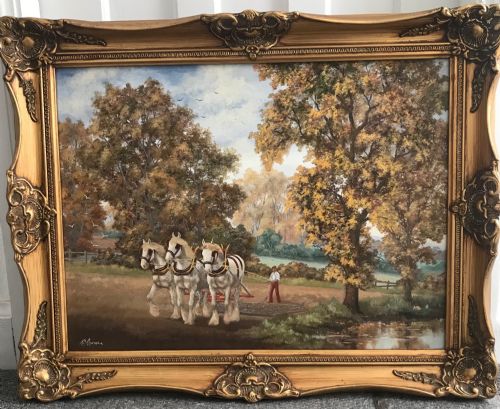
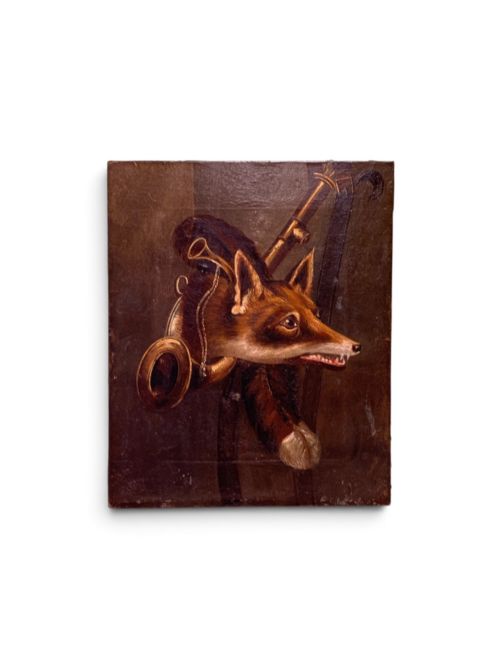
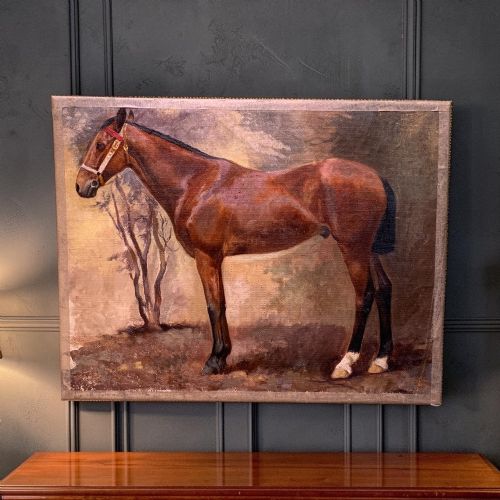
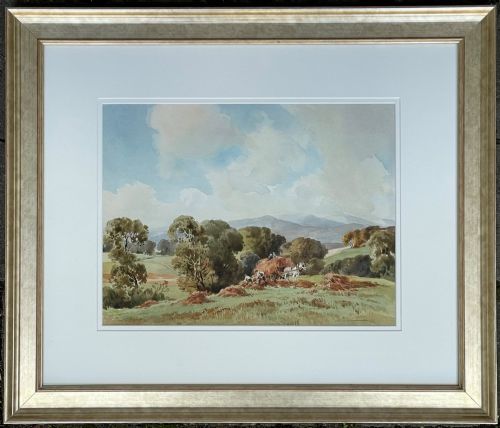
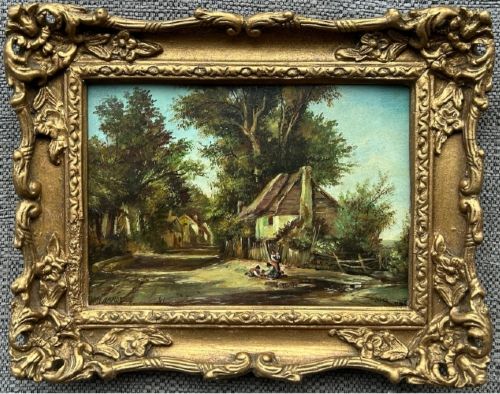
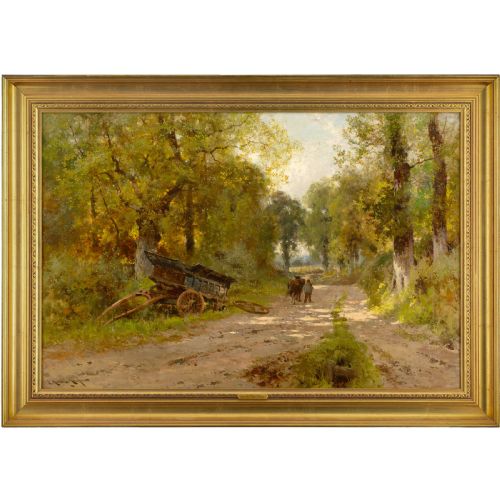
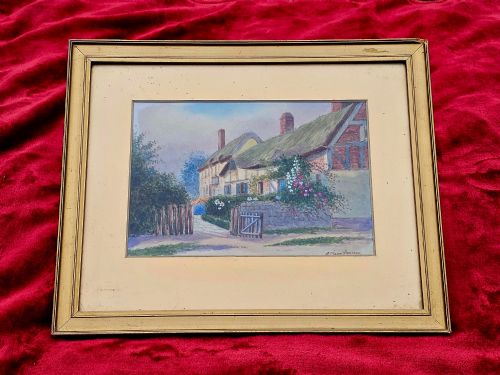
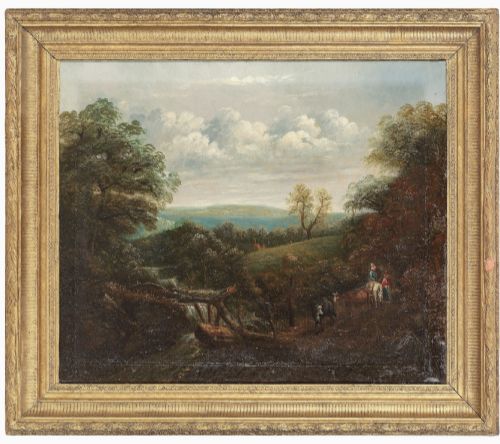
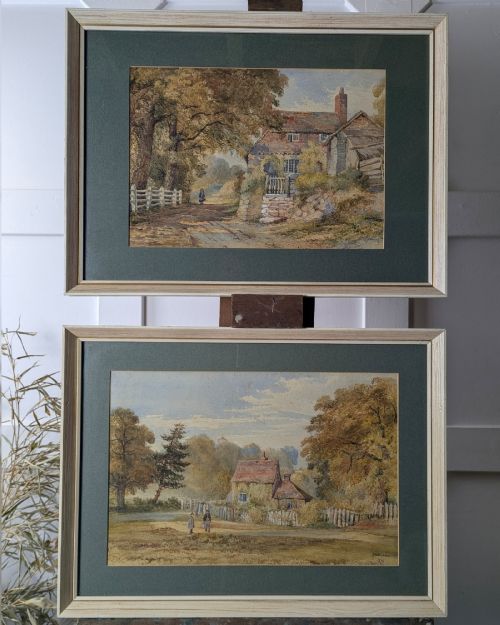
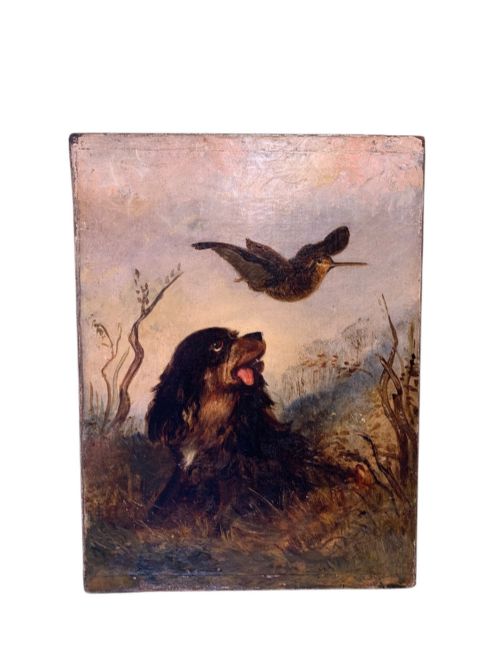
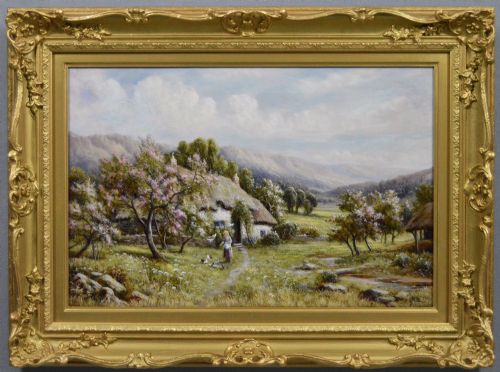
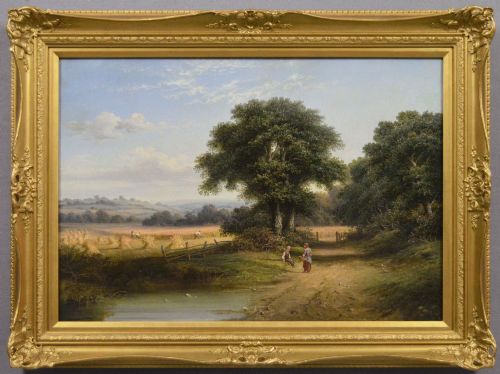
Traditional country artwork encompasses oil paintings, watercolours, and framed prints depicting rural life, agricultural scenes, and sporting subjects. Buyers encounter Victorian pastoral scenes, equestrian portraits, and landscapes executed by British and European artists. The selection ranges from detailed depictions of farm animals and harvest fields to quiet country paths and river views.
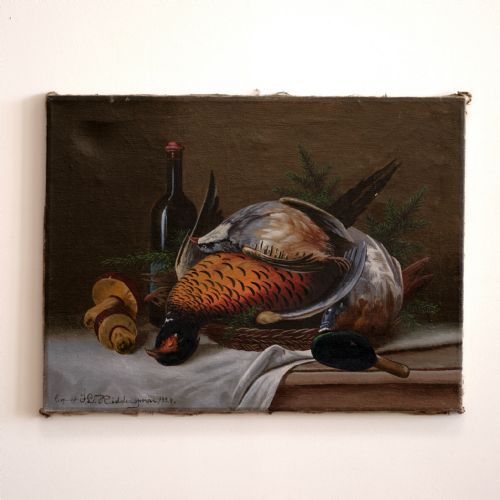
The most common formats on this page are oil paintings on canvas, panel, or board, alongside watercolours on paper. These works frequently date from the nineteenth and early twentieth centuries, spanning periods from the Victorian era through the Edwardian years up to the mid twentieth century. Subjects lean heavily towards domestic animals, rural workers, cottages, and field sports.
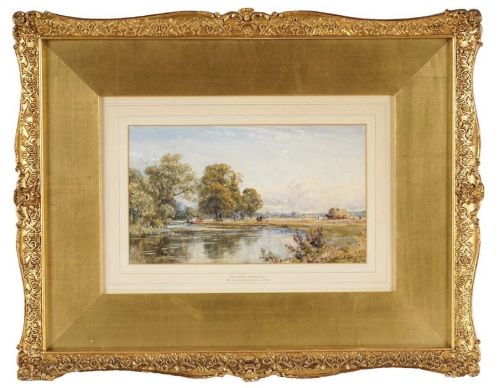
Framed artwork in this category often retains period gilt wood or wooden frames that complement the rustic subject matter. Smaller watercolours sit alongside large oil paintings of horses, cattle, and rural panoramas. Together, these pieces document a changing countryside through the eyes of academic and regional painters.
Materials and techniques
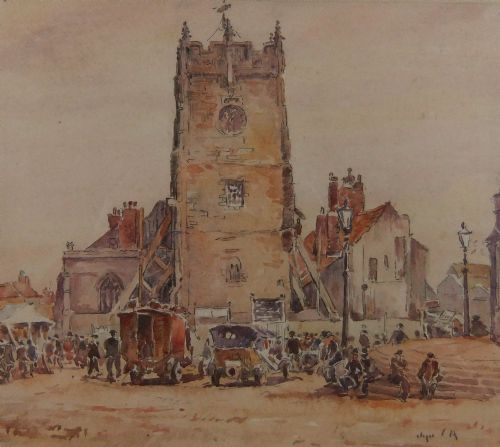
Artists painted these works using oil paint on canvas, wooden board, card, or panel, building up rich textures and deep tones. Watercolours were applied to paper, capturing light and atmosphere with transparent washes and fine brushwork. Lithographs also appear, utilising inked stones to transfer detailed graphic prints of field sports.
Supports varied according to the scale and ambition of the piece, with heavy wooden panels and stretched canvases supporting substantial oil compositions. Gilt wood and simple wooden frames completed the works, protecting the edges of the canvas or paper while providing a finished boundary for display.
Several canvases feature remarkably stern-looking shorthorn bulls and prize-winning racehorses that clearly commanded more household respect than the humans beside them.
Factors determining quality
The distinction between ordinary and superior traditional country artwork rests upon the artist's command of anatomy, light, and composition. Finer paintings display precise draughtsmanship in animal portraits and convincing depth in landscape perspectives, whereas lesser works rely on formulaic foliage and rigid figures. Brushwork in higher quality pieces shows deliberate control and varied texture rather than flat, uniform application.
Condition and originality also dictate standing within the range, particularly the preservation of the original paint surface and the appropriateness of the frame. Works that retain their historical character without heavy modern overpainting command greater appreciation among collectors seeking authentic period atmosphere.
Percy Lancaster·William Howard Hardy·John Horace Hooper·A Marie Parsons·Robert A Nottingham·Robert John Hammond·Walter Heath Williams·Robert Thorne Waite·John Smith Atherton·Howard Helmick·Thomas Sidney Cooper·Joseph H Barnes·John Sargent Noble·George Wright·William Albert Clarke·Carl Whitfield·C H Weigall·Johann Friedrich Voltz·Henry Yeen King·John Alfred Wheeler·T C Hofland·Henry H Parker
The Traditional Country Artwork Glossary
- Oil on Canvas
- Pigments bound in drying oil applied to a woven fabric stretched across a wooden frame. This surface allowed artists to create rich textures and blend colours smoothly.
- Watercolour
- A paint consisting of colour pigments suspended in a water-soluble vehicle, typically applied to paper. It yields translucent washes that capture natural light and delicate atmospheric effects.
- Panel
- A flat piece of wood used as a rigid support for painting instead of canvas. Wooden boards provided a stable surface favoured by many artists for smaller or highly detailed works.
- Lithograph
- A print produced from a flat stone or metal plate treated to repel ink everywhere except where the drawing exists. This technique allowed multiple precise reproductions of original artworks.
- Gilt Wood
- Wood that has been coated with a thin layer of gold leaf or metallic paint. It was commonly used to frame fine art and paintings during the nineteenth century.
Traditional Country Artwork: Frequently Asked Questions
What subjects define traditional country artwork?
These pieces focus primarily on rural landscapes, farm animals, agricultural scenes, and field sports. Common motifs include horses, cattle, cottages, harvest fields, and river views.
Artists drew inspiration from daily rural life and the natural environment, producing works that recorded the British countryside across successive generations.
How should I care for antique oil paintings?
Oil paintings require stable indoor humidity and protection from direct sunlight to prevent the canvas from sagging and the pigments from fading. Dust them gently with a soft, dry brush without applying pressure.
Avoid using water or chemical cleaners on the paint surface or frame. Professional conservators should handle any deep cleaning or structural repairs.
How do I identify a Victorian landscape?
Victorian landscapes often feature detailed brushwork, naturalistic palettes, and romantic or pastoral moods. Many are executed in oil on canvas and housed in ornate gilt wood frames.
Subject matter frequently highlights traditional farming practices, rural workers, and recognisable British scenery before the onset of rapid industrialisation.
Where were these paintings originally displayed?
These works hung in country houses, rectories, and urban drawing rooms where owners wished to display a connection to rural life and sporting traditions. Large oil paintings often occupied principal reception rooms.
Smaller watercolours and framed prints suited more intimate spaces such as studies, bedrooms, and morning rooms.