

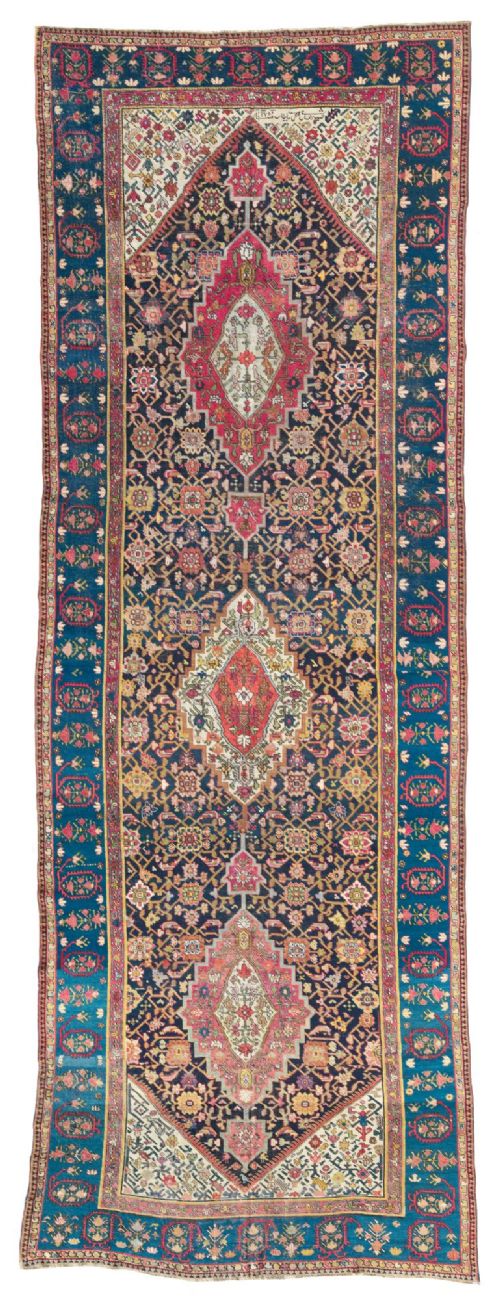
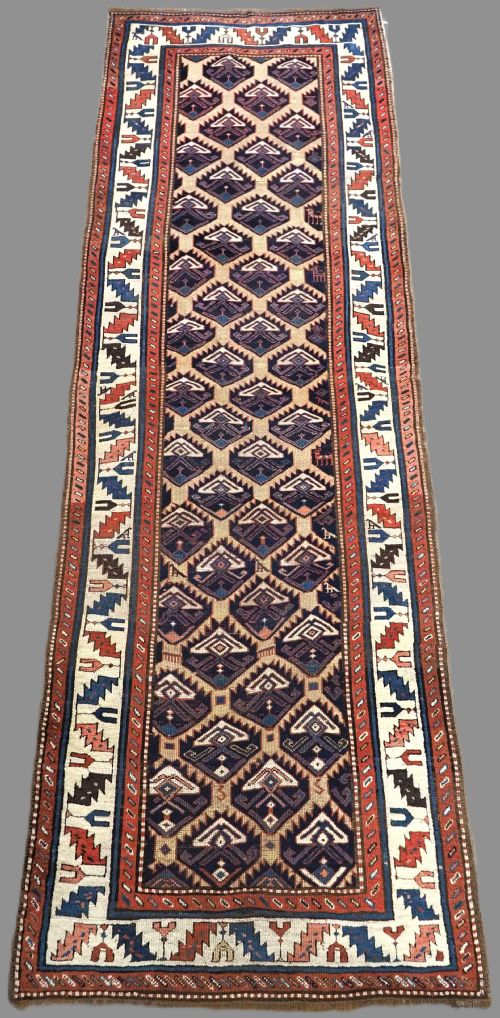
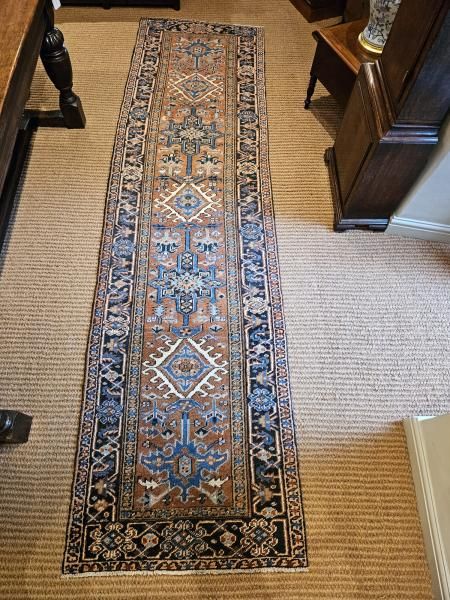
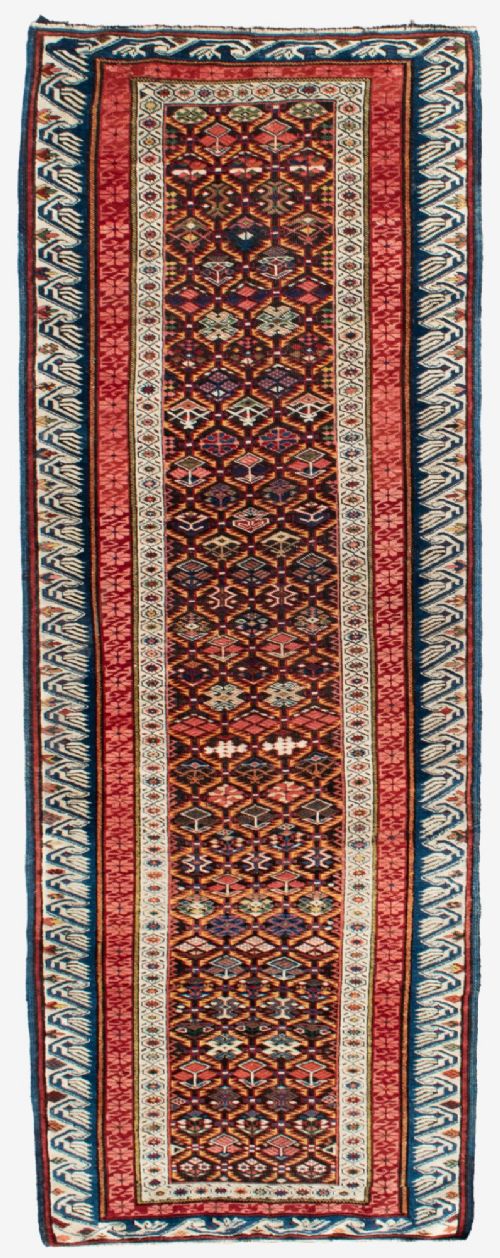
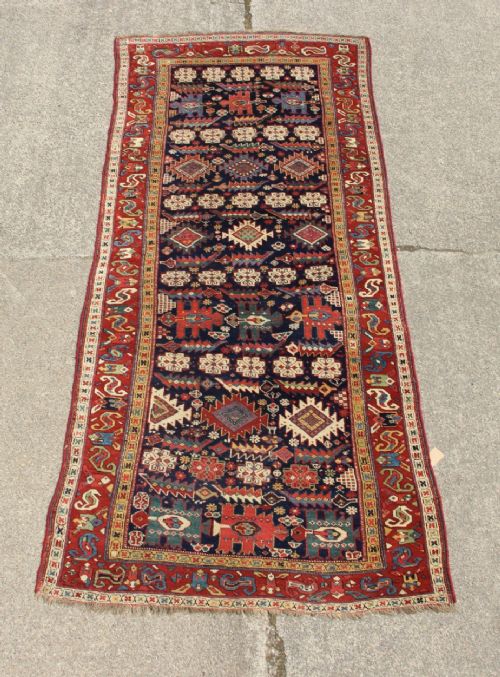
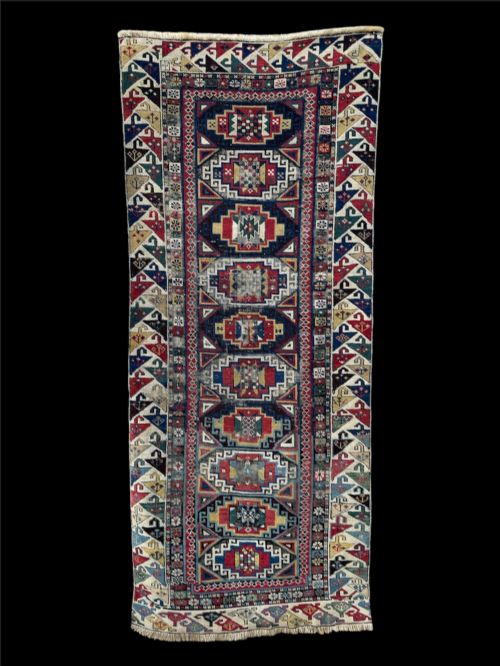

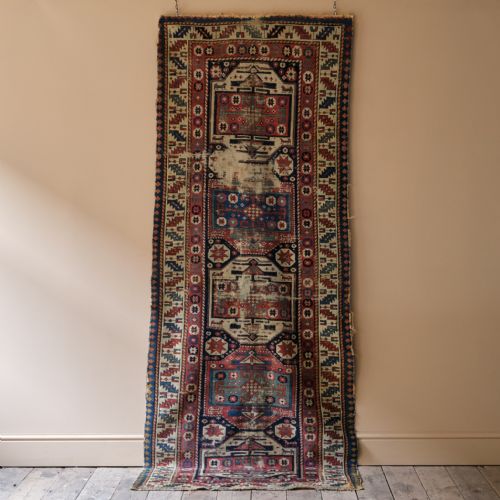


Traditional Caucasian Corridor Rug
A traditional caucasian corridor rug brings geometric rhythm and saturated dye work directly to a long hallway.
Traditional Caucasian Corridor Rug
A traditional caucasian corridor rug is an elongated textile designed specifically for narrow spaces, featuring structured geometric motifs and repeating tribal patterns. These floor coverings span the nineteenth and early twentieth centuries, originating from mountainous weaving regions and surrounding tribal territories.
Buyers meet narrow runners, long rugs, and kelleh formats produced by weavers in areas such as Shirvan, Gendje, Talysh, and Karabagh. The layouts prioritise linear designs that guide the eye along corridors, entryways, and long domestic passages.
The aesthetic relies on distinct regional vocabularies, showing lattice grids, boteh motifs, and stylized medallions rather than flowing floral curves. Each piece reflects the specific weaving traditions of the village or nomadic group that knotted it by hand.
How they were made
The construction of these floor coverings relies on a foundation of sturdy wool or cotton threads, forming the warp and weft that hold the textile together. Knotting is executed entirely by hand, creating a dense pile that absorbs foot traffic while retaining structural flexibility.
Dyers utilised natural materials to achieve deep, saturated tones of blue, red, and ivory that patinate gracefully over decades of use. The resulting wool pile holds complex geometric designs with remarkable crispness along the vertical axis of the corridor format.
Several runners proudly display a deliberate wobble in their straight lines, proving that human hands guided every single knot along the corridor.
What varies in quality
Quality in these long formats rests on the precision of the geometric drawing and the saturation of the dye work. Tighter knotting supports sharper lines in medallions and lattice patterns, distinguishing workshop pieces from simpler village work.
The handling of secondary borders and the integrity of the pile across the entire length dictate the visual impact of the runner. A successful weaving balances proportion and colour rhythm so the linear design flows without awkward compression.
The Traditional Caucasian Corridor Rug Glossary
- Kelleh
- A large format rug that is longer than a standard room size rug but broader than a typical corridor runner. It serves wide hallways and spacious gallery floors.
- Boteh
- A stylised almond or pear-shaped motif representing a seed or floral sprout. It appears frequently in repeating rows across Caucasian and Persian tribal weavings.
- Warp
- The vertical foundation threads stretched tightly on the loom before knotting begins. Cotton and wool serve as the primary materials for this structural skeleton.
- Memling Gul
- An octagonal or hooked polygon motif named after the fifteenth-century painter who depicted similar Anatolian carpets. It functions as a powerful protective emblem in tribal rugs.
Traditional Caucasian Corridor Rug: Frequently Asked Questions
Where should I place a long runner?
These narrow floor coverings fit naturally in hallways, galleries, and stair landings where linear shapes define the floor plan.
They protect high-traffic floorboards while adding vertical structure and warmth to otherwise stark architectural spaces.
How do I care for antique wool runners?
Regular gentle vacuuming without a rotating brush roll keeps the dense wool pile free from embedded grit and dust.
Professional specialist cleaning is recommended to maintain the stability of natural dyes and hand-knotted foundations.
What distinguishes Talysh from Shirvan rugs?
Talysh pieces generally present a more open, uncluttered field with a dominant central medallion column flanked by simple borders.
Shirvan weavings tend to incorporate denser geometric lattice networks and intricate multi-coloured boteh arrangements.
Why do some runners appear slightly crooked?
Hand-woven village textiles naturally shift during the manufacturing process as tension fluctuates on traditional upright looms.
This slight irregularity reflects organic human craftsmanship rather than industrial precision.