
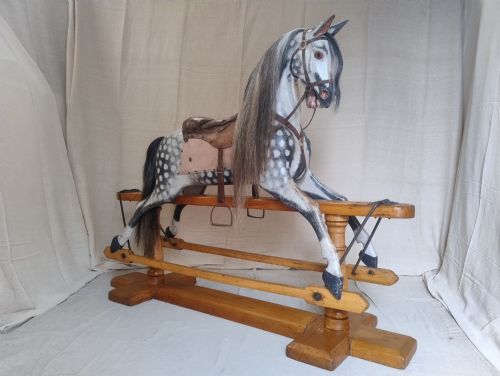


Traditional Carved Toy Horse
A traditional carved toy horse brings enduring motion and character into a room, offering a tangible link to childhoods of the past.
Traditional Carved Toy Horse
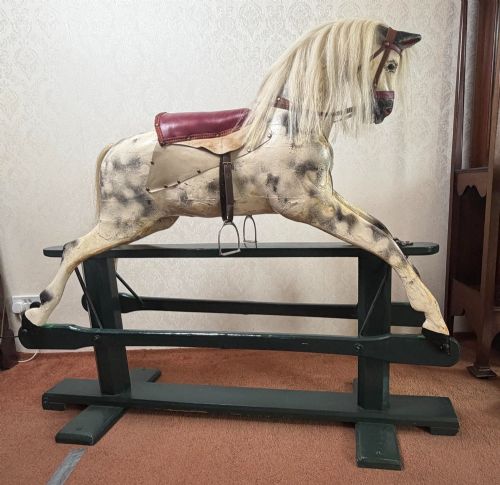
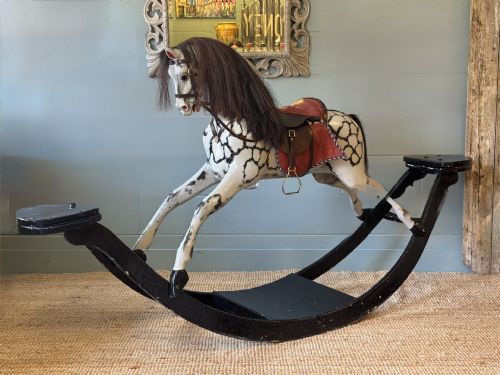
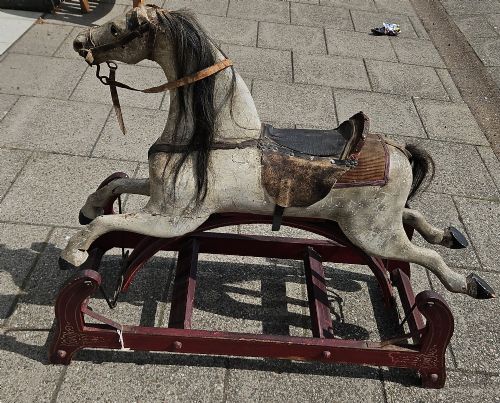
A traditional carved toy horse is most commonly encountered on this page as a rocking horse spanning the Victorian, Edwardian and interwar periods. These sculptures range from naive early works to large workshop productions mounted on curved wooden rockers or safety stands.
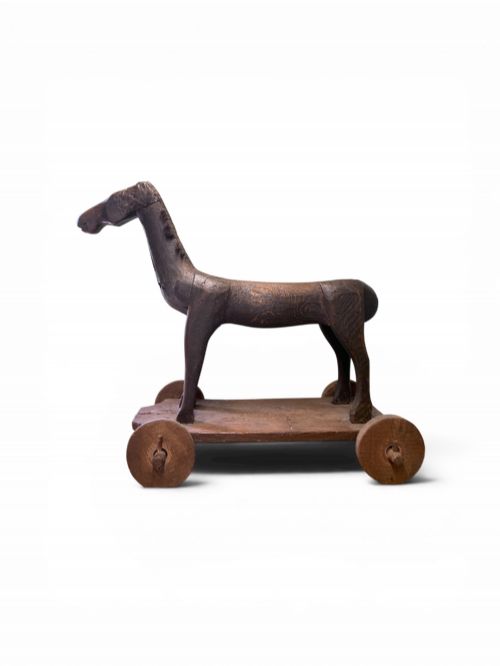
Makers such as F.H. Ayres, G & J Lines, and Collinson dominate the lineage of these pieces, alongside numerous unlabelled folk art examples originating from Britain, Spain and America. Forms vary from simple carved pine figures to grand, painted presentation pieces designed for domestic nurseries.
The materials visible across these pieces reflect a utilitarian yet robust construction, combining carved wood and pine bodies with leather tack, metal reinforcement and horsehair manes. Many retain layers of original paint showing the wear of generations of play.
What varies in quality
Quality in a traditional carved toy horse rests upon the crispness of the initial carving and the articulation of the anatomy, separating ambitious workshop productions from simpler naive pieces. Sculptural presence and proportion dictate the visual impact of the animal.
The survival of original surface treatments, including early or original paint and genuine horsehair, distinguishes superior examples from heavily restored or later repainted items. The integrity of the wooden rockers and the mounting structure also influence the overall character.
Listings feature pieces spanning the eighteenth century through to the 1950s, utilising pine, leather, horsehair and iron.
G & J Lines·F.H. Ayres·Collinson·Lines Bros
The Traditional Carved Toy Horse Glossary
- Rocking horse
- A carved wooden toy horse mounted on curved wooden rockers or a safety stand to allow motion. These objects formed the centrepiece of Victorian and Edwardian nurseries.
- Folk art
- Creative work produced by untrained artisans or within community traditions rather than formal academic workshops. This style appears in naive painted wooden toy horses.
- Safety stand
- A rigid wooden frame design introduced to prevent rocking horses from tipping over during vigorous play. It replaced traditional curved floor rockers in many later workshops.
- Original paint
- The initial decorative coating applied to the wooden surface by the maker or contemporary decorator. Its survival offers crucial evidence of a piece's age and history.
Traditional Carved Toy Horse: Frequently Asked Questions
How do I date an antique rocking horse?
Dating relies on stylistic clues, construction methods, and maker marks if present. Workshops changed their carving profiles and mounting styles across the Victorian and Edwardian decades.
Paint layers and materials like iron reinforcement or horsehair also help narrow down the period of manufacture, from nineteenth-century pieces to interwar examples.
Were these toys meant for actual children?
Most of these carved horses served as nursery toys and playground fixtures for children. Their robust construction in pine and wood with metal brackets reflects a design meant for active play.
Over time, heavy use resulted in the playworn condition seen on many surviving examples today.
How should I care for original paint?
Preserving original paint requires keeping the wooden horse away from direct sunlight and damp environments. Gentle dusting with a dry cloth protects the historic surface without introducing moisture.
Avoid chemical cleaners that might strip or soften early paint layers.
What is folk art style?
Folk art describes pieces made outside academic traditions, often displaying charming proportions and direct carving techniques. Spanish and British examples in this group show distinct regional carving habits.
These naive horses prioritize expressive character over strict anatomical accuracy.