


Antique Safety Stand Horse
An antique safety stand horse brings the cherished nursery tradition into your home with enduring craftsmanship.
Antique Safety Stand Horse
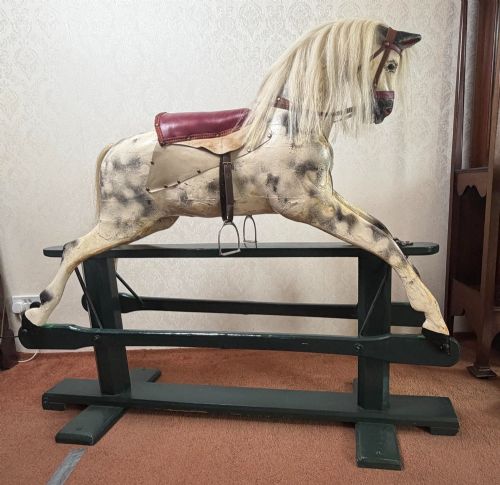
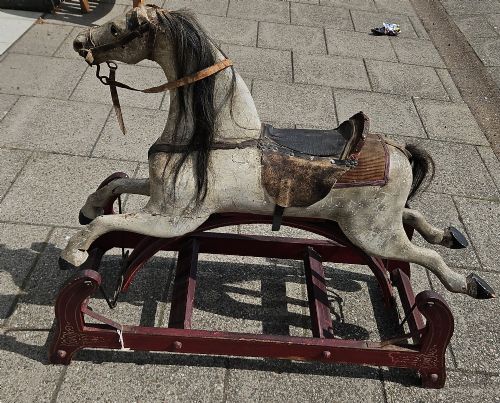
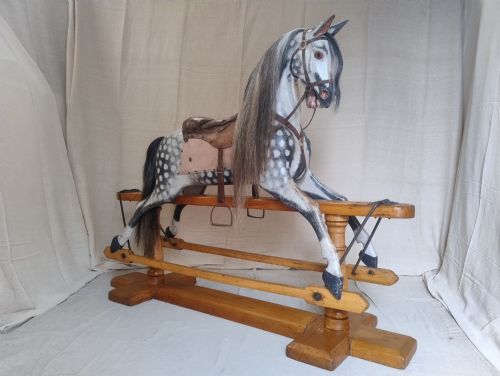
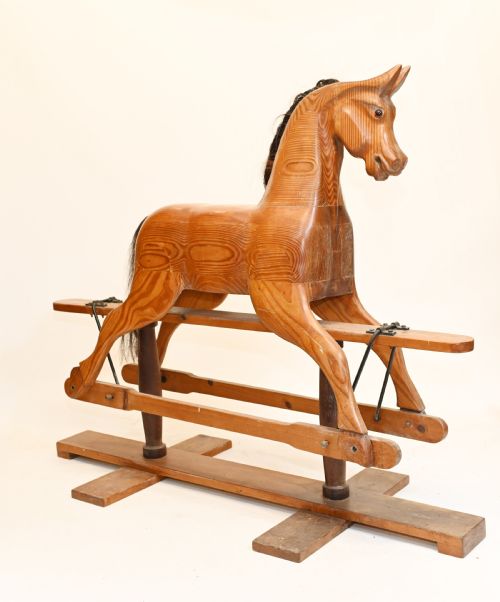
An antique safety stand horse represents a quintessential Victorian and early twentieth-century children's toy designed for vigorous play without the tipping risk of traditional bow rockers. You are primarily looking at carved wooden rocking horses mounted upon rigid, secure undercarriages that emerged from workshops during the late nineteenth and early twentieth centuries.
The pieces listed here span the Victorian era, the Edwardian period, and the interwar years, showcasing diverse forms from monumental exhibition pieces to smaller playroom companions. Most examples you will encounter display the classic dappled painted finish mounted securely on heavy pine or iron-strengthened stands.
How they were made
Makers shaped the bodies predominantly from carved wood and pine, often utilising separate laminated blocks to achieve the muscular contours of a true horse. Skilled artisans then applied layers of gesso before painting the surface, frequently incorporating real horsehair for manes and tails.
The mechanical ingenuity lies in the integration of metal and iron swing irons or safety stands, which allowed the horse to rock back and forth smoothly while the base remained entirely stationary on the floor. Leather tack, saddles, and bridles were then added by hand to complete the illusion of a real mount.
Many a Victorian horse retains genuine horsehair for its mane, swept wildly to one side from decades of imaginary galloping.
What varies in quality
The distinction between a standard playroom toy and a premier workshop specimen rests in the anatomical depth of the carved wood and the sophistication of the safety stand mechanism. Early examples by notable makers exhibit more expressive facial carving, superior glass or leather eyes, and robust iron brackets designed to withstand decades of enthusiastic use.
Surface preservation dictates much of the appeal, where original painted dapple patterns and untouched leather furniture elevate a piece significantly above later overpainted restorations. The balance between structural joinery in the pine base and the integrity of the original harness work ultimately defines the standing of the piece.
F.H.Ayres·Collinson·Lines Bros
The Antique Safety Stand Horse Glossary
- Safety stand
- A rigid wooden and metal undercarriage that holds a rocking horse securely in place, preventing the entire structure from tipping over during use. This innovation replaced the traditional curved bow rockers in the late nineteenth century.
- Dappled
- A painted surface finish imitating the mottled coat of a grey horse, traditionally applied by hand using stencils or sponge techniques. This iconic nursery look distinguishes many classic British examples.
- Swing irons
- The articulated metal arms connecting the horse's body to the stationary stand, permitting a smooth rocking motion. They are typically forged from heavy iron or steel for maximum durability.
Antique Safety Stand Horse: Frequently Asked Questions
How do I date an antique rocking horse?
Dating relies heavily on construction methods, timber choices like pine or carved wood, and the style of the mounting stand. Victorian examples often feature deep hand-carving and distinct iron swing brackets.
Later interwar and twentieth-century versions display simpler mechanical joints and different paint formulations. Examining any surviving paint layers and hardware provides further chronological clues.
What is a safety stand rocking horse?
A safety stand rocking horse is mounted on a fixed, non-moving wooden base connected by suspended iron swing arms. This design allowed children to rock vigorously without the risk of the horse tipping over.
It became the dominant format from the late nineteenth century onward, superseding the floor-bound bow rocker.
Are these horses safe for children today?
While these pieces were built as robust children's toys, today they are primarily appreciated as historic decorative objects and works of folk art. Modern safety standards for children's toys differ significantly from those of the Victorian era.
Collectors generally treat them as display focal points rather than active playground equipment.
How do I care for original paint and leather?
Preserving the original finish requires keeping the wooden horse away from direct sunlight, extreme temperature fluctuations, and damp environments. Dusting gently with a dry, soft cloth is usually sufficient for maintenance.
Avoid using modern chemical cleaners or polishes on old paint, gesso, or leather tack, as these can strip historical patina.