



Carved Pine Toy Horse
A carved pine toy horse brings raw historical charm into a room, offering tactile folk art sculpture that connects modern spaces directly to past childhoods.
Carved Pine Toy Horse
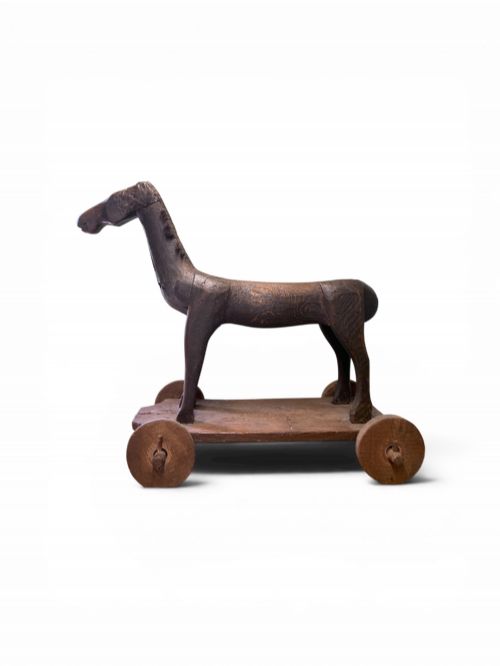
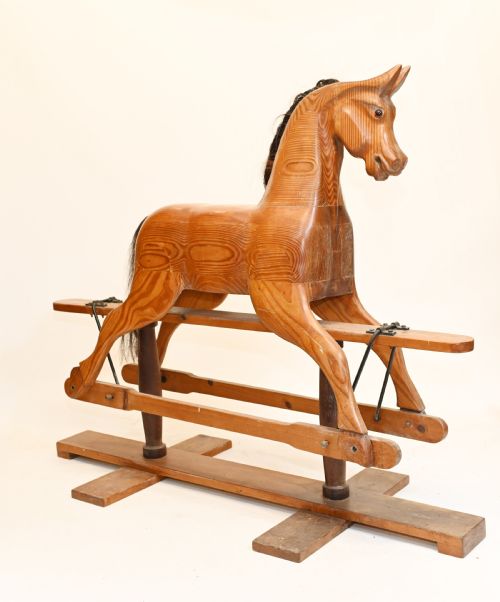
When searching for a carved pine toy horse, collectors look for handcrafted sculptural pieces spanning from the 18th century through to the mid-20th century. These objects include naive early figures, large rocking horses, and decorative folk art sculptures fashioned by traditional makers.
Makers represented in these listings range from notable firms like F.H. Ayres and Collinson to anonymous folk artists. Their creations survive as both children's toys and decorative objects, showing the enduring appeal of traditional British craftsmanship.
How they were made
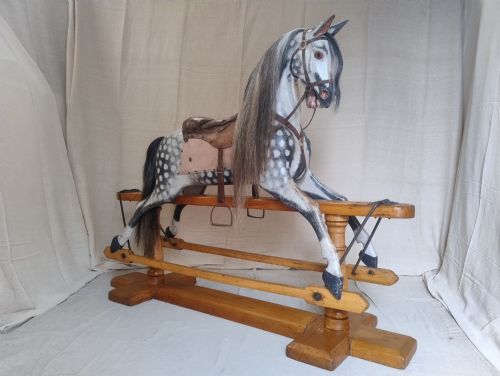
Carved pine toy horses take shape through traditional woodworking techniques, utilising solid carved wood and pine construction. Artisans shape the bodies by hand, often incorporating additional materials such as horsehair for manes and tails, leather for tack, and iron or metal components for structural reinforcement.
Listings feature pine and carved wood construction alongside supplementary materials like horsehair, leather, paint, and iron.
What varies in quality
The distinction between different examples rests in the depth of sculptural detail and the integrity of the original materials. Earlier naive carvings display a raw, expressive form, whilst larger Victorian and later works demonstrate more refined proportions and mechanical complexity in their rocking frames.
Surface preservation heavily influences the character of each piece. Surviving original paintwork and authentic additions like horsehair and leather contribute significantly to the visual weight and historical authenticity of the sculpture.
F.H.Ayres·Collinson·Collinsons
The Carved Pine Toy Horse Glossary
- Pine
- A softwood commonly used in historical woodworking and toy making for its workability and availability. It provides a lightweight yet durable base for carved figures.
- Folk Art
- Artistic work created within a traditional culture by self-taught or untrained artisans. These pieces prioritize utilitarian and expressive qualities over academic conventions.
- Rocking Horse
- A child's toy mounted on curved wooden bows or a safety stand designed to swing back and forth. They appear frequently in larger formats constructed from carved wood.
- Horsehair
- Natural hair taken from the mane or tail of horses, traditionally utilised in taxidermy and toy making. It provides realistic texture for the manes and tails of antique toy horses.
- Playworn
- A descriptive term for toys that show heavy evidence of use by children in the past. It indicates genuine historical interaction rather than pristine preservation.
Carved Pine Toy Horse: Frequently Asked Questions
What periods do carved pine toy horses come from?
These pieces date from the 18th century through to the mid-20th century, encompassing Georgian, Victorian, and later eras. Listings include naive early figures alongside larger examples from the 1930s and 1940s.
Makers and traditional workshops produced these objects across different centuries, reflecting evolving styles in children's toys and folk art sculpture.
How were these wooden horses used originally?
They served primarily as children's toys, either as stationary carved figures or mounted on rocking stands for play. Larger versions provided physical entertainment and imaginative exercise for children in nurseries.
Over time, many of these functional objects transitioned into decorative sculptures valued for their naive charm and historical presence in domestic interiors.
What materials make up an antique toy horse?
Construction relies heavily on carved pine and solid wood for the body and supporting frames. Additional elements such as horsehair, leather, and metal or iron components frequently complete the piece.
Many examples also retain layers of original paint, which defines the surface and adds colour and character to the wooden sculpture.
How do I identify a Victorian rocking horse?
Victorian examples typically feature substantial wooden construction, often combining carved pine with added horsehair manes and leather tack. They are frequently associated with established makers from the period.
Characteristics vary from simpler traditional British designs to larger, more elaborate sculptures reflecting the manufacturing standards of the 19th century.