




Vintage Glider Horse
These vintage glider horse pieces bring traditional playthings straight into a room, offering the charm of carved wood and classic motion.
Vintage Glider Horse
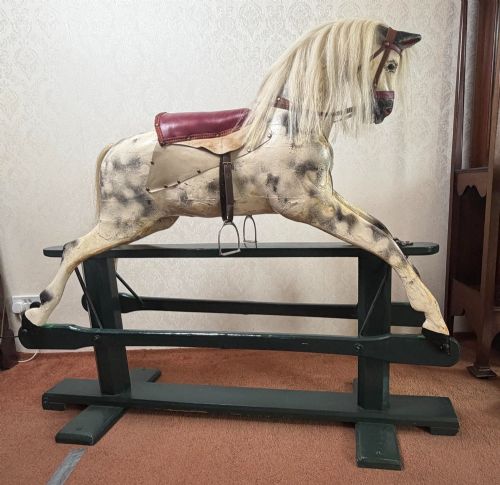
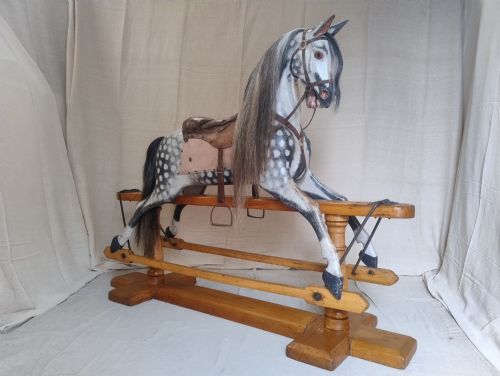
A vintage glider horse represents a classic childhood toy, taking the form of traditional rocking horses built across the nineteenth and twentieth centuries. These pieces emerge from periods such as the Victorian era, the Edwardian years, and the interwar period.
Most examples found here span from the late nineteenth century up to the middle of the twentieth century, showcasing traditional British craftsmanship. The selection centres on carved wooden forms, often retaining their original paint or surface finishes.
Buyers will encounter various traditional styles, including Victorian folk art and standard rocking horse designs. These objects serve as striking decorative items for nurseries, living spaces, and collectors of historic toys.
Construction and Materials
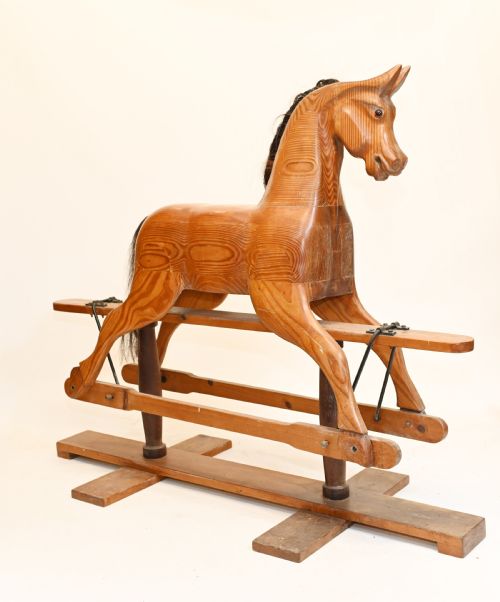
Makers utilised carved wood and pine to shape the bodies of these horses, employing traditional woodworking techniques to achieve durable forms. Metal, iron, and steel components provided structural support for the rocking mechanisms and internal frames.
Surface details frequently incorporated leather elements and horsehair manes to complete the realistic appearance of the animals. Original paint applications completed the manufacturing process, preserving the traditional aesthetic recorded in the listings.
Listings span from the Victorian era through the 1950s, featuring traditional wooden and pine forms.
Assessing Quality and Character
The degree of original surface preservation distinguishes different examples within this category. Pieces retaining their original paint and traditional fittings hold a distinct character compared to those with later repainting.
Carving depth and anatomical detail in the wooden bodies reveal the skill of the maker. The integrity of the underlying wooden frame and original rocker mechanism also shapes the overall standard of each piece.
F.H. Ayres·Lines Bros Sportiboy·Collinsons
The Vintage Glider Horse Glossary
- Rocking Horse
- A traditional children's toy shaped like a horse mounted on rockers or a safety stand. These objects range from simple carved pine versions to elaborately painted creations.
- Victorian
- A nineteenth-century period associated with the reign of Queen Victoria, influencing the design and decorative style of early toys. Pieces from this era often display traditional folk art characteristics.
- Edwardian
- The period spanning the early twentieth century up to the First World War, noted for refined manufacturing standards in household goods and children's playthings.
- Interwar Period
- The era between the First and Second World Wars, representing a time of continued production for traditional wooden toys.
- Folk Art
- Artistic work created within a traditional culture, reflecting local craftsmanship rather than academic training. In toy making, this style often appears in simpler, robustly carved wooden structures.
Vintage Glider Horse: Frequently Asked Questions
How do I date a vintage glider horse?
Dating relies on examining the construction methods, materials, and stylistic details visible in the carved wood and paint finishes. Periods span from the late nineteenth century through the interwar years.
Examining maker attribution marks, where present, helps confirm the specific era and workshop of origin.
Are these horses safe for children to ride?
These historical items are generally regarded as decorative collectibles or display pieces rather than modern toys. Their age and traditional construction mean they may not meet contemporary safety standards.
Collectors usually place them in nurseries or living areas as focal points rather than active playthings.
What maintenance do wooden rocking horses need?
Preserving the wood and original paint requires stable indoor humidity and avoidance of direct sunlight. Gentle dusting with a dry cloth helps maintain the surface without disturbing historic finishes.
Leather and horsehair components benefit from minimal handling and occasional inspection for environmental wear.