


Traditional Carved Floor Light
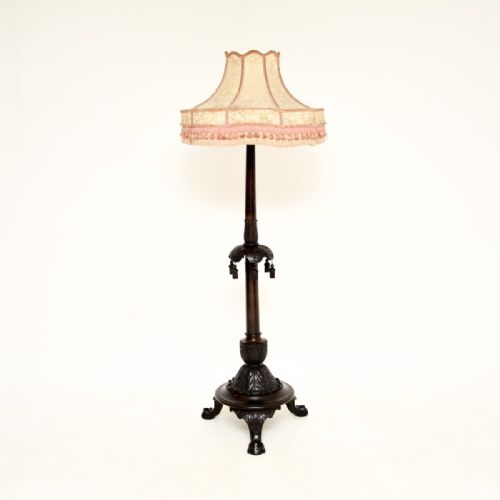
A traditional carved floor light brings warmth and upright presence to a room, offering height and tailored illumination without crowding a table.
Traditional Carved Floor Light
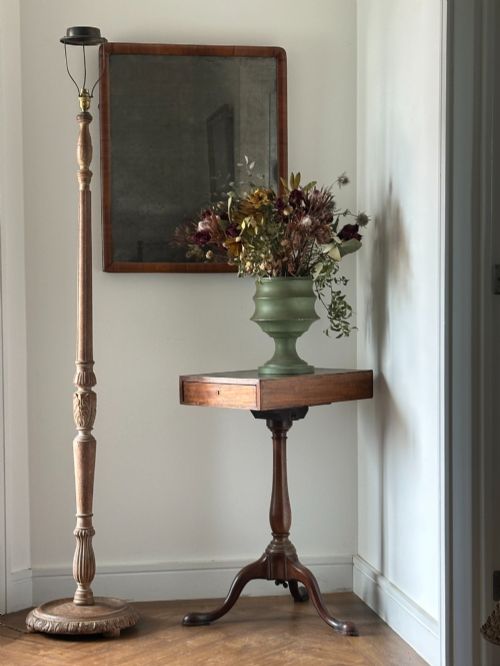
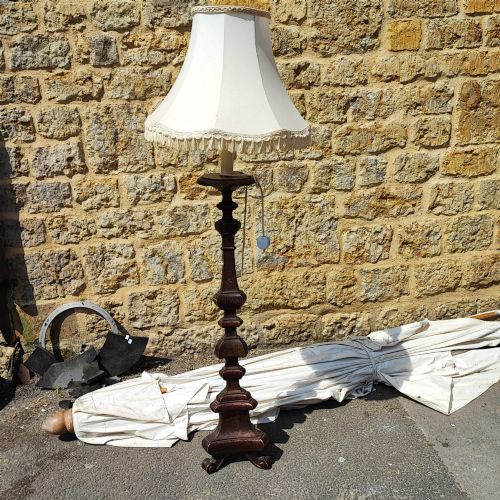
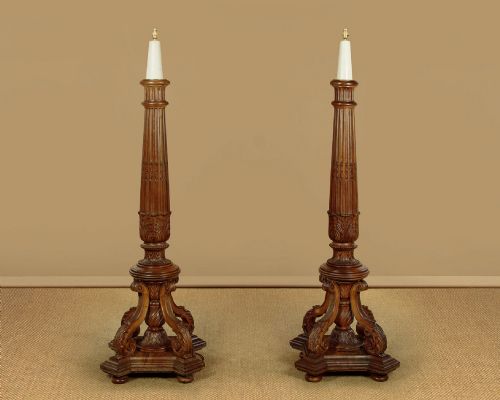
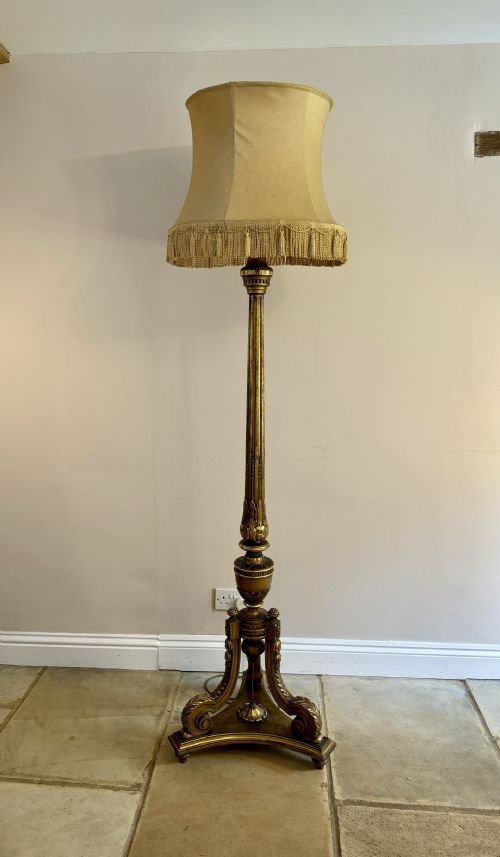
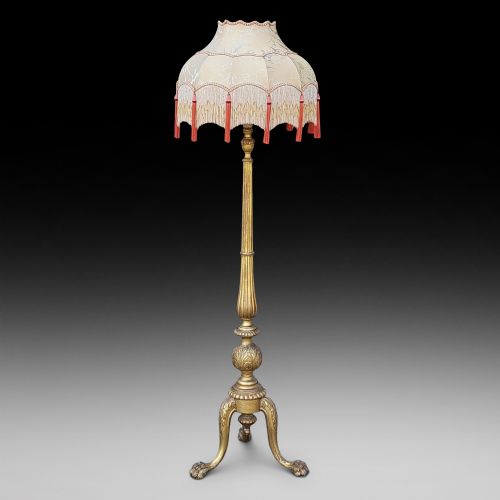
A traditional carved floor light typically takes the form of a tall standard lamp designed to stand beside a sofa or armchair, casting light downward from a fabric shade. When you browse for a traditional carved floor light on this page, you encounter pieces spanning the Victorian era through the interwar years, reflecting changing domestic tastes in upright lighting.
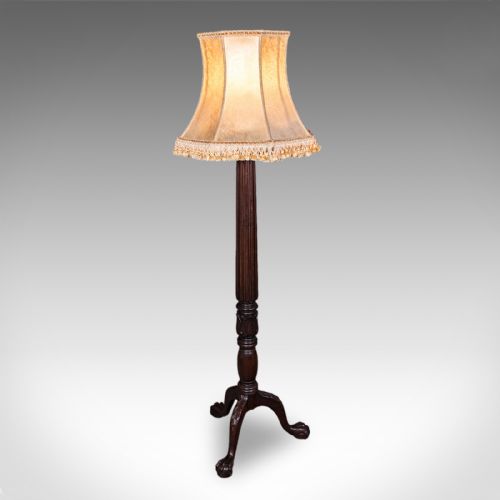
The dominant forms include slender turned wooden columns and heavier reeded shafts resting on stepped or tripartite bases, alongside substantial giltwood and mahogany designs. Many examples draw on historical revivals, showing William IV, Regency, and Neoclassical Adam influences in their carved details.
Origins range across English workshops and continental makers, incorporating woods such as oak, walnut, and padauk alongside gilded finishes and cast bronze details. These standards served as primary decorative and functional pieces in period drawing rooms and libraries.
Materials and construction methods
Makers shaped structural columns from hardwoods including oak, mahogany, walnut, and padauk, often utilising lathe turning before applying hand-carved fluting, reeding, or acanthus leaf motifs. Giltwood examples feature carved softwoods or composition ornament coated in gold leaf or gilt paint.
Metal components such as brass and bronze appear in weighted base inserts, fittings, and occasionally as the primary shaft material, providing stability for the tall upright structure. Fabric shades complete the construction, historically paired with silk or parchment linings.
Factors determining quality
The crispness and depth of the hand-carving define the upper tier of standards, where crisp acanthus leaves and fluted columns show precise chisel work rather than soft, moulded detail. Timber selection similarly separates robust pieces from simpler ones, with dense, well-figured mahogany and quarter-sawn oak holding up better over decades of use.
Proportion and stability dictate how successfully a floor light holds its height without leaning, relying on heavy internal weighting or wide, substantial bases. The quality of the original gilding or polish also marks superior workshop output, retaining rich patination rather than flat, uniform modern coatings.
Whytock and Reid
The Traditional Carved Floor Light Glossary
- Standard lamp
- A tall floor-standing lamp designed to illuminate a room from standing height rather than a table. They became popular in the Victorian period for illuminating dark corners.
- Giltwood
- Timber coated with gold leaf or a metallic finish applied over a prepared gesso base. It reflects candlelight and early electric bulb light effectively.
- William IV Revival
- A Victorian design movement looking back to the robust classical forms of the 1830s. Pieces in this style often display heavy carved scrolls and bold proportions.
- Padauk
- A dense, heavy tropical hardwood prized for its deep reddish-brown colour and fine grain. It allows for sharp, durable carving details.
Traditional Carved Floor Light: Frequently Asked Questions
How do I wire an antique floor lamp?
Most antique floor lamps require rewiring to meet modern safety standards before regular daily use. A qualified electrician can thread modern flex through the internal channel without altering the historical timber or exterior finish.
It is wise to retain original brass lampholders where possible, updating only the internal wiring and adding a compliant plug. Ensure the base has adequate internal weighting to support modern bulbs safely.
What kind of shade suits a standard lamp?
Traditional fabric shades with gathered silk, pleated linen, or parchment linings complement the historical character of these lamps. The proportion matters significantly, with the shade width generally matching the widest part of the lamp base.
Neutral tones in cream, gold, or dark silk allow the carved timber or giltwood column to remain the visual focus. Fringed edges and braided trims reflect period interior styles from the Edwardian and Victorian eras.
How do I tell a Victorian standard lamp from a 1920s one?
Victorian standards often display heavier proportions, darker mahogany or oak timbers, and deep hand-carving inspired by classical revival styles. By contrast, pieces from the 1920s frequently feature lighter limed finishes, slender turned shafts, and simpler neoclassical details.
Examining the turning marks and the method used to join the shaft to the base helps clarify the manufacturing period. Deeper patination and denser woods generally point toward the earlier nineteenth-century examples.
Where should I place a floor light in a room?
Floor lights work best positioned beside reading armchairs, in dark corners, or framing a fireplace to add vertical balance. Their height allows them to cast ambient light outward without taking up valuable surface space on tables.
Keep them away from damp areas and direct heat sources to protect the aged timber, giltwood surfaces, and fabric wiring. Pair them with low-wattage warm bulbs to replicate the soft glow intended by their makers.