






Hand Carved Standing Lamp
A hand carved standing lamp brings distinct regional craft and sculptural presence into a room, offering both illumination and heavy carved detail.
Hand Carved Standing Lamp
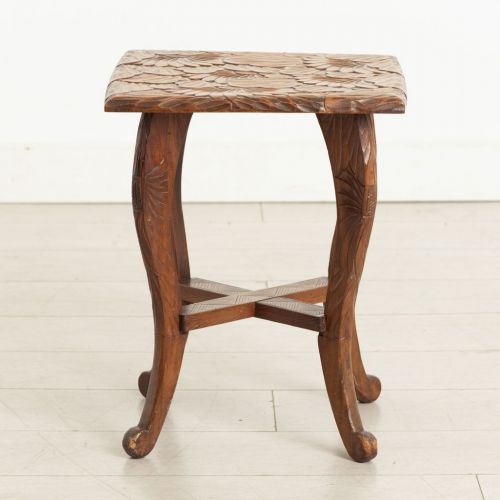
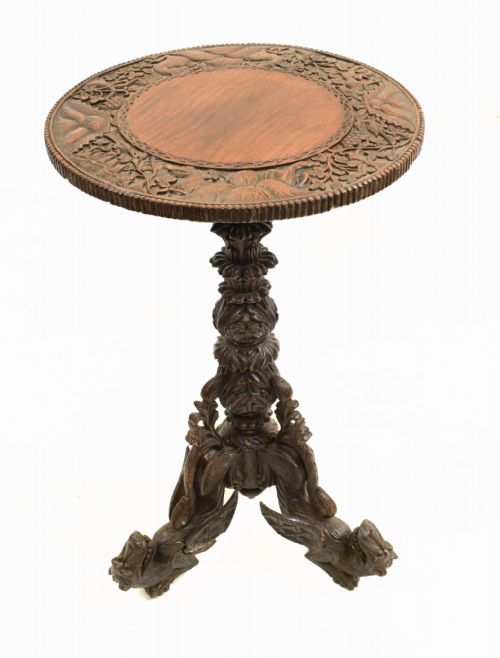
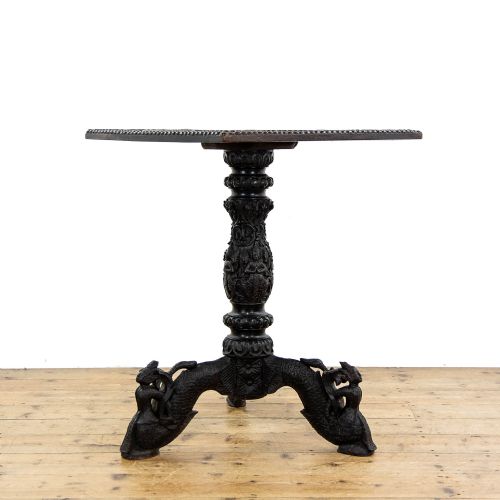
When you search for a hand carved standing lamp, you encounter heavily ornamented lighting pieces and tall supports that emerge from nineteenth and early twentieth century traditions. These objects encompass standard lamps, lamp standards, and torchiere forms created in diverse international workshops.
The versions most frequently met on this page span the Victorian era, the 1890s, and the 1920s, drawing upon Anglo-Indian, Chinese, Black Forest, and English Country House styles. They combine utility with dense surface carving, serving as focal points within domestic interiors.
How they were made
Maker workshops utilised dense timbers such as teak, padauk, rosewood, and general hardwoods, selected for their stability under deep chiselling. Artisans applied intricate hand carving techniques directly to the solid wood, rendering elaborate foliage, animal figures, and dragons.
Secondary materials like brass, metal, and glass occasionally appear in structural mounts, fittings, or associated lamp components, while surface finishes range from natural polished hardwood to red lacquer.
A Black Forest bear quietly holds its ground as a lamp standard, watching over the room with glass eyes.
What varies in quality
The distinction between ordinary and superior examples lies in the crispness and depth of the hand carving, where skilled carvers achieved sharp undercut foliage and expressive figures rather than shallow, mechanical indentation. Proportion and structural balance also dictate quality, as taller standards require precise turning and substantial bases to remain stable.
The choice of timber influences distinction, with dense tropical hardwoods like padauk and rosewood showing finer grain definition than softer generic woods. Furthermore, regional stylistic purity and the integrity of the original form elevate an object above later adaptations.
Liberty of London
The Hand Carved Standing Lamp Glossary
- Torchiere
- A tall stand or floor lamp designed to hold a light source high above the floor. These pieces often feature slender columns resting on tripod bases.
- Standard lamp
- A freestanding floor lamp used for ambient or task lighting. They typically incorporate a weighted or wide base to support a vertical shaft.
- Padauk
- A heavy, durable tropical hardwood with a reddish hue favoured in regional cabinetmaking. Its dense grain allows for sharp, enduring relief carving.
- Anglo-Indian
- A descriptive term for items made in India during the British colonial period, combining local artisan techniques with British furniture forms.
Hand Carved Standing Lamp: Frequently Asked Questions
How do I wire a vintage standard lamp?
Vintage floor lamps require modern internal wiring to meet safety standards. A qualified electrician can thread contemporary flex through the central channel without altering the exterior wood.
Original lamp holders are often updated while preserving the visible switchgear and upper brass components where appropriate.
What is an Anglo-Indian lamp table?
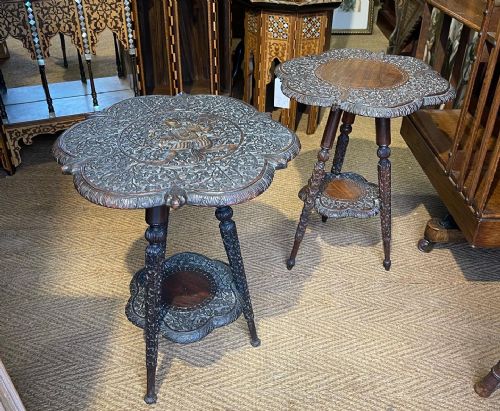
These hybrid pieces combine traditional Indian carving motifs with British furniture requirements of the nineteenth century. They frequently feature folding mechanisms or dense floral relief.
Makers utilised native hardwoods like teak to produce durable surfaces suitable for supporting early lighting fixtures.
How do I date a carved wooden lamp?
Dating relies on assessing the tooling marks, timber species, and stylistic indicators such as Victorian proportions or 1920s manufacturing traits. Examining the base construction and wear patterns provides further chronological clues.
Comparative analysis with documented side tables and torchiere forms from the same period helps narrow the timeframe.
Where should I place a standing lamp?
Tall carved standards suit corners or seating areas where their vertical form adds height and architectural interest to a room. Ensure the surrounding space allows the detailed woodwork to remain visible.
Position the lamp away from direct heat sources to protect the dry hardwood from splitting over time.