

Wooden Standing Floor Lamp
A wooden standing floor lamp brings height and vertical presence to a room, offering warm illumination alongside period character.
Wooden Standing Floor Lamp
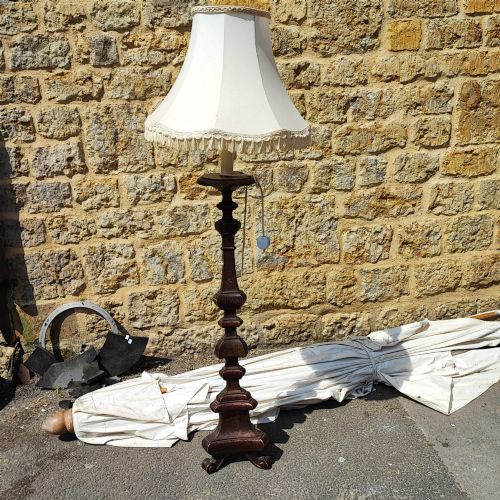
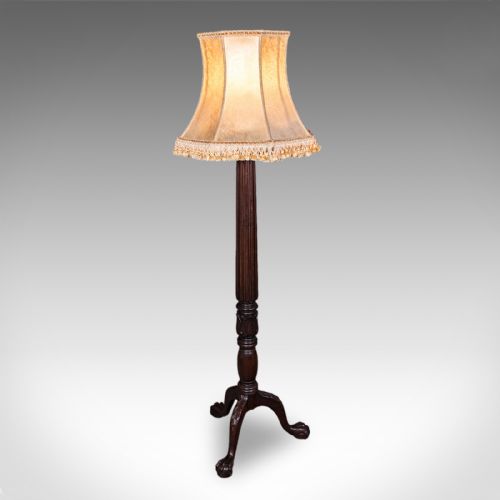
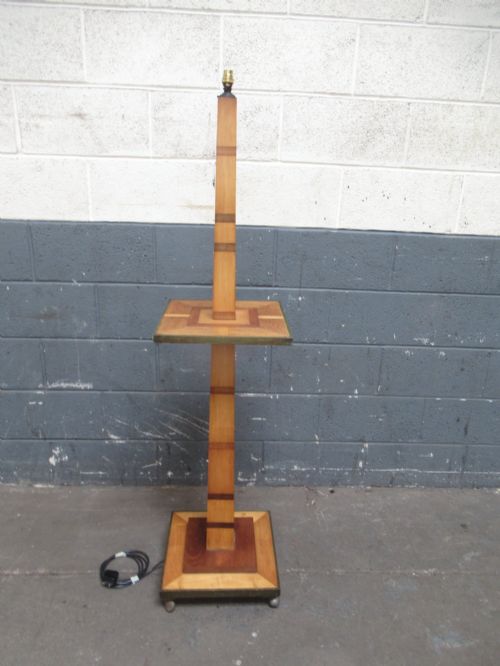
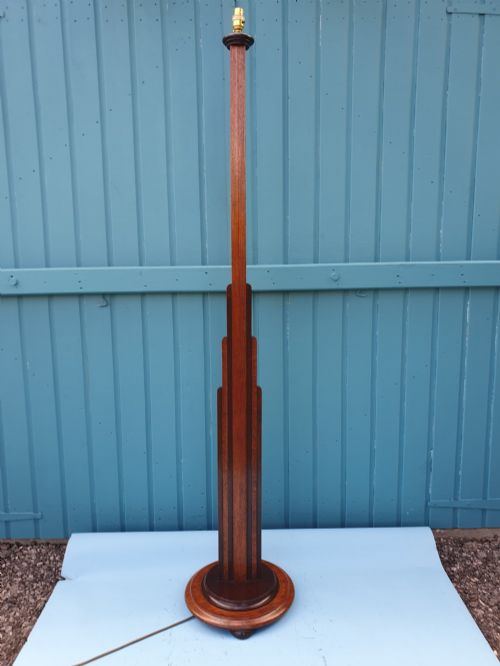
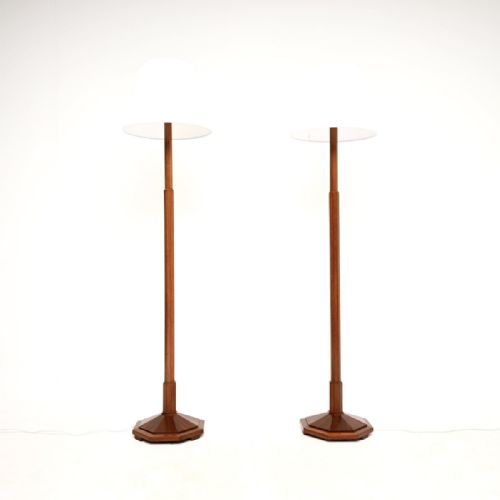
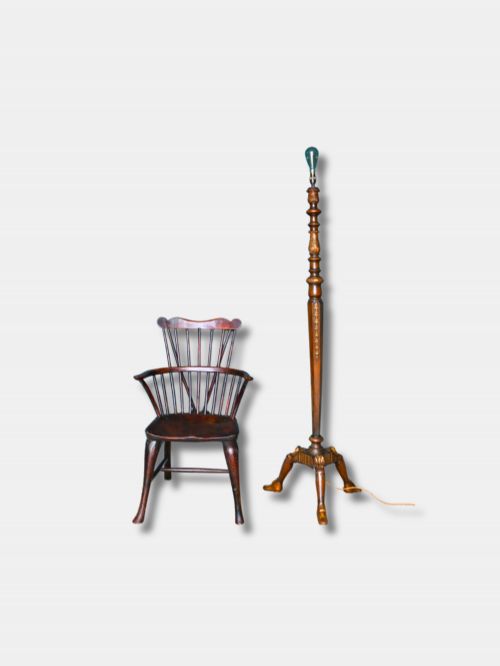
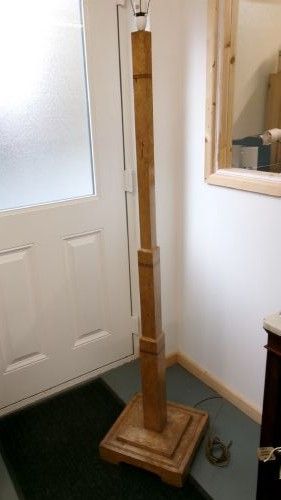
A wooden standing floor lamp combines structural height with domestic lighting, functioning as both a practical light source and a substantial piece of furniture. When exploring a wooden standing floor lamp, buyers encounter varied forms including standard lamps, tall pedestals, torchieres, and converted lantern stands.
The selection spans numerous decades and styles, from Victorian and Edwardian examples to Art Deco designs and revival pieces. Oak, walnut, mahogany, and giltwood appear frequently alongside painted and ebonised finishes.
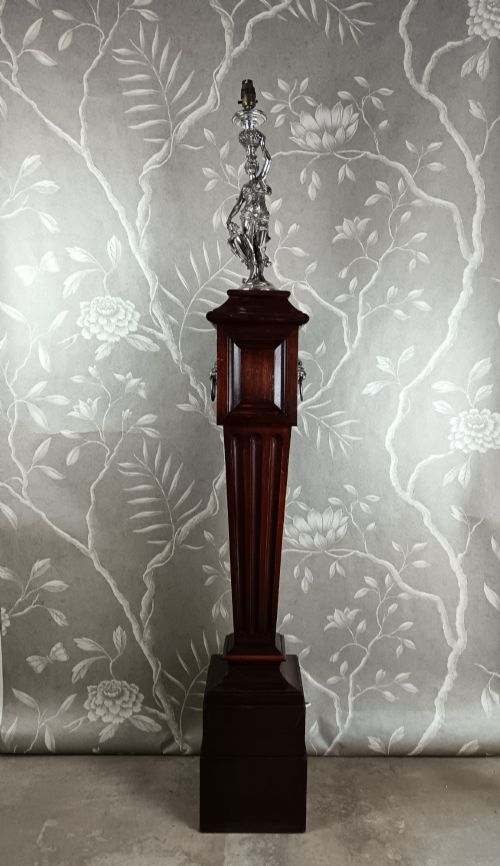
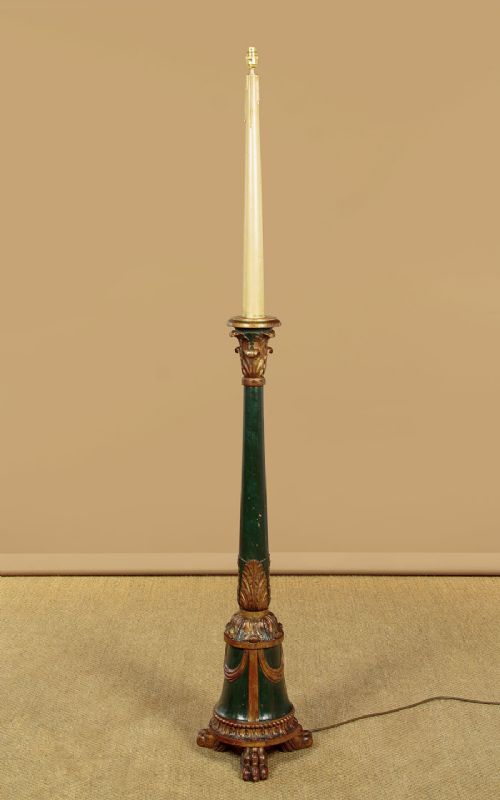
Makers utilised diverse regional traditions, resulting in English country styles, French boudoir pieces, and Italian giltwood creations. Figural elements also emerge, including Black Forest bear carvings and Venetian figures on stands.
Materials and construction
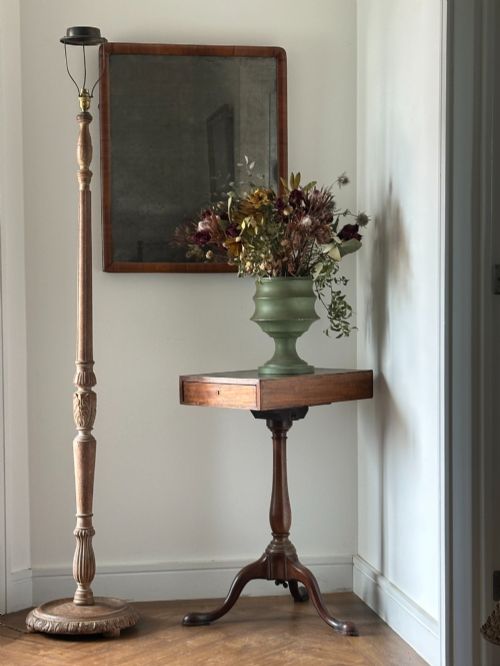
Craftsmen built these standards using native and exotic timbers such as oak, walnut, mahogany, beech, and pine, often turning them on lathes to create slender, vertical shafts. Structural stability required weighted bases or sturdy tripod supports to manage the height and the weight of fabric shades.
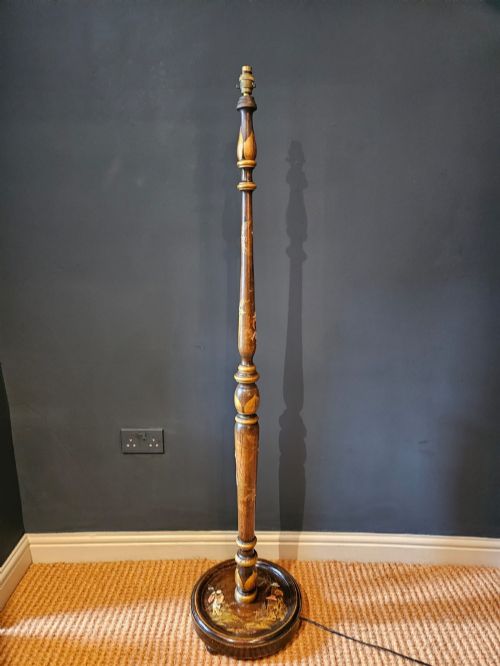
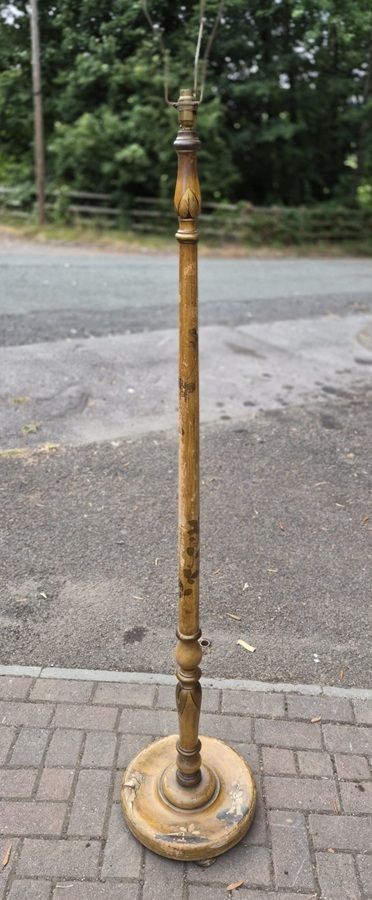
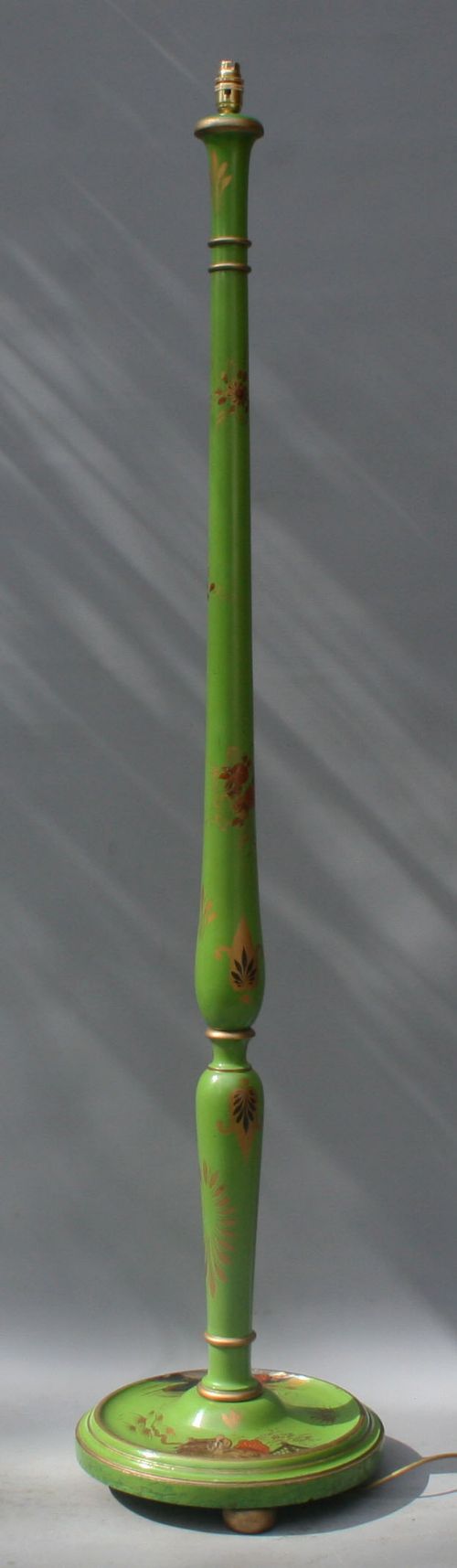
Decorative surface treatments distinguish many examples, incorporating hand-carving, parcel gilt, giltwood polychrome, and painted Chinoiserie ornamentation. Brass components and silver-plated elements frequently appear as functional adjustments or decorative mounts.
A carved wooden Black Forest bear stands ready to hold a light.
Assessing quality in floor lighting
The standard of carving and surface finish defines the upper tier of these pieces, distinguishing crisp hand-chiselled detail from simpler machine turning. Original polychrome, giltwood, and Chinoiserie decoration retain more distinction than later overpainting.
Structural integrity depends on the stability of the central shaft and the weight distribution of the base, preventing wobbling at heights. The treatment of wiring adaptations matters greatly, as professional conversion preserves the integrity of the original timber.
WMF·Heals and Sons
The Wooden Standing Floor Lamp Glossary
- Standard lamp
- A tall floor-standing lamp designed to illuminate a room from a raised light source. These pieces use a vertical wooden pillar supported by a stable base.
- Torchere
- A tall ornamental stand or floor lamp originating from a candlestick design. They often feature carved wooden columns or figural supports.
- Chinoiserie
- European decorative style inspired by Chinese artistic traditions, featuring hand-painted motifs and lacquer work. This style appears on several standard lamps from the early twentieth century.
- Giltwood
- Timber coated with a thin layer of gold leaf or gilt finish. This technique highlights carved details on Italian and Victorian standards.
- Barley twist
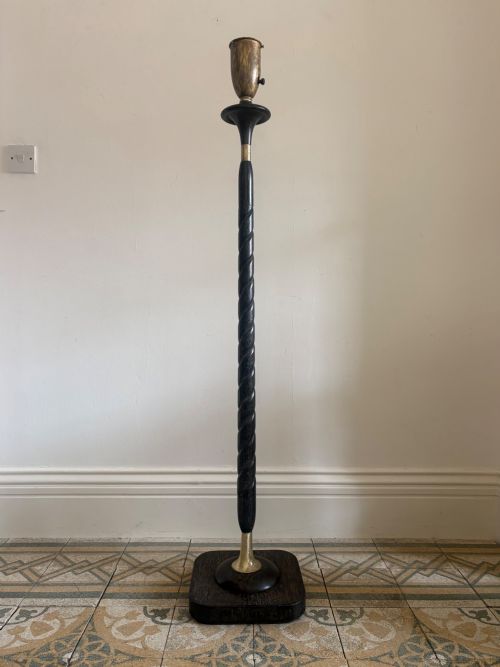
- A spiral turning technique resembling a twisted rope, carved into the wooden shaft of the lamp. It adds texture and visual movement to the vertical column.
Wooden Standing Floor Lamp: Frequently Asked Questions
How do I choose the right height?
Consider the ceiling height of your room and the intended placement beside seating. Standards generally measure over a metre tall to cast light effectively across furniture.
Ensure the proportions match the scale of surrounding pieces without dominating smaller corners.
Are these lamps safe for modern use?
Many older pieces require rewiring to meet contemporary electrical standards. A qualified electrician can easily update the internal cord while preserving the antique body.
Check that the lamp holder and plug match current safety regulations before daily use.
How do I care for antique wood?
Dust the wooden shaft regularly with a soft, dry cloth to prevent grime buildup. Avoid placing the lamp in direct sunlight or near heat sources that could dry out the timber.
Apply a suitable wax polish occasionally if the finish appears dry, following the grain of the wood.
Can I use modern shades?
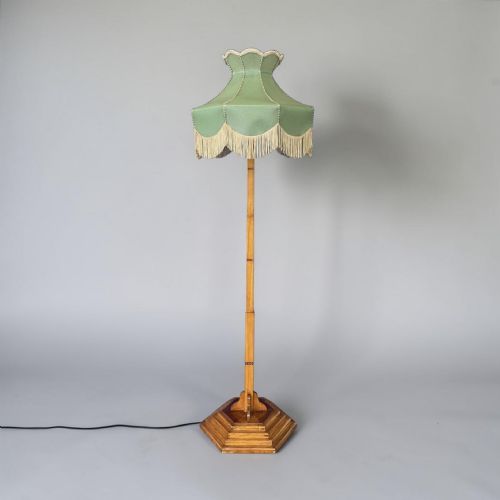
Most standard lamp fittings accommodate contemporary shades provided the ring fitting matches the bulb holder size. Proportion remains key when pairing a large shade with a slender turned stem.
Fabric shades complement both gilded woodwork and plain oak finishes effectively.