


Traditional Breakfront
Traditional breakfront furniture projects authority through a stepped central section, bringing substantial storage and display to any room.
Traditional Breakfront
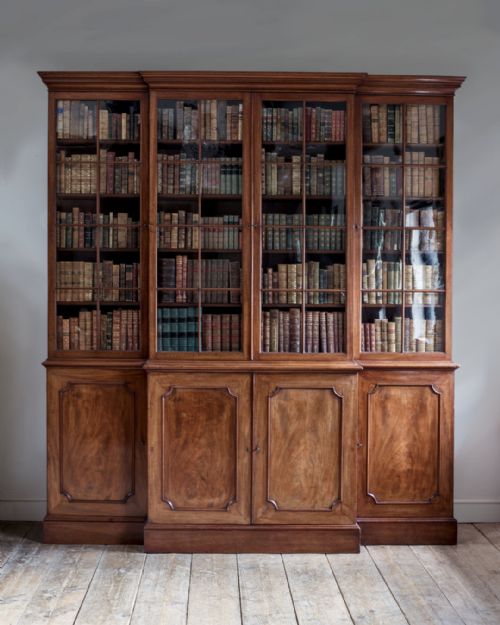
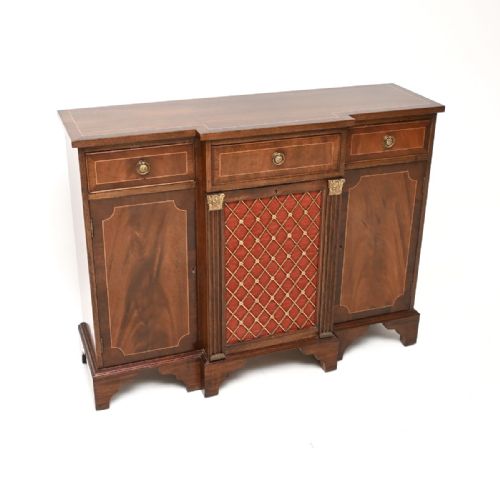
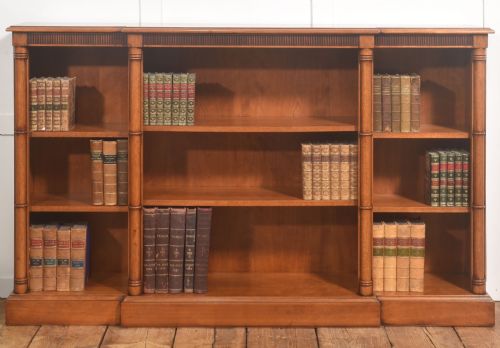
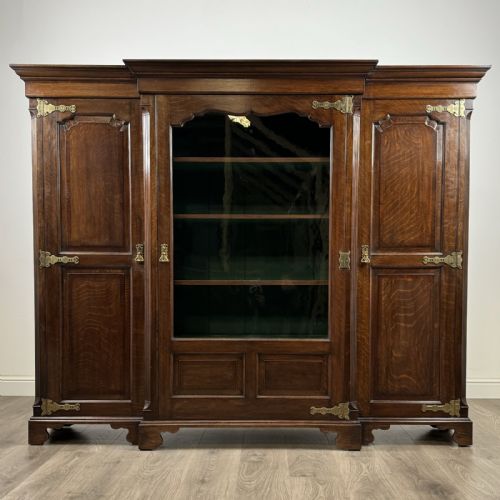
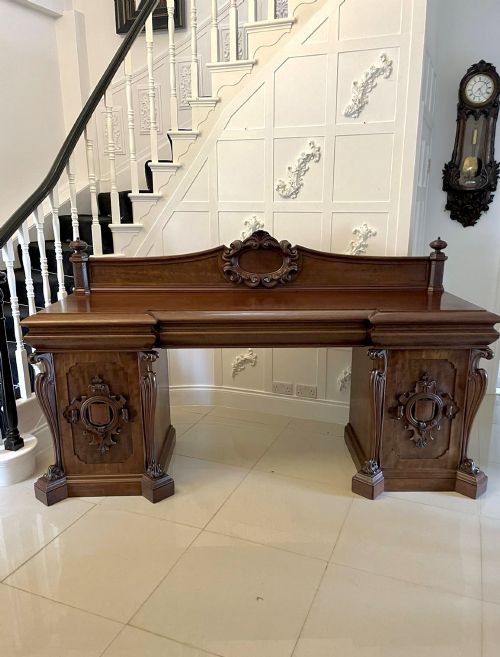
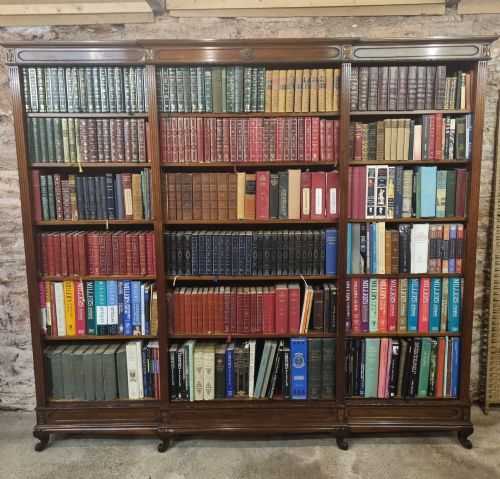
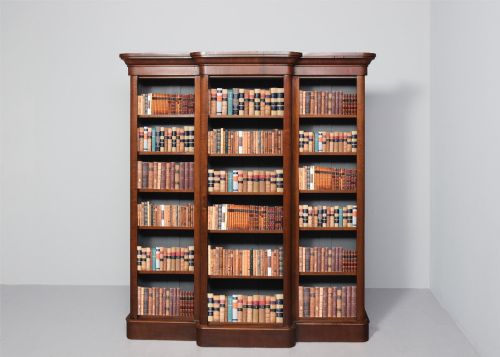
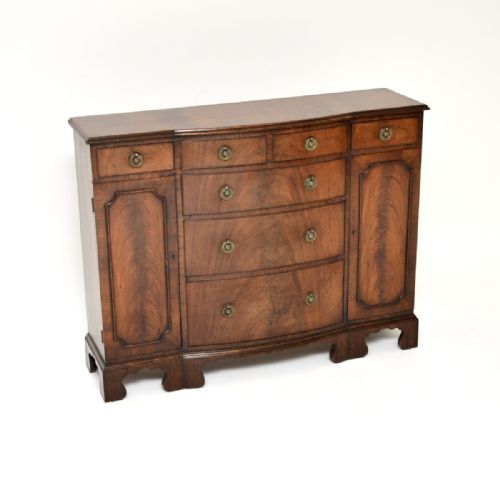
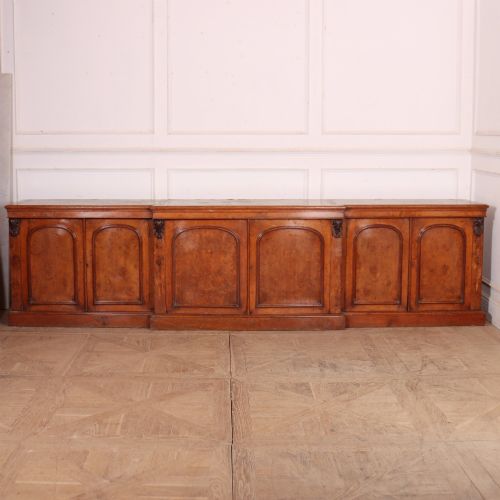
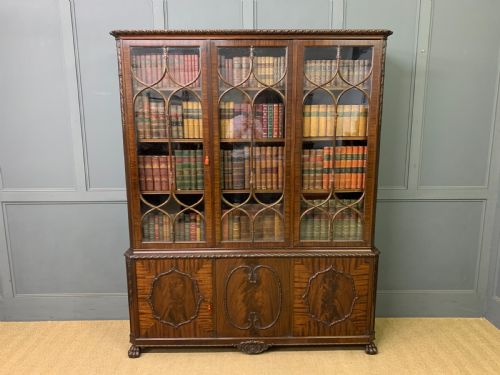
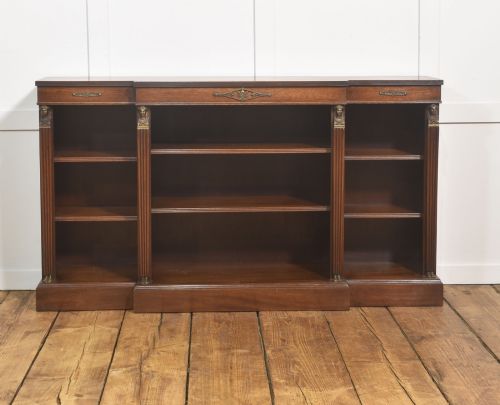
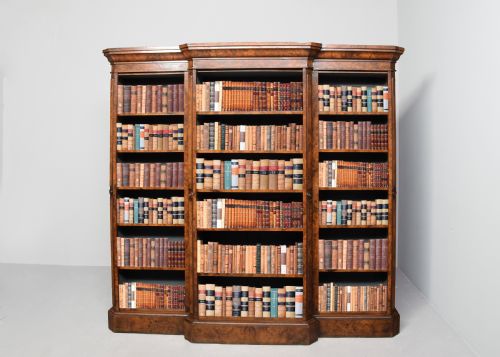
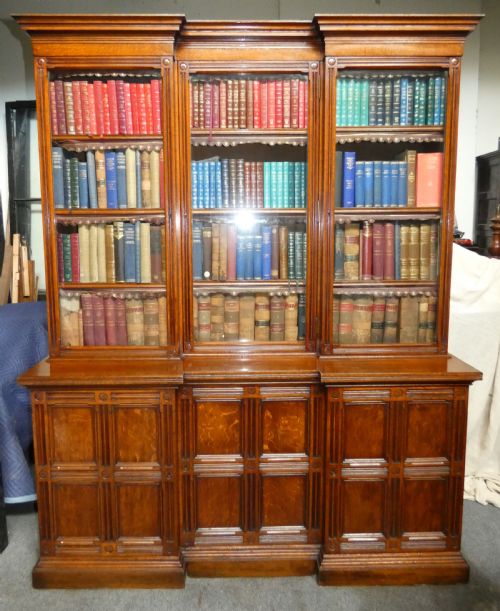
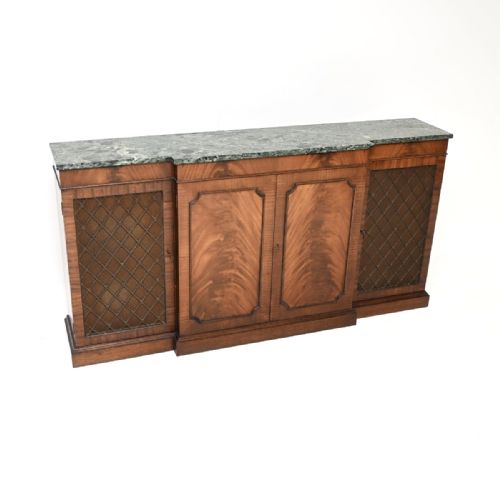
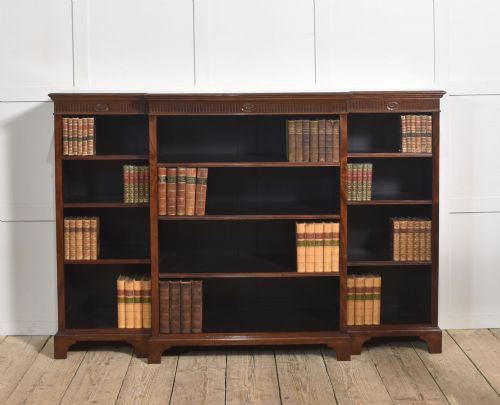
A traditional breakfront centres on a protruding central section flanked by recessed wings, creating a commanding architectural silhouette. These pieces appear primarily as large library bookcases, sideboards, dressers, and wardrobes spanning the eighteenth century through the Edwardian period.
The selection on this page leans heavily toward mahogany and walnut library bookcases alongside oak dressers and sideboards. Victorian and Edwardian examples dominate the offerings, often incorporating Georgian Revival and Regency design motifs.
Makers utilised various timber configurations, from flame mahogany veneer to burr walnut, creating formal storage units designed for grand interiors. Open bookcases and glazed display cabinets form the majority of the current choices.
What varies in quality
The caliber of a traditional breakfront rests upon the choice of timber and the depth of its figuring, particularly where flame mahogany veneer or burr walnut wraps the main facade. Finer examples display harmonious grain matching across the stepped sections and doors.
Construction precision dictates the longevity of these large items, showing in the smooth operation of adjustable shelving and the crisp execution of carved mouldings. Workshops of notable stature applied superior joinery that maintains structural integrity across multi-section bookcases.
Traditional Breakfront Retail Price Guide 2026
Typical asking prices for traditional breakfront among the pieces listed under this phrase on Sellingantiques today, from the lower quarter to the upper quarter. They describe what is for sale here now, not the wider market.
Listings feature 19th-century and Edwardian pieces built from mahogany, oak, walnut, and pine, spanning styles from Georgian to William IV.
Hille·Gillow and Co·Lamb and Co
The Traditional Breakfront Glossary
- Breakfront
- A cabinet or sideboard whose central section projects forward from the flanking wings. This configuration breaks the linear monotony of long furniture facades.
- Flame mahogany veneer
- A thin slice of mahogany timber exhibiting a distinctive torch-like or flickering grain pattern. Cabinet makers applied this over stable secondary woods.
- Burr walnut
- Timber harvested from walnut tree growths, featuring intricate swirled grain patterns. It provided highly decorative surfaces for Victorian and Edwardian case pieces.
- Grill front
- Cabinet doors inset with brass wire mesh instead of glass or solid wood. This treatment allowed ventilation while securing the contents of a bookcase.
Traditional Breakfront: Frequently Asked Questions
How do I identify a Victorian breakfront?
Victorian breakfront pieces typically utilise dense mahogany or walnut, often featuring rich dark finishes and substantial proportions. Carved details and glazed doors reflect the period's preference for imposing library furniture.
Many examples from this era incorporate three-section construction with adjustable shelving to accommodate varying book sizes.
Where should I place a large breakfront?
These substantial pieces require a generous wall with minimal architectural obstruction to accommodate their prominent width and depth. Libraries, formal dining rooms, and spacious living areas suit their scale best.
Ensure adequate clearance for doors that open across the stepped sections of the cabinet.
What is the difference between Georgian and Edwardian styles?
Georgian breakfronts emphasise classical proportions, clean architectural lines, and restrained mahogany or oak surfaces. Edwardian interpretations often draw on these earlier forms while introducing lighter timbers and decorative Revival styling.
Edwardian pieces frequently appear as open bookcases or display cabinets with softer interior tones.