



Traditional Breakfront Bookshelf
A traditional breakfront bookshelf offers generous display and storage for a serious library, combining classical proportions with accessible open shelving.
Traditional Breakfront Bookshelf
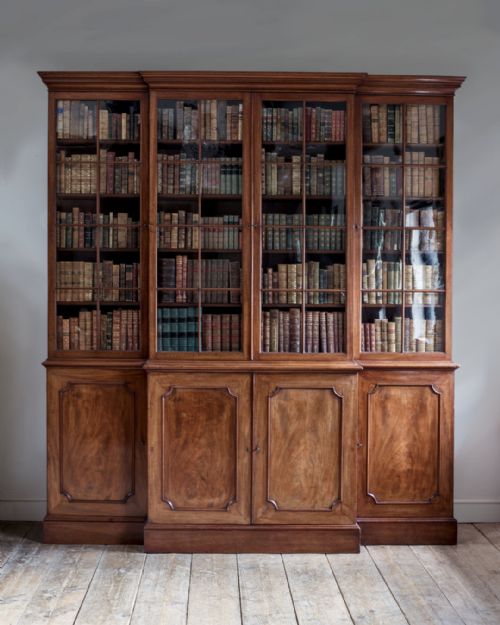
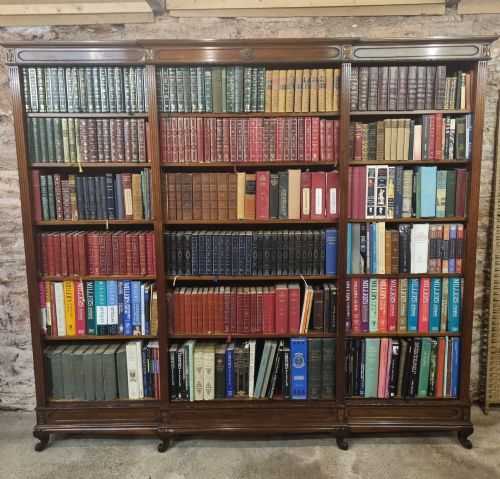
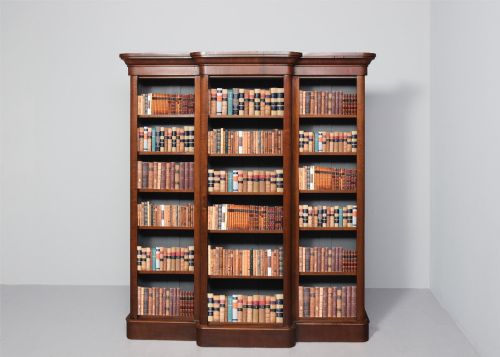
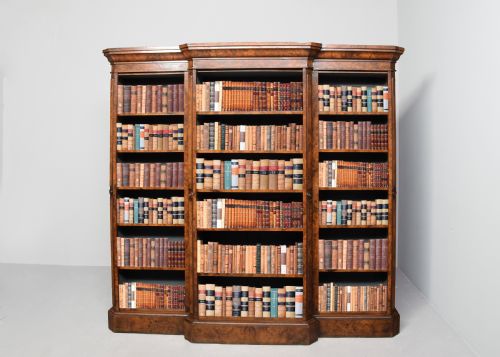
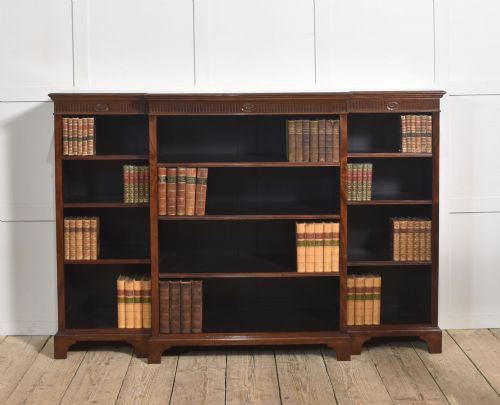
Most pieces encountered on this page take the form of open bookcases, often divided into three distinct sections. The layout accommodates substantial collections while maintaining clear sightlines across the bindings.
The aesthetic draws heavily on Victorian, Edwardian, and Regency design vocabularies. Makers of these periods applied classical architectural principles to domestic library furniture.
How they were made
Construction relies heavily on timbers such as mahogany and walnut, selected for their grain and structural stability. Workshops frequently utilised burr walnut veneers to introduce varied figures and rich visual texture to prominent surfaces.
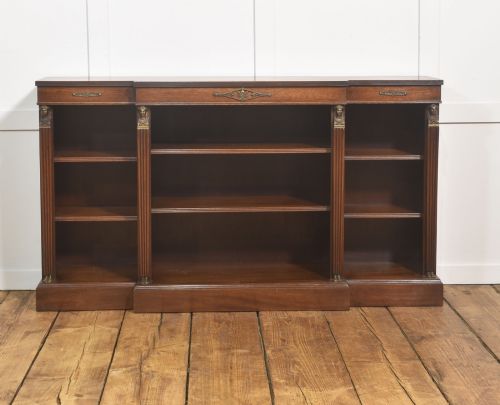
Makers integrated brass and metal hardware to secure structural elements and support adjustable shelving systems. Ebonised timber appears occasionally, providing a sharp contrast to standard brown hardwoods.
Traditional Breakfront Bookshelf Retail Price Guide 2026
Typical asking prices for traditional breakfront bookshelf among the pieces listed under this phrase on Sellingantiques today, from the lower quarter to the upper quarter. They describe what is for sale here now, not the wider market.
Several bookcases boast adjustable shelves, ready to accommodate your tallest folios or shortest paperbacks without complaint.
What varies in quality
The distinction between standard and superior pieces rests on the choice of timber and the precision of the joinery. Fine examples display carefully matched veneers and robust internal construction that supports heavy volumes without sagging.
Proportion and detailing separate unremarkable cases from distinguished ones. Subtle moulding work, well-integrated breakfront setbacks, and functional adjustable shelving indicate a higher standard of workshop production.
The Traditional Breakfront Bookshelf Glossary
- Breakfront
- A cabinet design where the central section projects forward from the flanking wings. This configuration breaks up long horizontal lines and adds architectural depth to large pieces.
- Burr walnut
- Timber taken from the abnormal growth of a walnut tree, yielding intricate, swirling grain patterns. Cabinetmakers prize this material for decorative veneered surfaces.
- Ebonised timber
- Wood treated with a chemical stain or finish to imitate ebony. This dark, uniform treatment appears on specific nineteenth-century decorative pieces.
- Regency style
- A design aesthetic reflecting the Regency period, characterised by classical restraint and clean lines. Later revival pieces often adopt these balanced proportions.
Traditional Breakfront Bookshelf: Frequently Asked Questions
What is a breakfront bookcase?
A breakfront bookcase is a large cabinet featuring a central section that steps forward from the flanking bays. This layout creates a pronounced architectural rhythm across the front elevation.
Such pieces usually provide extensive shelving across multiple vertical sections. They serve as the focal point for a traditional study or library.
How do I date a bookcase?
Dating relies on observing timber choices, construction methods, and stylistic cues. Mid-nineteenth-century examples often display solid mahogany construction and hand-cut joinery.
Later pieces from the Edwardian era or the early twentieth century may employ lighter woods and machine-finished components. Comparing the overall silhouette to known period styles confirms the likely era of manufacture.
Are the shelves adjustable?
Many traditional breakfront bookcases feature adjustable internal shelving to accommodate books of varying heights. This flexibility allows owners to configure the interior space according to their collection.
Older pieces typically utilise wooden support pegs or simple rackwork systems for shelf placement. Checking the interior reveals the mechanism used by the original maker.
Where should I place a breakfront bookcase?
These large bookcases require substantial wall space and benefit from placement in rooms with high ceilings. Their architectural presence anchors a study, drawing room, or private library.
Direct sunlight and extreme temperature fluctuations should be avoided to protect timber surfaces and veneers. Maintaining stable indoor conditions preserves the finish of the wood over time.