



Edwardian Walnut Display Shelves
Edwardian walnut display shelves combine open storage with refined timber grain, offering a practical way to showcase books and small objects.
Edwardian Walnut Display Shelves
Edwardian walnut display shelves encompass open bookcases, multi-tiered whatnots, and etageres designed for displaying books and decorative objects. These pieces frequently appear in Edwardian and Victorian iterations, spanning the mid-nineteenth century through the early twentieth century.
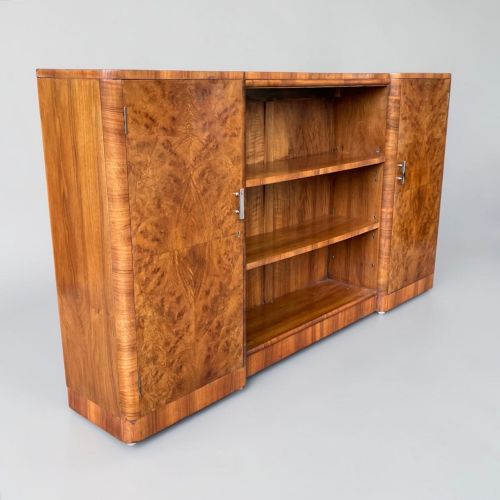
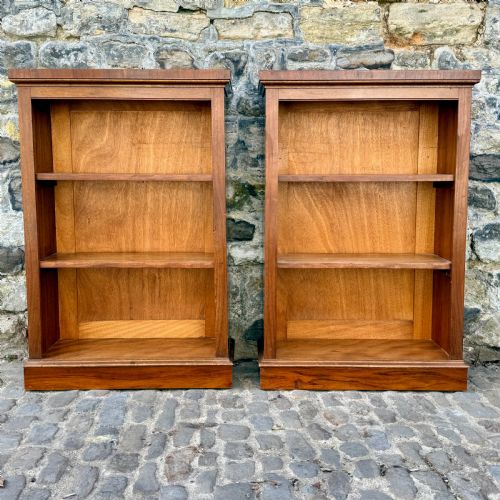
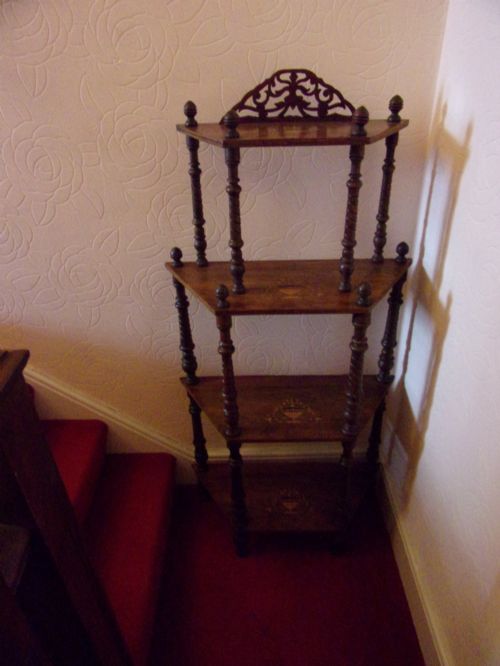
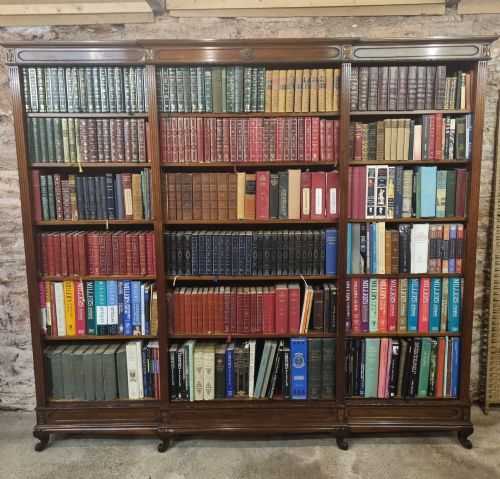
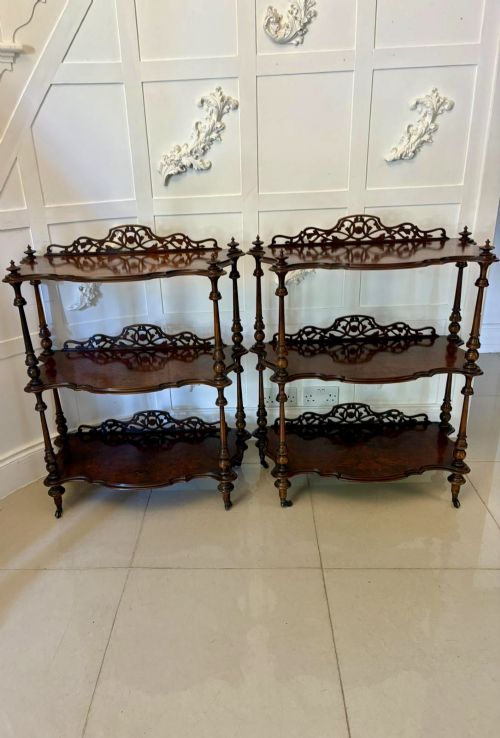
Bookcases in this selection range from breakfront designs to slim open bookshelves with adjustable shelves. Whatnots and etageres provide tiered platforms, sometimes featuring corner stands or oval inlaid surfaces.
The objects originate primarily from the Edwardian and Victorian periods, drawing on revival styles such as Queen Anne, Georgian, and Arts and Crafts. Buyers looking for edwardian walnut display shelves will find pieces ranging from tall two-part cabinets to compact occasional tables and music cabinets.
Gradations of Craft
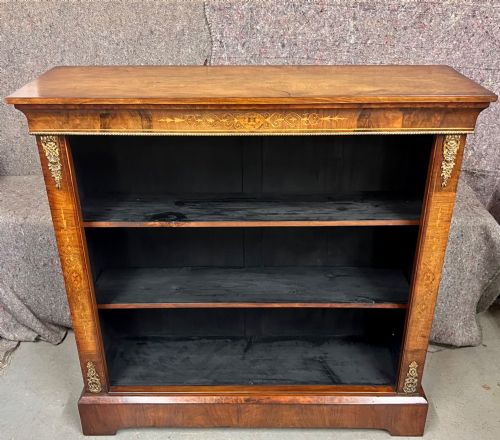
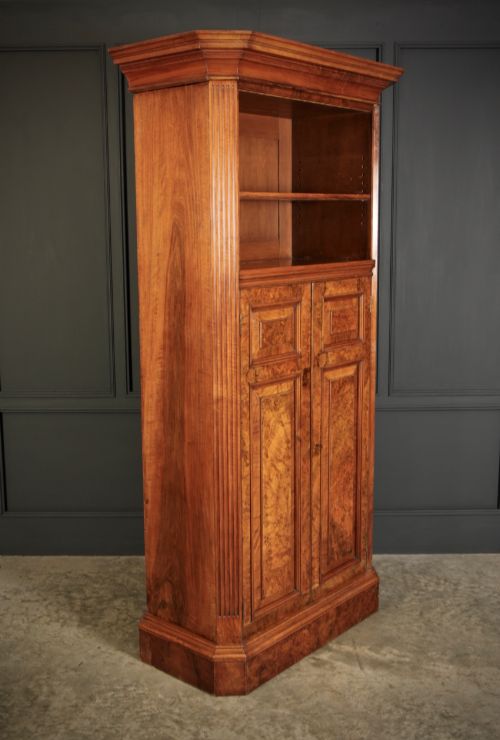
Quality reveals itself in the selection of timber veneers, where heavily figured burr walnut and precise marquetry inlay distinguish finer pieces from plain timber surfaces. The crispness of carved details and the integration of decorative metal mounts also mark the upper tier of execution.
Proportion and utility further separate standard examples from exceptional ones, particularly in the balance of multi-tiered whatnots and the smooth operation of adjustable shelving in bookcases.
Edwardian Walnut Display Shelves Retail Price Guide 2026
Typical asking prices for edwardian walnut display shelves among the pieces listed under this phrase on Sellingantiques today, from the lower quarter to the upper quarter. They describe what is for sale here now, not the wider market.
Hollow barley twist uprights give certain Victorian whatnots an unexpectedly bouncy silhouette.
The Edwardian Walnut Display Shelves Glossary
- Burr walnut
- Timber featuring swirling, organic growth patterns harvested from tree burls. This material is prized for its decorative grain.
- Etagere
- A piece of furniture consisting of a set of open shelves for displaying small objects. These tiers are typically supported by slender columns.
- Marquetry inlay
- Decorative wood veneers fitted together to form geometric or pictorial patterns. This technique adorns the surfaces of panels and tabletops.
- Breakfront
- A cabinet or bookcase whose central section projects forward from the flanking sides. This architectural arrangement adds depth to the facade.
Edwardian Walnut Display Shelves: Frequently Asked Questions
How do I style edwardian walnut display shelves?
Balance books with decorative objects across the open shelves, keeping heavier volumes on the lower tiers for visual stability. Leave some space empty to let the figured walnut grain remain visible.
Incorporate items of varying heights and textures, such as ceramics or small sculptures, to create a curated display that complements the period character of the woodwork.
Are the shelves adjustable?
Many of the open bookcases in this selection feature adjustable shelves to accommodate books of different heights. Fixed tiers are more commonly found on multi-tiered whatnots and etageres.
Check the specific description of each piece to confirm whether the shelving mechanism allows for repositioning.
What is the difference between a whatnot and an etagere?
Both forms provide multiple open tiers for display, though their origins and specific naming conventions can overlap in antique furniture. Whatnots often feature three to six tiers, sometimes including corner configurations or mirror backs.
Etageres frequently incorporate finer decorative elements such as marquetry inlay, ormolu mounts, or French styling. Both serve the same primary function of showcasing decorative items and books.
How do I care for walnut veneer?
Dust the timber regularly with a soft, dry cloth to prevent the buildup of grit on the veneer surface. Avoid placing the furniture in direct sunlight or near heat sources to prevent the wood from drying out.
Apply a suitable furniture wax sparingly when the wood appears dry, buffing gently to maintain the natural lustre of the finish.