




Traditional Brass Taper Stands
Traditional brass taper stands are classic lighting accessories shaped by centuries of metalwork, offering functional elegance for any surface.
Traditional Brass Taper Stands
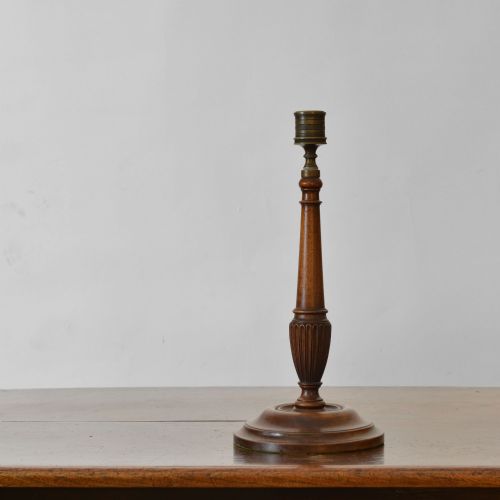
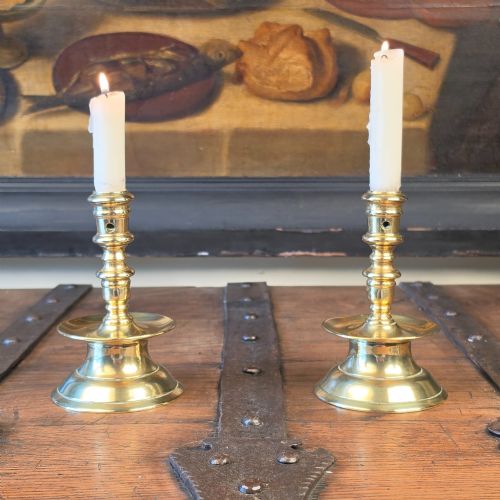
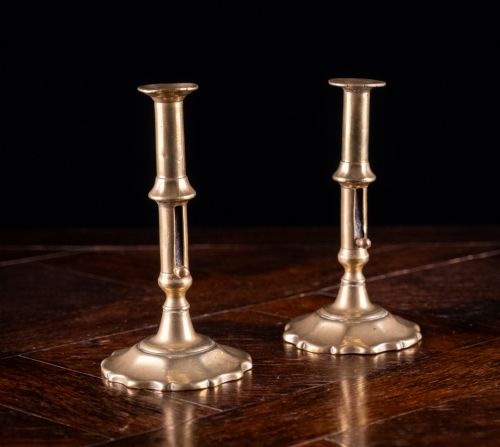
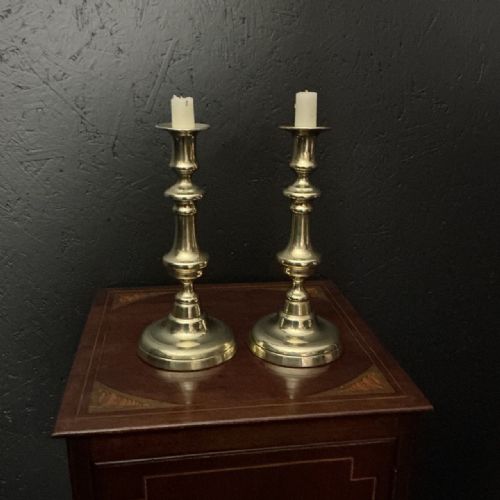
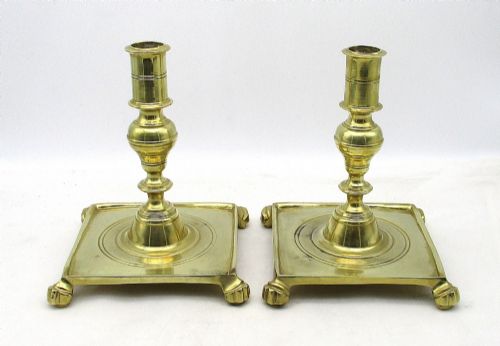
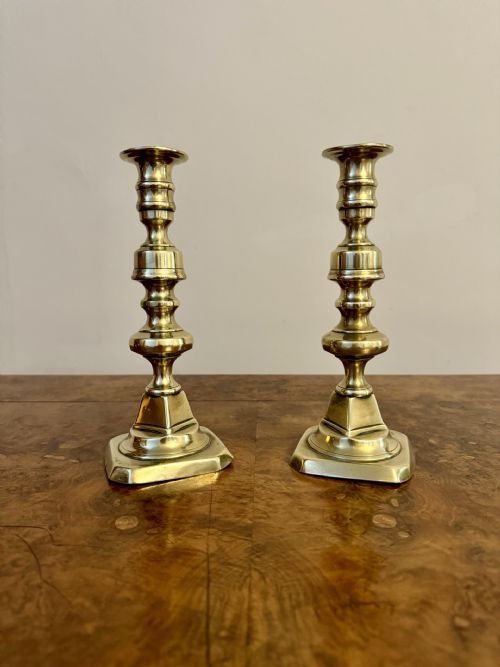
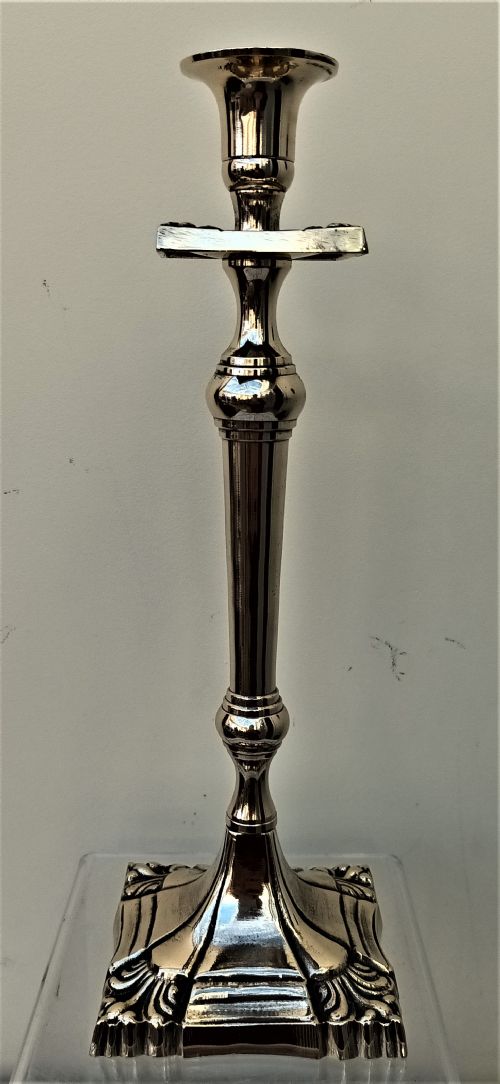
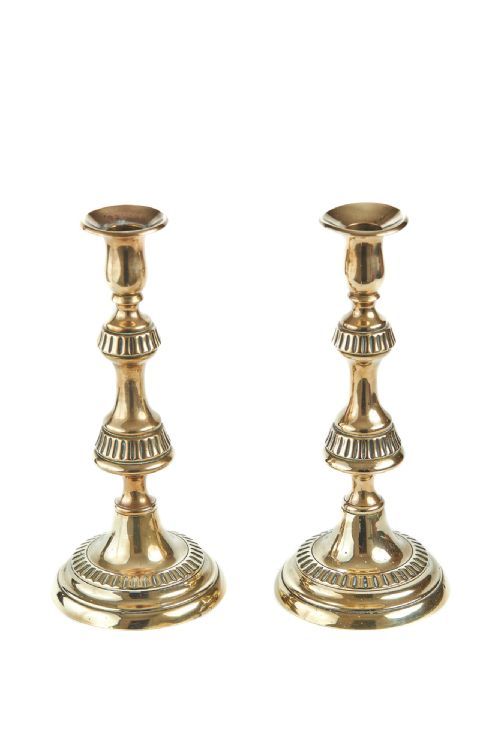
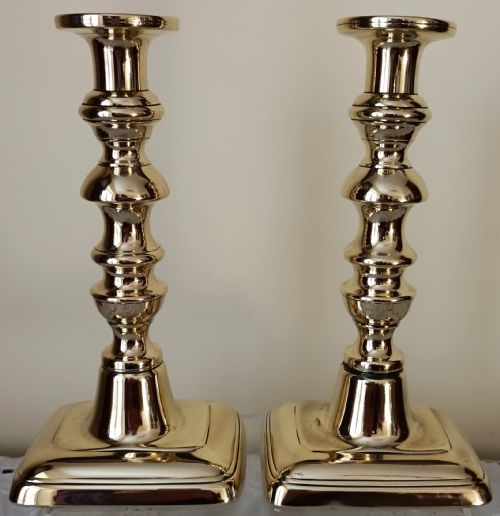
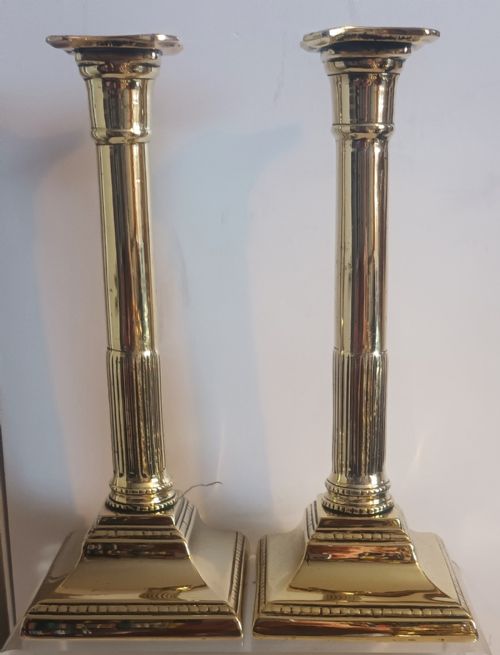
Traditional brass taper stands appear across this selection primarily as candlesticks spanning the eighteenth, nineteenth, and early twentieth centuries. Buyers searching for these pieces encounter diverse historical forms, including Georgian designs, Victorian ornamental pairs, and earlier seamed or ejector models.
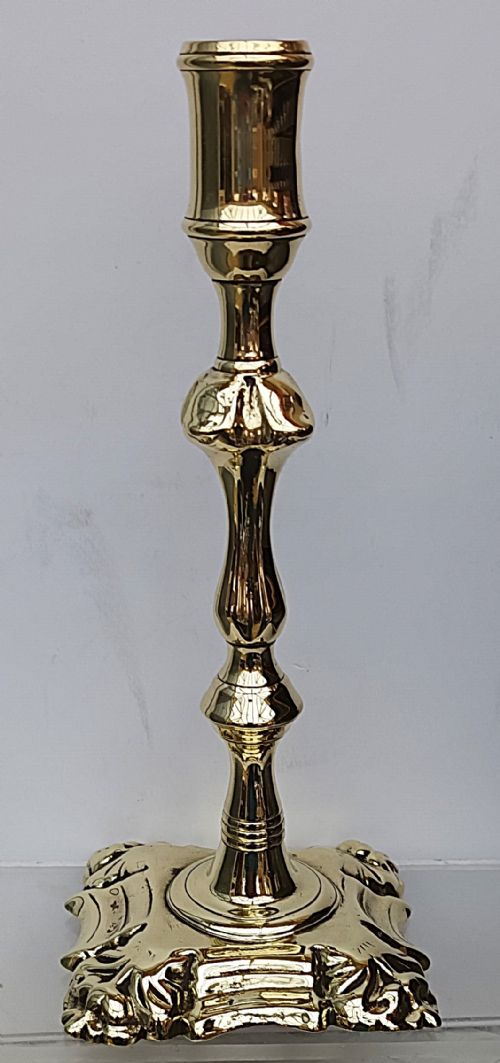
The objects take various structural shapes, from hexagonal and petal-based eighteenth-century formats to baluster columns, twisted shafts, and church candlesticks. Alongside solid brass, the listings incorporate related materials such as cast bronze, mahogany, and oak within specific historical revivals.
Most examples originate from English and continental workshops, displaying the evolution of domestic lighting from utilitarian chamber pieces to decorative Victorian table items. The variety encompasses simple functional stands as well as ornate pairs intended for formal display.
Distinctions in quality and execution
Quality rests upon the precision of the casting, the crispness of decorative turning, and the integrity of historical assembly methods such as seamed joints. Finer specimens exhibit balanced proportions and well-defined architectural details without heavy smoothing from excessive polishing over time.
The choice of material and weight also differentiates standard production from exceptional work, with solid cast brass and heavier bronze imparting a substantial feel. The survival of original operational components, such as functional ejector mechanisms, further distinguishes superior examples.
Listings span the eighteenth, nineteenth, and early twentieth centuries, featuring brass, bronze, mahogany, and oak.
J.T. & Co·WM Tonks & Sons
The Traditional Brass Taper Stands Glossary
- Ejector candlestick
- A type fitted with an internal mechanism to push out the remnants of a wax candle. This practical device became common during the eighteenth century.
- Baluster
- A moulded column shape featuring a swelling lower portion reminiscent of a classical architectural baluster. It is frequently seen on nineteenth-century shafts.
- Petal base
- A distinctive foot design shaped like overlapping flower petals, commonly found on eighteenth-century candlesticks. This form adds stability and decorative contour.
- Seamed brass
- Metalwork constructed from rolled sheet brass joined along a visible vertical seam rather than being cast in one piece. This technique indicates specific period manufacturing methods.
- Beehive
- A decorative turned profile featuring concentric rings resembling a traditional beehive structure. This shape appears on nineteenth-century column designs.
Traditional Brass Taper Stands: Frequently Asked Questions
What is an ejector candlestick?
An ejector candlestick includes a small internal stem that moves upward to lift out the remaining wax stub. This mechanism made cleaning the socket much easier.
Such pieces date predominantly from the mid-eighteenth century and remain popular for their functional design.
How do I date a brass candlestick?
Dating relies on base shapes, column styles, and manufacturing methods like casting marks or seamed construction. Eighteenth-century examples often feature petal or hexagonal bases.
Later Victorian versions tend to be more ornate, incorporating baluster or twisted columns and heavier cast ornamentation.
Were these stands used for taper candles?
Many examples served general lighting needs with standard wax or tallow candles rather than thin taper wax spills. The term encompasses various height and socket dimensions.
Smaller stands accommodated narrow desk candles, while taller pairs lit dining rooms or church altars.
How should I clean antique brass?
Antique brass benefits from gentle dusting and occasional cleaning with a soft cloth rather than harsh chemical polishes. Preserving the natural aged patina maintains historical character.
Avoid aggressive scrubbing that removes the subtle surface wear acquired over centuries of use.