



Open Barley Twist Candlesticks
Open barley twist candlesticks are turned wooden or metal lighting pieces that bring tactile warmth to a room.
Open Barley Twist Candlesticks
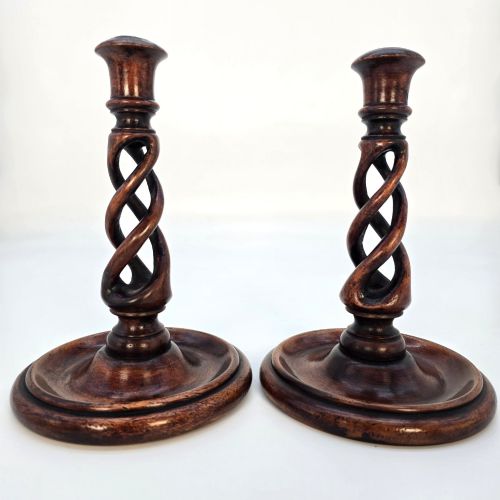
Open barley twist candlesticks are sculptural lighting supports defined by their distinctive helical stems, which leave a clear space through the centre of the turn. When you browse open barley twist candlesticks, you will most frequently encounter sturdy oak pairs dating from the Edwardian period or the 1920s, often fitted with brass drip pans or thistle tops. These pieces range from compact eight-inch examples to towering eighteen-inch columns designed for placement on side tables or heavy sideboards.
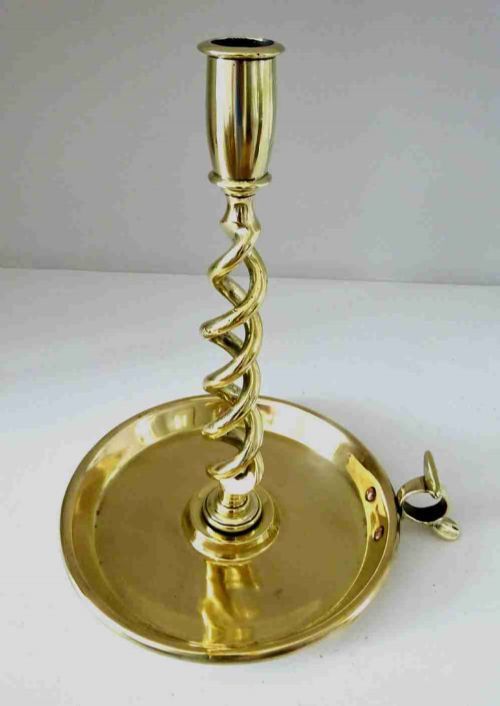
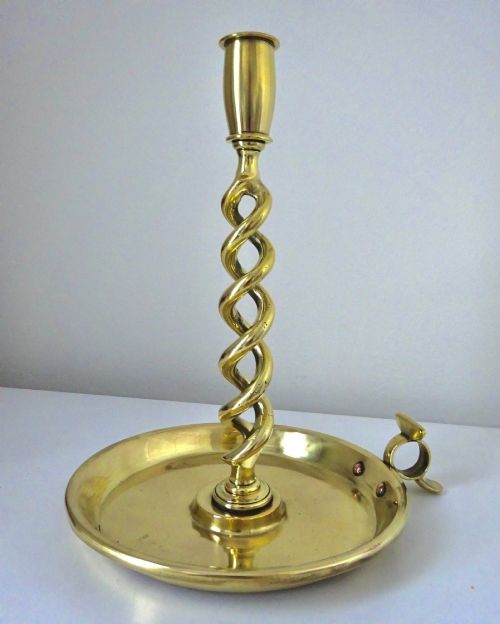
Earlier examples extend back to the eighteenth century in fruitwood or mahogany, showing hand-carved facets rather than the uniform lines produced by later machinery. Brass versions also appear across the Victorian era, sometimes cast with double helix stems or mounted on fitted trays complete with handles for carrying chamber lighting. Table lamps adapted from these same turned stems surface occasionally, bridging the transition from candle power to electricity.
Materials and Method
Makers fashioned the wooden columns of these pieces primarily from solid oak, alongside select fruitwood and mahogany for earlier iterations. Artisans cut and shaped the helical stems to create the signature open voids, requiring precise hand woodworking skills to maintain structural balance along the rising spiral.
Brass versions utilised casting techniques to achieve the twisted shafts, frequently pairing the metal with wooden bases or incorporating fitted brass thistle tops and drip pans to catch melting wax. Glass components appear selectively in supporting elements, adding a reflective contrast to the dense grain of the timber and the polished metal.
Listings span the eighteenth century through to the 1920s, with solid oak and brass being the dominant materials recorded across the eras.
Judging Quality
Quality rests in the crispness of the turning and the depth of the open channel through the helix, where sharper edges and symmetrical coils indicate superior craftsmanship. The choice of timber also dictates the character of the piece, with dense, well-figured oak holding a deeper lustre than softer secondary woods.
Proportion plays a role in distinction, as taller columns require careful alignment to remain straight over time without warping at the base. Integrated metal elements, such as heavy brass thistle tops or fitted trays, should fit securely to the turned wood without loose joints or excessive solder.
The Open Barley Twist Candlesticks Glossary
- Barley twist
- A decorative turning style resembling the spiral stalk of barley grain, forming a continuous helical column.
- Open twist
- A spiral turning where the central core of the column is hollowed out completely, leaving a light-filled gap through the centre of the helix.
- Thistle top
- A metal candle socket shaped like a swelling thistle blossom, commonly found fitted to the upper section of wooden candlesticks.
- Drip pan
- A wide metal rim or saucer positioned beneath the candle nozzle to catch running wax before it reaches the turned wooden stem.
- Double helix
- A decorative configuration featuring two intertwined spiral strands running parallel up the length of the stem.
Open Barley Twist Candlesticks: Frequently Asked Questions
How do I clean wooden barley twist candlesticks?
Dust the deep grooves of the spiral regularly with a soft-bristled brush to prevent grime accumulation in the carved channels. Feed the dry timber occasionally with a traditional beeswax polish applied sparingly on a soft cloth.
Avoid using liquid cleaners or soaking the wood, as moisture can damage the grain and loosen any fitted brass elements attached to the top or base.
Can I convert these candlesticks to table lamps?
Many examples are adapted into lamps by running wiring down the open central void of the twist without altering the historic timber structure. Look for professional conversions that protect the interior grain and utilise appropriate brass fittings that match the period aesthetic.
Retaining the original candle sockets where possible helps preserve the dual potential of the piece if you choose to return it to non-electric use.
How do I date an oak barley twist candlestick?
Examine the colour and patina of the oak, alongside the weight and manufacturing method of any attached brass components. Edwardian and 1920s examples typically show machine-assisted turning with uniform pitches and standard brass thistle sockets.
Earlier pieces from the eighteenth or nineteenth centuries display hand-tooled tool marks within the spiral channels and denser, darker fruitwood or mahogany grains.
What is the difference between oak and brass twists?
Oak versions rely on traditional carpentry and woodturning, offering a heavier silhouette with visible grain patterns suited to domestic table settings. Brass variants utilise metal casting techniques, resulting in sleeker double helix columns or functional additions like fitted carrying trays.
Both materials were produced concurrently across the Victorian and Edwardian eras, serving different decorative preferences in period interiors.