






Brass Spiralled Candlesticks
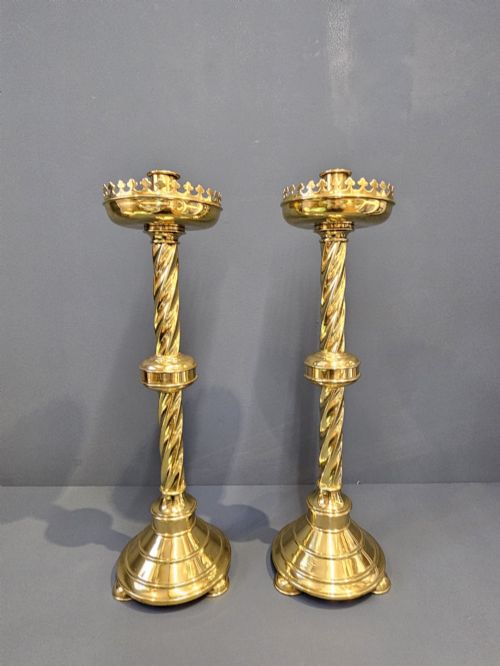
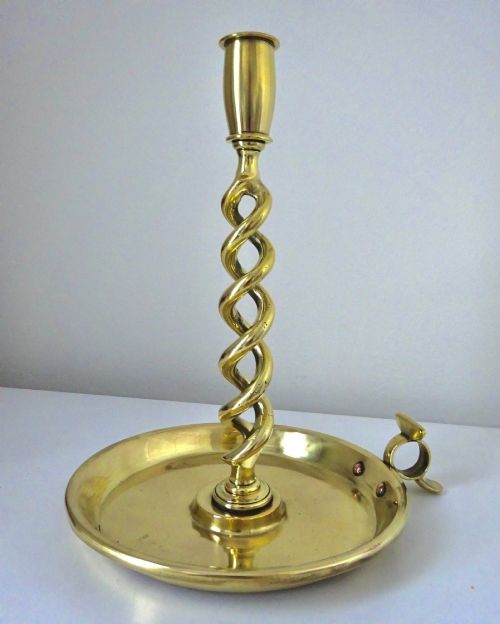
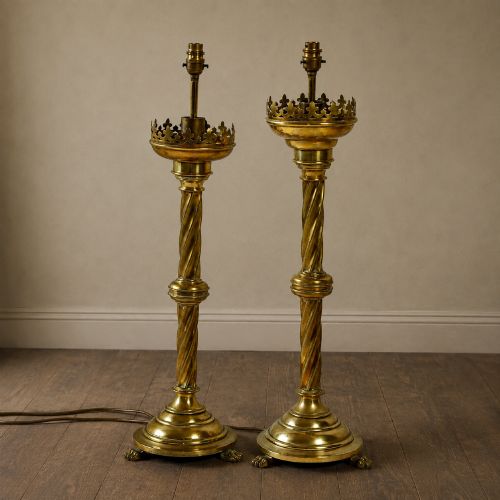
Brass spiralled candlesticks bring sculptural movement to a room, catching the light along their fluted columns.
Brass Spiralled Candlesticks
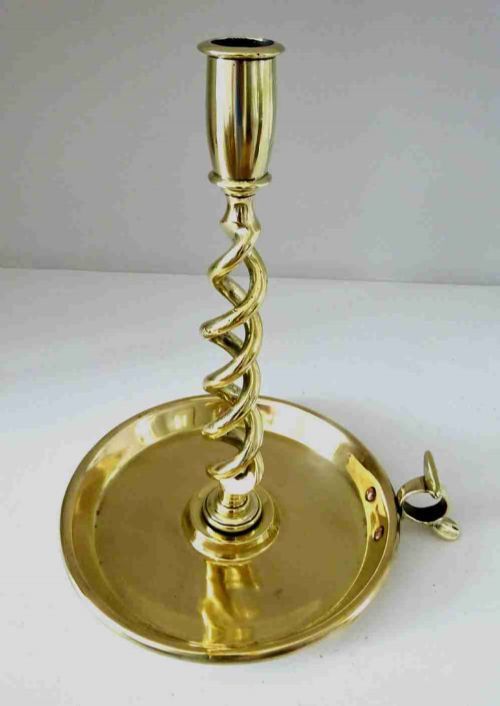
Brass spiralled candlesticks combine turned metal columns with substantial bases, spanning domestic and ecclesiastical forms. You will frequently encounter Victorian and Edwardian examples featuring twisted shafts or barley twist designs.
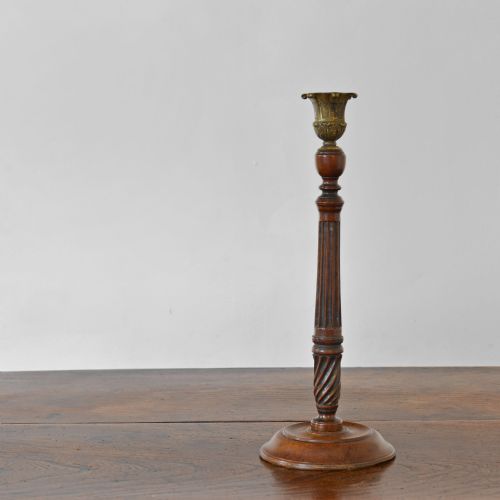
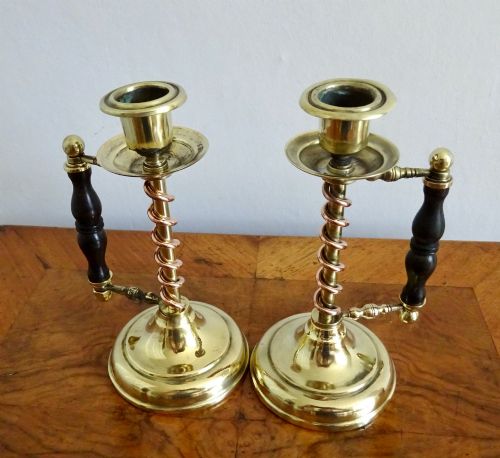
The selection includes pairs and larger sets, alongside table lamps converted from earlier lighting forms. Alongside solid brass, combinations of oak, mahogany, copper and enamel appear across the periods.
Stylistic influences range from Gothic Revival and Arts and Crafts to Georgian and Jacobean Revival aesthetics. These variations reflect the changing interior tastes of the nineteenth and early twentieth centuries.
How they were made
Makers utilised cast and turned brass, often combining metal shafts with fitted wooden bases or incorporating copper elements. Wood-turned components in oak and mahogany provide structural contrast to the bright metal work.
The characteristic twist is achieved through lathe-turning or casting techniques that create the spiral form. Assembly methods include threaded components and fitted trays that secure the structural parts together.
Current listings demonstrate a strong representation of Victorian and Edwardian periods, alongside materials such as oak, mahogany, copper and enamel.
What varies in quality
The standard of execution in the turning of the spiral and the crispness of the cast details define the better examples. Substantial gauge metal and well-fitted bases provide stability and visual weight.
Proportion and scale distinguish finer pairs and sets from standard domestic items. The integration of mixed materials, such as enamel highlights or secondary woods, indicates more ambitious workshop production.
T Thomason & Co
The Brass Spiralled Candlesticks Glossary
- Barley twist
- A decorative spiral column resembling the stalks of barley, turned on a lathe. This form became popular during the seventeenth century and saw revivals in the Victorian and Edwardian periods.
- Ecclesiastical
- Pertaining to the church, describing items originally made for altar or church use. These pieces are often larger and heavier than domestic lighting.
- Gothic Revival
- An architectural and decorative style drawing inspiration from medieval forms. It is characterised by pointed arches and robust construction seen in nineteenth-century metalwork.
- Arts and Crafts
- A design movement valuing handcraftsmanship and simple materials. Pieces from this tradition often combine brass and copper with visible construction methods.
Brass Spiralled Candlesticks: Frequently Asked Questions
How do I date a brass twisted candlestick?
Dating relies on examining the manufacturing methods, base construction, and stylistic clues within the design.
Victorian and Edwardian examples often show specific casting seams and turning marks characteristic of their production era.
Were these originally for churches or homes?
The selection includes both domestic table pieces and larger ecclesiastical examples made for altars.
церковные and domestic forms share similar twisted turning techniques while differing significantly in scale.
How should I clean antique brass?
Maintenance generally involves gentle dusting and preserving the aged patina rather than aggressive polishing.
Harsh chemical cleaners can strip the historic surface finish that accumulates over the centuries.
Why do some candlesticks include wooden bases?
Makers frequently combined turned brass columns with oak, mahogany, or fitted trays to add weight and stability.
This mixed-material approach became particularly popular during the Arts and Crafts and revival periods.